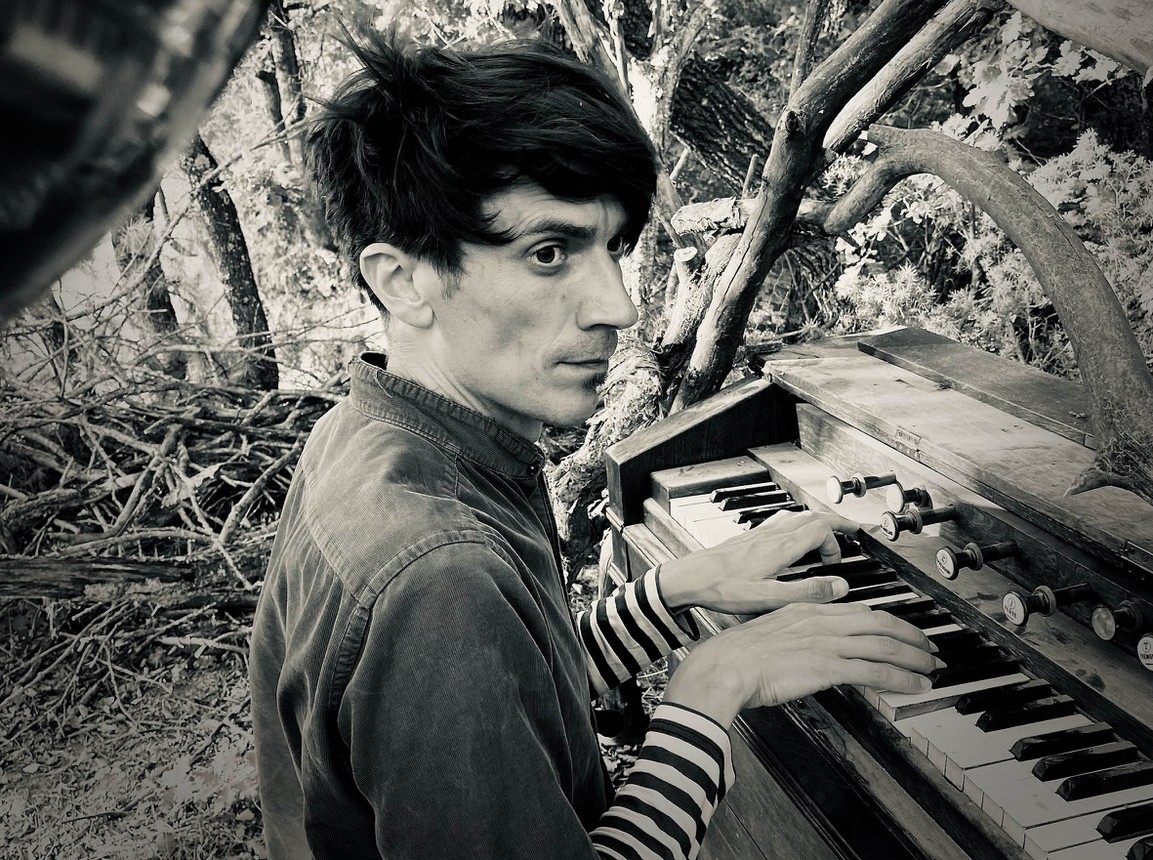
Furii/Adrien Rodes (Credit: Susane Rodes)
Adrien Rodes has spent the better part of a decade learning to play music that was challenging to play live. As a member of Tim Smith’s Spratleys, that challenge proved unexpectedly addictive, and it is in the gaps between those performances that Furii began to take shape.
When Amon Tobin asked him for an album, Adrien had seven months and almost nothing in the drawer. What he did have was a working friendship with Jo Spratley, a willingness to write entirely by feel, and a name plucked from a book that seemed to fit the presence he was after.
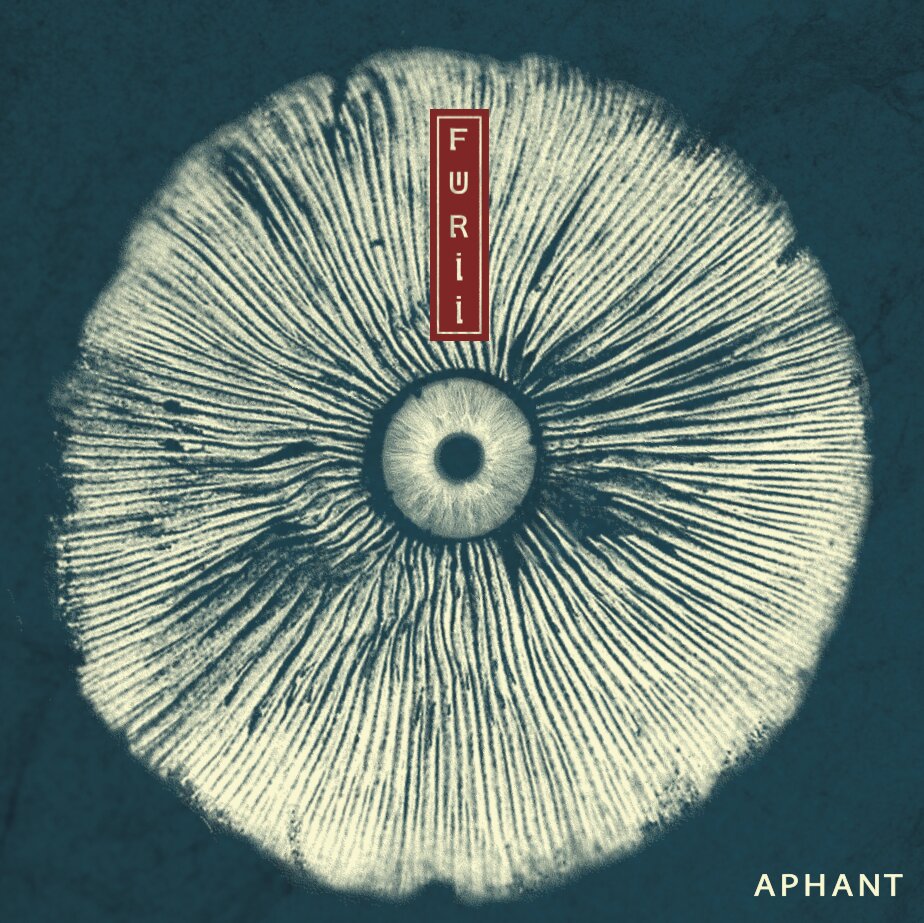
The result is Aphant, a debut EP out now on Nomark, Tobin’s label and, until Furii came along, a home exclusively for his own work. Four tracks that move between the seductive and the strange, with Spratley’s voice running through them like a second conscience. A full album follows this summer. Rodes is, as he explains to Jason Barnard, puzzled by why music works, hopeful that he never finds out, and grateful for it.
You’ve spent years as Topo Gigio and as part of Tim Smith’s Spratleys, so why does a new alias feel necessary now?
Changing guise for my own projects is a bit of a habit. I also made an album as rec.tangle (Heavy Maple) some time ago. These three solo projects felt quite different, mostly because of the changes in the way I go about making music. Topo Gigio was done only with a sampler and very little clue. It felt right to try out a new alias once I started playing instruments and relied less on programming.
When Amon Tobin asks you for music, you want a fresh start and to make it all sparkly. The different aliases he uses for his output somehow make you perceive the music differently. Dissociating something you make from yourself as a person is, I think, a vital part of the creative process. Ideally, I’d rather have anonymity, but it takes too much discipline. I really admire people who stick to it, but in these AI-riddled times it feels like you owe people the assurance they’re dealing with a human.
The name Furii jumped out at me from a book when that first song was released. It somehow felt like it encapsulated the presence I was after. I’ll stick to it for the foreseeable.
What does Furii let you do that those other identities couldn’t?
Getting Jo Spratley to sing on that first song was initially thought of as a one-off, but it was just too good to leave it there, so she’s all over the album. Given her involvement, you could argue some of these songs could be Spratleys songs. The thing is, carrying on a project that she and Tim Smith started is loaded and comes with its fair share of imposter syndrome for me. Plus, the current line-up collectively had enough for a new album, given the talents of Jesse Cutts and my brother Etienne.
It was freeing to approach Furii as something unrelated and not be self-conscious on that front. What I wanted to do here was totally eliminate language from my side of the writing process, going only by feel, knowing Jo would just get it without being prompted one way or another. Things could remain at an unconscious level, and it really surpassed my expectations.
Amon Tobin describes you as a songwriter he’s admired for over twenty years, and yet Nomark is a label that has, until now, only ever released his own music. How did that conversation happen, and what did it feel like to be the one to break that pattern?
I still can’t quite believe it, having been in awe of the breadth and quality of his work over the years. He’s been very sly about it, I’d say. He initially asked if I wanted to contribute a track for an upcoming compilation of Nomark’s new signings. At least that’s how I understood it.
Thinking that it would be filled to the brim with sharp sounds of the future, I thought I would throw a curveball and try to come up with a Syd Barrett–type thing, knowing full well I wouldn’t be able to beat them at their own game (whoever I thought these groovy artists were). I submitted ILK, assuming I’d never hear from him again.
Being asked for an album on the back of that caught me off guard, but given the quality and diversity of the label’s output, I was inspired to give it my best shot. Nomark feels like a place where anything can happen—I’m insanely lucky to call it home.
How much of what became Aphant already existed before that conversation? How do you write for Jo Spratley, or does she bring something that changes what you’ve already made?
I had absolutely nothing on the shelf when asked if I could deliver an album within seven months period, apart from an embryonic version of Hypnagog, having left my own music by the wayside for some time. Since joining Spratleys in 2016, the focus had been on playing existing music live.
This had never appealed to me before but proved to be very addictive—I liked the challenge of finding ways to play things that were not meant to be reproduced live. After playing everything in existence, it became evident we had to write a new Spratleys album. The songs I had left over from that did not feel right for Nomark, so I decided to treat it as a fresh experiment and see what would happen.
Writing tunes knowing Jo would take them somewhere else has been a real joy. I had vocal melodies on some of the songs, and she came up with brilliant ones on others. Her take has always elevated things beyond measure. If you haven’t got a friend like Jo, I suggest you make some serious changes in your life.
You tour with Cardiacs as well as working under Furii. Two very different musical worlds. Does one influence bleed into the other, and if so, how consciously do you manage that?
I’m not in the current Cardiacs line-up. I played on the Sing to Tim tours in 2024, both with Spratleys and a Cardiacs line-up of past and present members—maybe that’s where the confusion comes from. It’s been a beautiful thing and tons of fun. I’ll play “The Duck and Roger the Horse” in my head until I die. The setlist slated for this spring’s Cardiacs tour was really exciting, but I didn’t think I would have much to contribute, given LSD was mixed when I first heard it. There is no shortage of excellent (proper) keyboard players who would give it a better rendition.
Once somebody plants the idea of making a record, it seems like there is no better use of time. It sounds very silly, but I had this weird realisation of time being very finite. Plus, I really wanted to be in the audience.
Having soaked in a bath of Tim Smith’s music for ten years has definitely had an impact. If I had come across his work earlier on, my understanding of music would have been entirely hijacked, but I try not to replicate the things I love about his harmonic vocabulary (I’d make a hash of it!). The spirit of it is the guiding light for me—an incredible gift. I may never get there, but I know what to look for.
“Pony” was my way into his world and remains my favourite of his—things have never been quite the same since hearing that mischievous album.
You say you hope never to understand why music works. Is that genuine, and if so, does the mystery keep you making it?
Yes, I feel a degree of ignorance about the inner workings of music can be valuable. It’s useful to have a grasp of music theory to avoid known tropes, maybe, and not reinvent the wheel. But going by feel would be my preferred approach. You can always hear when someone is sight-reading music, for instance.
I find that going to a piano or grabbing a guitar first thing after waking up is a good way to avoid having things ruined by analytical tendencies and to just let something happen. You also need a degree of discipline not to try smoothing everything out, and to respect the integrity of improvised bits.
It can be a bit schizophrenic to be writing and producing—you need to know when you’re no longer allowed to question what is there and just work with what you have. For lack of a better word, psychedelia, as personal and potentially corny a concept as it is, feels like a good barometer. It’s not something you can inject onto a chord sequence retrospectively—the song needs to have spoken to you initially.
What happens to the creative impulse if you ever feel you’ve got it worked out?
The fear of having mastered music is definitely not something that keeps me up at night, being such a slow learner. If anything, I’m amazed at how your ears can radically change over time and really familiar things can suddenly sound really different.
Music is such a limitless field anyway that there will always be new areas to explore. Humans could stop making music now and there would already be enough good bits in the can to keep us going for a thousand years, even with 90% of it being derivative.
We can’t help ourselves adding more to the pile, so it had better have a unique flavour.
A full album is due this summer. Given that the EP already feels complete in itself, what does a longer body of work allow you to do that four tracks can’t?
A record has to keep you in a space for its whole duration and not overstay its welcome. That’s not to say it shouldn’t take unexpected turns.
Amon suggested splitting what I had between an EP and an album. It was a good call, as I like records that you can listen to in one go—and ideally ones that make you want to stick them straight back on.