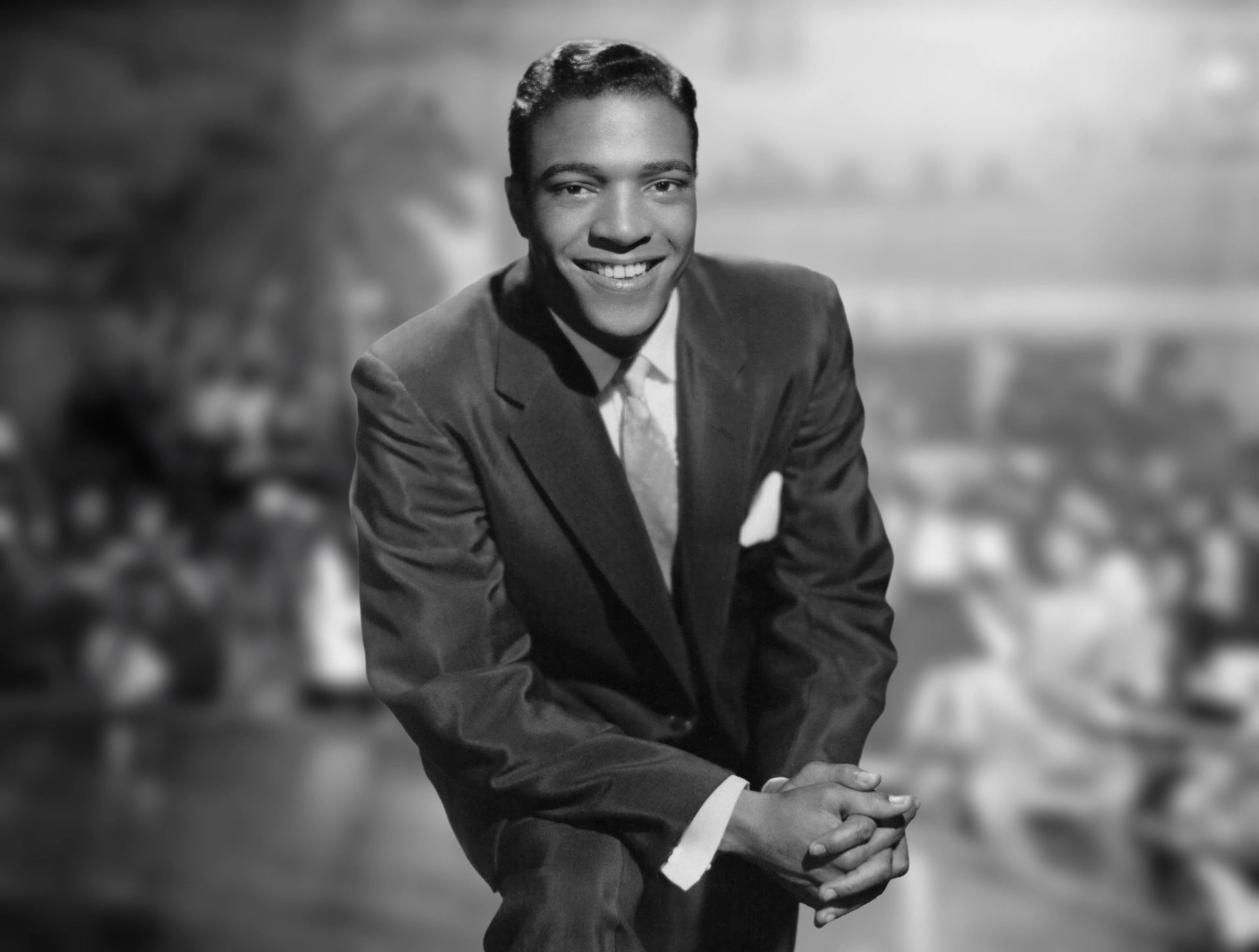
Clyde McPhatter - 1959. Adapted from General Artists Corporation/Marvin Drager - eBayfrontbackrelease, Public Domain, https://commons.wikimedia.org/w/index.php?curid=29697710
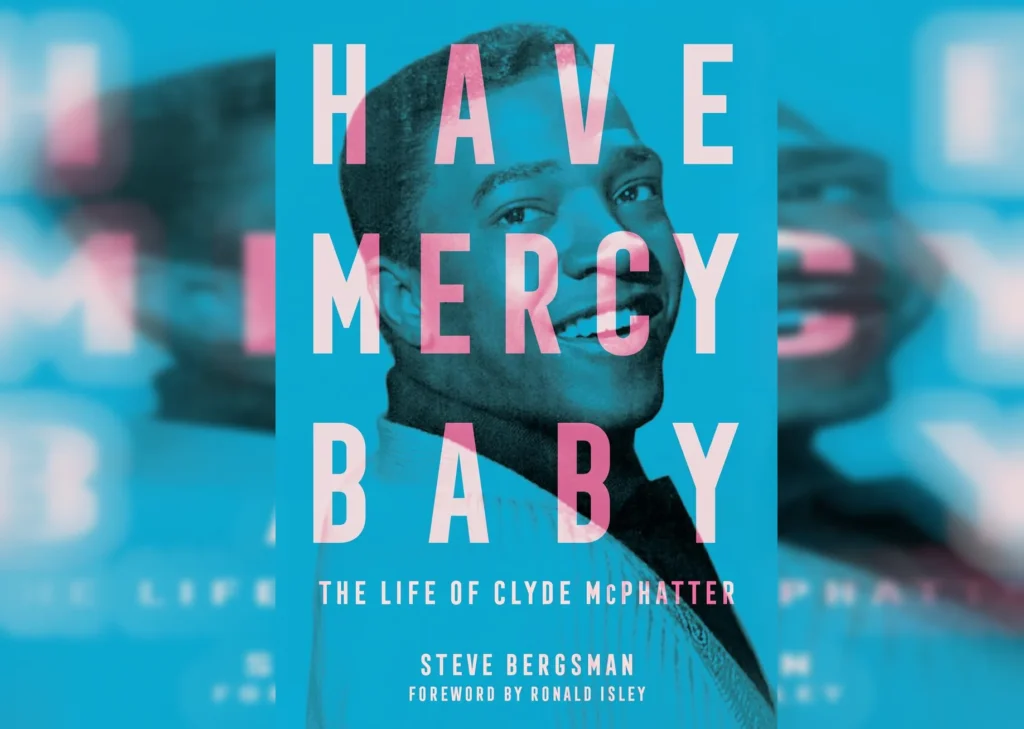
By the early 1960s, Clyde McPhatter had already lived more musical lives than most singers manage in a lifetime. He came up through church choirs in North Carolina, broke through with the Dominoes, founded the Drifters, and then scored solo hits for Atlantic and Mercury. Ronald Isley, writing the foreword to Steve Bergsman’s biography Have Mercy Baby – The Life of Clyde McPhatter, argues that without McPhatter there might never have been an Isley Brothers career at all.
Less familiar is what McPhatter was doing away from the microphone, particularly on a Friday night in Memphis in May 1961, when he and Sam Cooke checked into the Lorraine Motel to find a telegram waiting from the NAACP. It warned them about segregated seating at Ellis Auditorium. The episode has usually been framed as part of Cooke’s political awakening, but Steve Bergsman, drawing on contemporary reporting and interviews with witnesses, shows McPhatter was central to what happened next.
Running alongside that story is another. By 1961, McPhatter’s run of hits was slowing, and salvation arrived through a rockabilly song from Missouri that he initially disliked. “Lover Please” became his biggest solo success in four years. Bergsman keeps both threads moving together and each helps explain the other. Here is chapter 13 of Have Mercy Baby – The Life of Clyde McPhatter by Steve Bergsman:
LOVER PLEASE
A Friday night in May 1961 and another Sam Cooke/Clyde McPhatter tour arrived in Memphis, Tennessee.
At this point in time, Cooke was at the top of his game, one of the biggest names in popular music. He had hit big in 1957 with the #1 record “You Send Me,” a string of moderate hits over the next three years, and then came back strong with “Chain Gang,” a #2 record in 1960. Another Cooke tune, “Cupid,” was beginning to take off. Cooke had begun the year with engagements in the Bahamas, and when he came back to the states, he and Clyde organized the current tour, adding the always popular Hank Ballard, and then other performers along the way.
Also on the tour was a new female singer named Aretha Franklin. The young songstress with a powerful voice signed with Columbia Records the year before. The big record company was not a good fit, as it tried to mainstream Franklin, not only in the tunes chosen for her to sing but where she was to perform as well, not hitting the chitlin’ circuit until she was booked for one-week engagements at the Royal in Baltimore and Howard Theater in Washington, DC. For the tour Sam Cooke took her under his wing and she was enamored with him, saying, “It was Sam’s tour as far as I was concerned. He followed me [on stage] and he just wore people out. He wrecked every place that we went . . . When he would come on, the building would just erupt.”
When the tour arrived in Memphis, it was a couple of hours before the show was scheduled to begin. The whole entourage was staying at the Lorraine Motel, the best accommodation in Memphis for visiting African Americans. For performers, it was also an advantageous location, as it was just a few blocks from Ellis Auditorium, a big venue in the city. As Clyde and Cooke stepped into the motel’s lobby to check in, they were informed a telegram had arrived earlier and was waiting for them.
The NAACP (National Association for the Advancement of Colored People) had been directing efforts to desegregate music venues, taking particular umbrage at places that segregated audiences into Black sections and white seating. The NAACP had targeted the Ellis Auditorium ahead of the Cooke/ McPhatter tour and the telegram informed the two singers that not only was the auditorium to be segregated for the show, but seating would be even more rigid. Sam Cooke’s biographer Peter Guralnick laid out the scenario, “Negroes restricted to the left of the first, second and third balconies, thus limiting not only sight line and participation [there would be no coloureds dancing on the floor] but keeping their numbers to fewer than 1,000 in a crowd of 4,000.”
Clyde had already been through skirmishes of this type. As his drummer Bill Curtis commented, “Clyde integrated a couple of cities. In Raleigh, a club there had a section for Black people. His family wanted to come and see him perform. Clyde didn’t want them put into the segregated section, he wanted down front, and if the club wasn’t going to open up, he wasn’t going to perform. He stood his ground and they eventually opened up the club to a mixed audience.”
According to Jet magazine, the Jim Crow structure at this particular club was more dire than Curtis remembered, and Clyde canceled a four-day nightclub engagement in Raleigh because “Negro patrons” were barred. The magazine reported, “The Mercury Record star said that when he arrived in town for the date, promoted by a white disk jockey, he learned of the ‘no-Negroes’ edict and promptly announced his decision to the owners of Thornton’s Danceland Café.” A life member of the NAACP and a follower of the southern student sit-in movement, McPhatter told Jet: “I think it’s time for performers in the higher income brackets to take a definite stand in the battle for racial equality even if it hits them in the pocketbook.”
A similar battle happened with a nightclub in Atlanta called the Copa, said Curtis. At the time, in March 1963, the Atlanta situation was a major coup for Clyde. A headline in the pages of The Carolinian trumpeted, “Militant Artist Ends Atlanta Bias.” The news story began: “Confronted with a jimcrow [Jim Crow] situation that could’ve resulted in his losing $3,000, Clyde McPhatter talked with the owner of the swank Copa niteclub here and persuaded him to drop his bias attitude toward Negro patrons.”
Clyde had been booked into the café for a week’s engagement, then afterward learned not only weren’t “Negroes” welcome but that he was the first “colored attraction” to play the club. When local Black leaders learned of the situation at the Copa, they informed Clyde that if he performed there, they would picket the club. Clyde was not only a lifetime member of the NAACP but had made several appearances before the youth groups of the civil rights organization and donated to their cause. He decided to solve this problem for everyone concerned.
“When I pointed out the breaking down of Jim Crow barriers throughout the South in schools, public places and on transportation lines, he [Copa owner] relented,” Clyde told The Carolinian. “A picket line wouldn’t solve any of his or my problems, so he agreed to just quietly let any orderly guest come in.” Clyde then phoned several civil rights leaders in town and told them that they and their guests were welcome, and the picket line demonstration plans were canceled. Jet observed, “Singer Clyde McPhatter instituted his own brand of militancy down in Atlanta and successfully talked management of the Copa night club to drop racial barriers.”
The Carolinian concluded its story: “That night about 15 Negro parties were admitted without incident. One waiter was heard to remark that ‘they were much better behaved than many white parties he had served and their tips ran higher than he was accustomed to.’”
In the September 1963 issue of Ebony magazine, a story headlined “Negro Entertainment” summarized: “The Negro entertainer of old usually has been forced to sell his wares to prejudiced audiences . . . The goals of the Negro entertainer of 1963 are essentially the same as those sought by his predecessor during the past century: to be judged strictly on talent, to discard undignified identities and stereotypes and to demand and assert his own humanity. The story of the Negro in the entertainment arts has been a growing affirmation of . . . citizenship. His final goal will not be reached until his story cannot be isolated from the larger panorama of American entertainment as a whole . . .”
In 1960 Memphis’s population stood at just under 500,000, with at least a quarter of that population being Black. In addition, the Beale Street area of the city had been a tremendous cauldron of blues music for decades. Nevertheless, Tennessee was a state committed to Jim Crow, and Memphis was always problematic to Black performers in transit.
“One night we were driving through Memphis, really just outside the city, and we got caught up between two cars,” Curtis recalled. “They got us boxed in, and the car behind was bumping us. We couldn’t get past the car in front. That’s when we decided not to come through cities like Memphis at night again.”
Then there was the night of April 3, 1968. Clyde and Curtis were staying at the Lorraine Hotel for a Memphis gig. They stepped out on the balcony and saw Martin Luther King Jr. and his entourage. Everyone waved hello. After the show, Clyde and his band left town for another gig. On the road they were listening to the car radio and heard Martin Luther King Jr. was shot.
Sam Cooke had his own Memphis war stories. The last time he was in Memphis before the March 1961 tour, his car ran out of fuel. He sent his brother to get some gas and waited with the car. As he was standing by the side of the road, a white policeman pulled up and told him to move the car. Cooke explained the situation, but the policeman didn’t care. “Well, push it, then.” As Cooke told the story, he informed the policeman that he was a singer, his name was Sam Cooke and he didn’t push cars, adding for emphasis, “If Frank Sinatra was here, you wouldn’t ask him to push no car.”
Meanwhile, Charles arrived and tried to distract his angry brother before the situation got out of hand. Sam Cooke, shook him off and barked at the cop. “If it was all that important, you push the fucking car. You may not know who I am, but your wife does. Go home and ask your wife about me.”
While that incident ended positively, Cooke understood that African American performers did have to tread carefully in the South. The year before, a Cooke/McPhatter tour was going through Birmingham, Alabama, when their New York–licensed bus started drawing attention from a white streetcorner mob. Since some white acts were on the tour, the passengers on the bus were mistaken for a group of Freedom Riders.
What to do about the Memphis show posed a quandary for Clyde and Cooke. Clyde’s view was that Black performers were no better than indentured servants in a business that was dominated by white people and governed by greed. On the other hand, by refusing to play a show from which you were contractually committed could have adverse consequences, “from legal and financial pitfalls to the one result no entertainer ever wants to contemplate, the alienation of a substantial portion of his audience.”
Clyde and Cooke went around and around on this, eventually deciding they weren’t going to play before a segregated audience. Over time, this confrontation has been recognized to be a bravura Sam Cooke moment as Cooke biographers often accentuate the Memphis story as part of the singer’s change from pop music idol to one committed to the cause of desegregation. The biographers then forget about Clyde, who had been on the desegregation road longer.
Guralnick wrote about the incident, first quoting Cooke’s brothers who said, “Ordinarily Sam knew just how far to push the buttons and he knew what buttons not to push because it might hinder his career. This time he didn’t give a fuck about his career as we were right in the middle of it.” According to Charles Cooke, Sam had told him to check out the audience, which was segregated with all the Black people in the balcony. Then Sam Cooke said, “Shit, forget it. Cancel it.” Guralnick writes that he (Sam Cooke) released a statement to the Negro press declaring that it was against his policy and the policy of his promoter to play to a forced segregated audience.
The Cooke pronouncement read: “This is the first time that I have refused to perform at show time simply because I have not been faced with a situation similar to this one . . . [to the NAACP] I hope by refusing to play to a segregated audience it will help to break down racial segregation here and if I am ever booked here again it won’t be necessary to do a similar thing.”
Another heroic Cooke bio reads: “He [Cooke] returned to Memphis, and another segregated audience at Ellis Auditorium. He refused to play unless the audience members were seated together. His requests were denied and he was met with threats, but he didn’t back down. Two hours before the show was scheduled to start, Cooke cancelled it.”
Over time, the Memphis confrontation has been completely co-opted by the legend of Sam Cooke. Where were Clyde and the other performers when all this was happening?
No slight to the wonderful Sam Cooke, but when the press got wind of the Memphis situation, after a calming lead paragraph, it reported a much different scenario: “Top singers Sam Cooke and Clyde McPhatter this week refused to perform before a segregated audience in the municipality-owned Ellis Auditorium here [Memphis]. NAACP President Jesse H. Turner wired Mr. McPhatter, an active NAACP life member, informing him of the Jim Crow seating arrangements. The NAACP message was delivered to Mr. McPhatter upon his arrival here, a few minutes before show time. The NAACP expressed opposition to the seating plan. Mr. McPhatter agreed, as did the other stars who were asked what could be done at such a late hour. After a brief conference with NAACP Field Secretary L.C. Bates, the stars [McPhatter and Cooke] elected not to perform. They were joined by vocalist Aretha Franklin and the Olympics, a singing group.”
In Memphis, the NAACP came to Clyde McPhatter, not Sam Cooke, because he had been active in civil rights issues going back to the end of the 1950s. According to Curtis, Clyde was an advocate and supporter of the Atlanta Student Movement, which mobilized the city’s university students to end segregation in public facilities, and on March 15, 1960, over two hundred students sat-in at eleven restaurants in downtown Atlanta.
Early in July 1960, Clyde addressed the NAACP at its convention in St. Paul, Minnesota, and as one press report noted, he shared the spotlight with “young NAACP freedom fighters from across the land during youth night.”
Referring to student protest leaders, Clyde said, “The NAACP is proud of the young people who, rather than continue to endure the humiliation of Jim Crow, are willing to risk verbal abuse, physical assault, expulsion from school and imprisonment in Dixie dungeons.”
Clyde even commended white civil rights activists, saying, “The NAACP hails the young white students, who, rejecting prejudice, have stood shoulder to shoulder with Afro-American youth in this irresistible crusade.”
In December 1960, Jet magazine reported, “Adding their efforts to Atlanta sit-in demonstrations, singer Clyde McPhatter, John Wesly Dobbs, 77, father of opera star Mattiwilda Dobbs [who got out of his sick bed to join the march], and the Rev. Martin Luther King Sr., carry protest signs in picket lines.” A photo showed all three with their particular signs. Clyde’s read: “The presence of segregation is the absence of democracy: Jim Crow Must Go!”
Atlanta wasn’t the only city where Clyde protested.
During the 1963 civil rights campaign in Birmingham, Alabama, white supremacists bombed the A. G. Gaston Motel, which catered to Black patrons and at the time was the headquarters of the Southern Christian Leadership Conference’s directors Martin Luther King Jr., Ralph Abernathy, and Fred Shuttlesworth. Fortunately, they weren’t injured. Again, Curtis recounted, he and Clyde were at the Gaston Hotel, and “we got caught up in that and then we marched.”
Back in Tennessee, African Americans in Fayette and Haywood counties started registering to vote en masse. In response, white merchants, principally the gas dealers in the area, stopped delivering to Black gas station owners and farm fuel users. According to the press, Gulf Oil distributer Rube Rhea removed the oil tanks from one Negro gas station owner and told suppliers from other oil firms to do the same to their Negro clients as long as they persisted in their right to exercise the ballot.
Clyde and organist Bill Doggett, who had a huge hit in 1956 with “Honky Tonk Parts 1 and 2,” started a counterprotest, urging fellow artists, who like them drove thousands of miles between gigs on one-night tours, to join them in a “selective patronage” campaign against certain gas companies including Gulf, Texaco, Amoco, and Esso. McPhatter and Doggett publicly returned their Gulf Oil credit cards. In a joint announcement, Doggett and McPhatter stated, “As members of the NAACP we feel that all show people should give them their unqualified support in their campaign, which we support, to get Negroes to stop buying gas from those who don’t care about our civil rights.” It was not an empty gesture. By one estimate at least $5 million was spent yearly by theatrical people on the road for gas and oil. Said McPhatter and Doggett, “The least we can do to help is to refrain from the purchase of these companies’ products.”
In 1967, Ebony magazine sought to dispel the notion that it was the financial support from white donors that kept civil rights organizations afloat. In a story headlined “Lifers Dispel Myth of Laxity,” the magazine editorialized: “A long-standing rumor that Negroes are unwilling to pay the cost of their own freedom cannot be substantiated by facts, according to the NAACP, for the organization’s records show that its first two life members were Negroes: John B. Nail, a Harlem real estate man, led the way back in 1927, along with Dr. Ernest Alexander, and among them many prominent in American life—Marian Anderson, A. Philip Randolph, Count Basie, Harry Belafonte, Chuck Berry, Althea Gibson, Dr. Martin Luther King, Clyde McPhatter . . .”
The environment for Black entertainers was still perilous in 1967. When Deborah McPhatter and her mother accompanied Clyde on tour that year, one of the stops on the chitlin’ circuit was Tifton, Georgia. Deborah took the opportunity to visit a local Black-owned shoe store to get a pair of sandals repaired. She dropped off the shoes, which were never to be seen again. Afterward she wrote this note on the ticket: “Summer of 1967, KKK ran us out of town. Had to leave shoes. My father with band and ‘mommie.’ Thought I was going to die! Will never forget.”
Deborah McPhatter, who grew up in the Northeast where her life circulated between New York and New Jersey, sardonically noted that tour journey was “educational.” She had friends and family who were white, so to see signs for the first time that read “for colored only” or “for whites only” was shocking to her. Laughing about it decades later, she said, “Never did get the sandals out of repair. The car and van for Clyde’s family and band members came and got us as the KKK marched down the street. Loved those darn sandals; my dad had them made for me in the Village [Greenwich Village, New York City].”
Like other Black entertainers of the era, Clyde had to balance his activism against his career. He still had to spend time in recording studios and go on the road to perform. His songs had to be good enough to attract the attention of teenage record buyers, and his shows had to be entertaining despite long, long road trips. He was no longer a young man, but he was in a young man’s game, pop music. He didn’t have options. Aging white singers like Perry Como and Andy Williams could host television shows or, like Frankie Avalon and Rick Nelson, appear in movies. Some aging Black performers could move on to nightclubs, Las Vegas, or prestigious art centers such as Carnegie Hall in New York. Clyde was not old enough to be esteemed like a Count Basie or jazzy enough like a Sarah Vaughan.
While signing with Mercury gave Clyde’s career a boost, he was still on the downside as a hitmaker. His last major record was “A Lover’s Question” from 1958, and his last crossover song to dent the charts in a substantial way was “Ta Ta” in 1960. For whatever reason—too much time on the road, civil rights activism, or personal demons—1961 was a washout year. Too little time in the recording studio meant just a handful of songs to be released, only one of which, “I Never Knew,” attained what could only be called mediocre success. Help was on its way and came from a place so far from Clyde’s frame of reference that it could have been sent, for all he knew, from another planet.
And initially Clyde didn’t know much of anything about the celestial gift, which was a song called “Lover Please,” other than that he didn’t like it.
In 1974 singer/songwriter Billy Swan had a #1 hit record, a little tune called “I Can Help.” In his long slog to fame, Swan had a number of brushes with good fortune, including writing the song “Lover Please.” He was born in 1943, in the small burg of Cape Girardeau, Missouri, which is located near the borders of Illinois, Kentucky, Tennessee, and Arkansas. He grew up on country music before switching allegiance to rock ’n’ roll. It seemed his destiny was to be a Nashville musician or songwriter because by the time he was teenager he could play multiple instruments from piano to guitar. At the age of sixteen he wrote a poem for English class that would become the basis for “Lover Please.” Swan’s first big break came in the early 1960s. He was in a local band called Mirt Mirty and the Rhythm Steppers, which, as just the Rhythm Steppers, recorded “Lover Please,” on the Louis label, created by Bill Black, who not only was Elvis Presley’s bass player but led his own group, Bill Black’s Combo, which charted five Top Twenty instrumental hits in a row from 1959 to 1961.22 The Louis label was created in 1962 and was based in Memphis. Black was an esteemed musician (later in the Rock and Roll Hall of Fame). His involvement attracted the Mercury Records representative in the area, and when he heard the song by the Rhythm Steppers, he thought it might work for one of his company’s performers. The record went first to corporate headquarters in Chicago. They, too, liked the tune and passed the record to New York, home base at the time for Shelby Singleton, Mercury’s recording director, with a note that the song was perfect for Clyde McPhatter and he should record it. Singleton was the right person to handle this request. Considering the southernish origins of the Rhythm Steppers, its version was straight rockabilly. Singleton, who was from the South, in 1960 was named the head of Mercury’s Nashville office. He was so good that he was also made the head of A&R in New York as well. In June 1962, Billboard spotlighted him in a column called “Man Of The Week,” noting “A typical day in Singleton’s peripatetic life is to do a recording session in New York in the a.m., fly to Nashville for a session in the afternoon, and fly back to New York that same day to edit tapes in Mercury’s New York offices. At 29, Singleton has become a fireball among A&R men.” That year Mercury promoted Singleton to company vice president. Why not? One of his major successes in 1962 was Clyde McPhatter’s “Lover Please,” which fell into his lap. Since he was steeped in country, rockabilly, and R&B, he could transition the tune from rockabilly to ebullient, soulful pop.
Singleton listened to the Rhythm Steppers song several times before phoning the singer. “Clyde,” he said, “I’m sending you over a record I want you to listen to. Learn it today, and we’ll record it tomorrow night. We have to move fast.” Singleton was thinking the Rhythm Steppers version or another rockabilly remake could hit the market before Mercury made its move.
An unexpected roadblock was Clyde, who didn’t like the song, telling Singleton “It’s no good. This song is not my kind of thing.” Part of the problem was that so many of Clyde’s recent records had been done with big string orchestras, and he had gotten used to recording lush ballads. He wasn’t sure he wanted to go back to a basic rock ’n’ roll recording session. Singleton finally convinced him to at least try out the song. Clyde acquiesced, and Singleton quickly organized a recording for the next night.
Clyde and a group of musicians, engineers, and producers gathered at Capitol Studios in New York, and as can be expected with such a rushed schedule, things didn’t go well at the start. Clyde was still griping that he didn’t like the song. The original arrangement called for two guitars, drums, bass, piano, two saxes, two trumpets and a small chorus. After a few tries, Singleton ditched the trumpets and one of saxes and had those guys handclap instead. The bonus here was the remaining sax player. Singleton had hired King Curtis, one best sax players in the business, who played, as Singleton told the press, a “yakkety” saxophone that had a “flutter-tongued effect.”
Singleton was a man on a mission, and that was to beat to market anyone else who might have been thinking of recording the song. The Clyde McPhatter interpretation had to be established as “the version” in the public’s mind, so he kept the engineers working through the night, processing tape. The next morning, the first one hundred pressings were ready for shipment to radio disc jockeys. In a blink of an eye, young Billy Swan was going to have a hit record, and so was Clyde McPhatter.25
What Singleton saw in “Lover Please” was the possibility of merging a song with Southern origins with a New York recording style. He felt the Nashville sound and the New York sound began in different places but could be made to work together. According to Singleton, the Nashville sound derived from musicians recording extemporaneously, where the singer goes over his or her song with the pianist and the musicians take it from there. New York musicians mostly used written arrangements. In September 1962, Singleton brought Clyde McPhatter to Nashville for recording sessions at the RCA Victor Studios.
“Lover Please” hit the turntables of deejays early in 1962, with the first trade publication reviews coming on February 10. Cash Box chose eight new songs for its “Pick of the Week,” only two of which became hits, “Dream Baby (How Long Must I Dream)” by Roy Orbison and “Lover Please” by Clyde. The review read: “We’ll bet our bottom dollar that Clyde McPhatter has one of his biggest sides in quite a while with this one. Tabbed ‘Lover Please,’ it’s a tremendous twister that has the vocal and instrumental sound of success. Great arrangement.”
The key word in this review is “twister,” which referred to the dance called the twist. Chubby Checker’s song, “The Twist,” went to #1 in 1960 and then returned to the charts at the end of 1961, becoming a #1 song all over again, ushering in the first wave of rock ’n’ roll dance crazes. “Lover Please” had a twistable dance beat, which was something the Billboard reviewer highlighted: “A snappy rhythm number with a handclapping beat. McPhatter shouts out the message in fine style. Good dance number, with upward modulation that helps it build.”
In April, Cash Box’s listing of the top R&B songs in the country showed “Lover Please” still holding firm at #4. The top three songs were all dance tunes: “Slow Twistin’” by Chubby Checker, “Mashed Potato Time” by Dee Dee Sharp, and “Twistin’ the Night Away” by Sam Cooke.
There was one other oddity about the record. The B-side song was written by Clyde and his longtime guitarist and music coordinator Jimmy Oliver, who according to Bill Curtis had worked with Clyde since his days on 124th Street in Harlem when he was doing doo-wop on street corners. Doo-wop groups often worked with a regular guitarist, who appeared on stage with them. The original Drifters boasted guitar man Walter Adams, who in 1953 died of a heart attack, and Oliver officially took over that slot. Oliver stayed with Clyde until April 1962, when he left for what one writer said was “unspecified reasons.” The gossipy “New York Beat” in Jet magazine simply wrote, “Singer Clyde McPhatter and his longtime accompanist Jimmy Oliver came to a parting of the way.” Curtis suggested that, by this time, Clyde was becoming a difficult person to be around, especially when on the sauce.
Mercury Records, sensing a big hit from Clyde, booked full page ads in the trade publications. The Billboard promotion touted the star and the song to deejays and jukebox owners. This was publicity aimed at the industry, not consumers. In varying typefaces and sizes, the sparse verbiage read: Clyde Pleases . . . ; “Lover Please” (large letters); Clyde McPhatter; Mercury 71941 (small letters); A Big Money Maker; Here’s another Big Profit Hit by Clyde McPhatter; Mercury Records logo. For Cash Box, Mercury featured a head and shoulders shot of Clyde with similar sparse wording. The message line was changed to “A Sure ‘Money Maker.’”
Clyde hit the road again. On February 23, he was in Washington, DC, where the local newspaper caught up with him: “Singing star Clyde McPhatter hit town Wednesday for a fast swing through the disc jockey studios and three, night time, teenage hops. He was promoting his latest record, ‘Lover Please.’” After years of trying to be more urbane, with ballads heavy with strings and backed by full orchestras, this late career song put him back in front of teenagers. The good thing, of course, was that teenagers listened to the radio and bought his records. As a solo artist, “Lover Please” was the biggest hit of his career since “A Lover’s Question” four years before. The song climbed to 7 on the pop charts and to #4 on the R&B listing.
Shelby Singleton wasn’t going to let the Clyde McPhatter moment go to waste and by spring had pushed a follow-up Clyde record into the market. Nothing new this time. Instead, he plucked the Thurston Harris hit, “Little Bitty Pretty One” from 1957, and had Clyde record it. The song always had a powerful groove, and Clyde’s approach didn’t change it much—the new version was just less bluesy and more pop than the original. Still, Clyde was hot and the song climbed to #25 on the pop charts but was a no-show on the R&B lists.
Then things got incestuous at Mercury.
In September, Mercury released another Clyde McPhatter single with “Maybe” on the A-side and “I Do Believe” on the B-side. Both songs list Margie Singleton as a cowriter. Cash Box review noted, “The exciting, fastmoving ‘I Do Believe’ moves along at a sizzling twist [an over used word in 1962] clip. Great assist from the Merry Melody Singers . . .”
Margie Singleton was Shelby Singleton’s wife and was not only a songwriter, but also one of the Merry Melody Singers. She wrote the B-side tune, “Next to Me,” for Clyde’s hit song “Little Bitty Pretty One.”
“My husband at that time, Shelby Singleton, started bringing Black artists to Nashville to get a different sound,” said Margie Singleton, conjuring up her past. “There was no place for Black people to stay in Nashville except one crummy motel, so we would let the singers—Brook Benton, Damita Jo, Clyde McPhatter—stay in our house while they were here to record. I played ‘Next to Me’ to Clyde. He liked it and recorded it without much change. I’m basically a country-blues artist. That’s where my heart is.”
With Clyde, things could suddenly go off track, and in Nashville things did. “We were in our offices looking for songs for Clyde, Shelby was in the next room,” Margie retraced the moment. “I was singing a song for Clyde when he grabbed me and kissed me.”
Margie was both surprised and offended. Black or white, in the South, it was not, err, “gentlemanly” to grab a married woman for a buss on the lips. “Clyde was a great artist, and I had already given him the song ‘Next to Me,’” she said. Then remembering the kiss incident, she added, “I didn’t think too much of Clyde as a person.”
It’s hard to say what Clyde was thinking, or not thinking, at that moment. The year was 1962, the location was the South, and he decided to kiss a white woman. Just seven years before, fourteen year old Emmett Till was lynched in Mississippi for allegedly offending a white woman. Margie Singleton may have been “the white girl that wrote the blues” and taken a liberal attitude toward race relations, but she was born in a small Louisiana town and married Shelby at thirteen years of age. When Margie told her husband about the incident, he wisely advised, “don’t make a fuss.”
She didn’t and the two ended up working together on many projects. The singles and albums they did together just didn’t congeal.
“Maybe” with “I Do Believe” did not chart at all. Nor did Clyde’s last release in 1962, “The Best Man Cried” with “Stop” on the B-side. Both of those cuts were credited to Clyde McPhatter with the Merry Melody Singers.
“I formed the group, the Merry Melody Singers, with three of the Jordanaires, the group that often served as the background singers for Elvis Presley on recordings and live performances,” said Margie. “It was Gordon Stoker, Bill Matthews and Ray Walker, me and Nellie Kirkland, who had a high, beautiful voice. Sometimes Priscilla Mitchell, who was married to singer Jerry Reed, sang with us. We called her Prissy.”
A bit of trade publication puffery about Shelby Singleton included this note: “Margie Singleton, who has recorded on the Mercury label for a long time. She is known as a singer, but also writes songs, among them many important tunes.” Margie Singleton had been recording country songs since 1957. She signed with the Mercury label in 1960. Her biggest hit, “Keeping Up with the Joneses,” was a duet with Faron Young. As a songwriter, she wrote a couple of hits for Brook Benton. In 1949, she married Shelby Singleton. They divorced in 1965, and Margie moved to United Artists Records.
In 1962, Mercury Records released two Clyde McPhatter albums. The first was called “Lover Please,” which featured the best-selling song. With “soul” music in ascendence, the second album was called “Rhythm and Soul,” and the credits read Clyde McPhatter with the Merry Melody Singers.
The Cash Box review read: “Clyde McPhatter has won many laurels in the past for his distinctive, highly-personal style of singing the blues and this new Mercury LP outing seems destined to earn the chanter a flock of new fans. With some first-rate backings from the Merry Melody Singers . . .”
For as much as Shelby Singleton pushed his wife, the very talented Margie Singleton, into Clyde’s professional orbit, nothing worked for them in concert with each other. Margie worked well with Brook Benton, writing his hit “Lie To Me,” and Damita Jo—“I just loved her,” said Margie—there was no incoming tide for Clyde. Perhaps the disconnect began with the unwanted kiss from Clyde or Shelby Singleton trying, unprofessionally, to reward his wife by getting her to write for a big star. Shelby, who gets kudos for reviving Clyde’s career, also should be credited with helping to kill it as well, because after “Little Bitty Pretty One” a penumbra drifted over Clyde’s association with Mercury—the law of unintended consequences.
In the year-end Cash Box survey of R&B records and artists, Clyde McPhatter was still in the mix, although beginning to slide. For “Best Male Vocalist,” Clyde was listed at #14. Ahead of him in 1962 were singers associated with him or his prior groups, Sam Cooke (#3), Brook Benton (#4), and Ben E. King (#13). Behind him was Jackie Wilson (#19).
As to the “Top R&B Records of 1962,” Clyde’s “Lover Please” only came in at #40. Among the songs ahead of it were King Curtis’s “Soul Twist” (#7), Sam Cooke’s “Twistin’ The Night Away” (#9) and “Having a Party” (#36), and Ben E. King’s “Don’t Play That Song” (#21). However, it did chart better than Brook Benton’s “Lie to Me” (#50), which was produced by Mercury Records, cowritten by Margie Singleton, and backed by the Merry Melody Singers.
Further information
Have Mercy Baby, The Life of Clyde McPhatter – by Steve Bergsman, foreword by Ronald Isley
Used with permission of the author – do not reproduce without their agreement