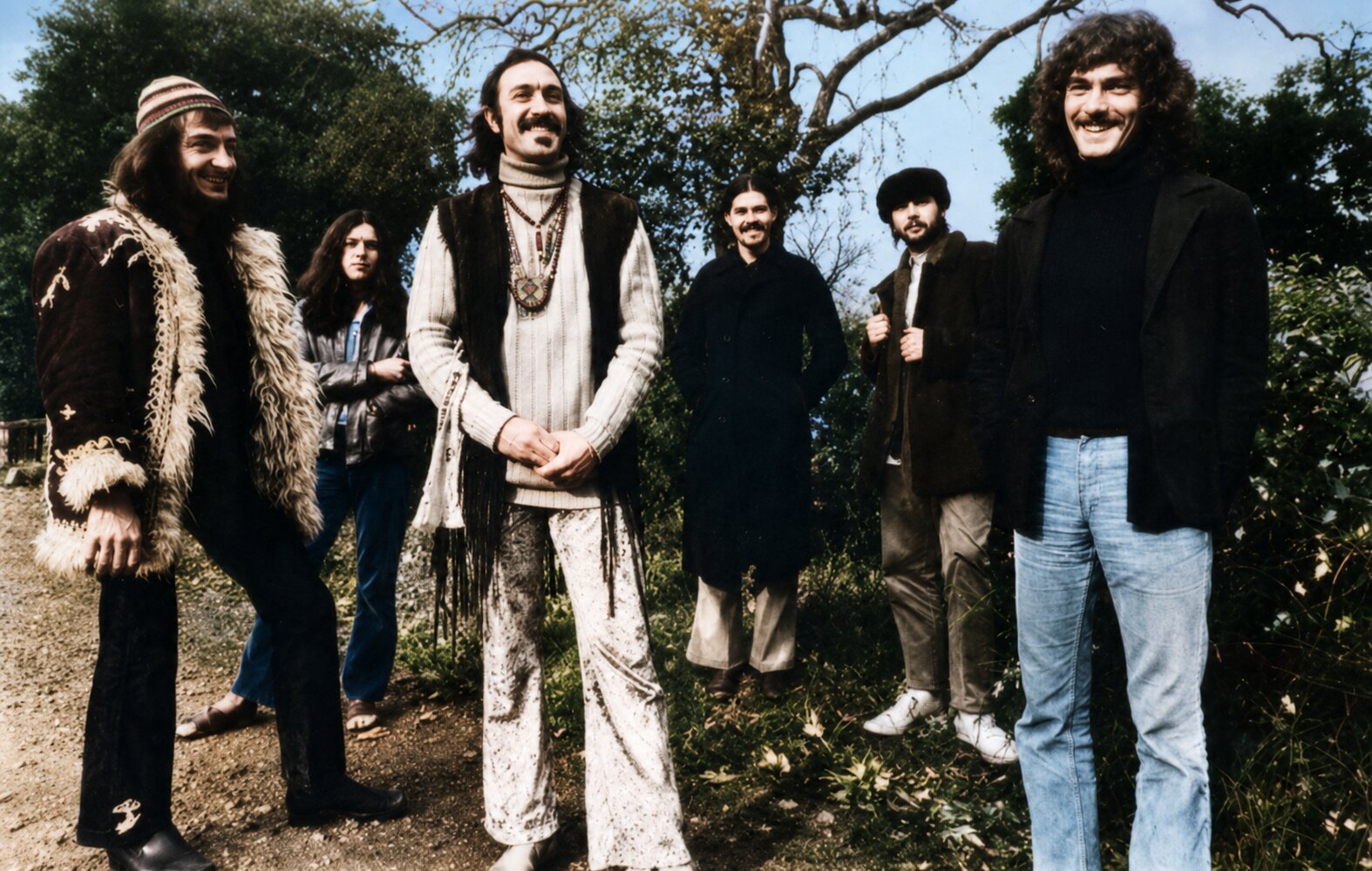
Quintessence - London. Phil/Shiva 2nd from left. Colourised (original from Singsong/Shiva Jones)
By Jason Barnard
Speaking from his kitchen in the United States, Phil ‘Shiva’ Jones looks back on a life that spans the 1960s Sydney rock scene, Glastonbury, and deep spiritual connections. It is not the setting you would guess for a conversation that takes in the 1960s Sydney rock scene, Chris Blackwell, Glastonbury Festival, John Lennon’s house, and the connection between spirituality and music. A new book, Cosmic Surfer by Philip F. Marks has just told his story, but talking to him, it is clear there is plenty he still enjoys telling in his own words.
His career started, fittingly enough, with a ‘no’. Sydney, 1965, and Jones was still at school when he heard there was a group in another suburb worth trying out for. “I auditioned for them,” he says. “They said, you’re not really that good, there’s a band in another suburb, a bunch of young guys, they’re trying to do something, you would probably fit in with them.” He got there, sang a song with them, and might have been turned away a second time had the lead guitarist’s father not walked through the room. “Chris Brown’s dad walked through, he was an osteopath chiropractor, and he said, that guy’s got a good voice, you ought to get him in the band. However they were looking for someone with a really high voice, everyone was at the time, but I had a baritone.” They took him regardless. “We did our first couple of shows, nervous as heck. And as time went on we started getting more confidence, our shows got better, bigger gigs, you get a following, you get a manager and that’s when it all started.
The manager was Peter Conyngham, Jones’s brother-in-law, and the comparison Jones reaches for is not a modest one. “He turned out to be our Brian Epstein. He really got the band where it needed to be, promoted as well, put us on at a lot of university gigs and big shows, got a record deal, put the lyrics together for our hit “If I Had a Ticket” which the band put our R&B spin on it. So out of being shuffled out of the school band, we suddenly ended up in a band that did really well.” That band was Phil Jones and the Unknown Blues.
Asked about his own family’s roots in Australia, given the wave of post-war British migration that shaped so much of the country’s rock scene, Jones goes further back than most. In Australia, you’re kind of proud to say that your ancestors were convicts. So we did a family search, and it turned out that my great, great grandfather was Sergeant John Jones. And he had ten offspring, ten Joneses, and that’s where they came from. He was not a convict, he was someone who kept them in line. So I kind of kept that quiet, I didn’t tell anybody.” His mother’s side traced back to a French family, de la Fontaine, a couple of generations further. “So I wasn’t like the Easybeats, who are my peers, a great band, who AC/DC kind of evolved out of. They were UK/European immigrants, and they went through that whole thing of living in those strange compounds that they didn’t tell people they would end up in if you came out to Australia for ten pounds. But boy, some real talent did come from England at that time.”
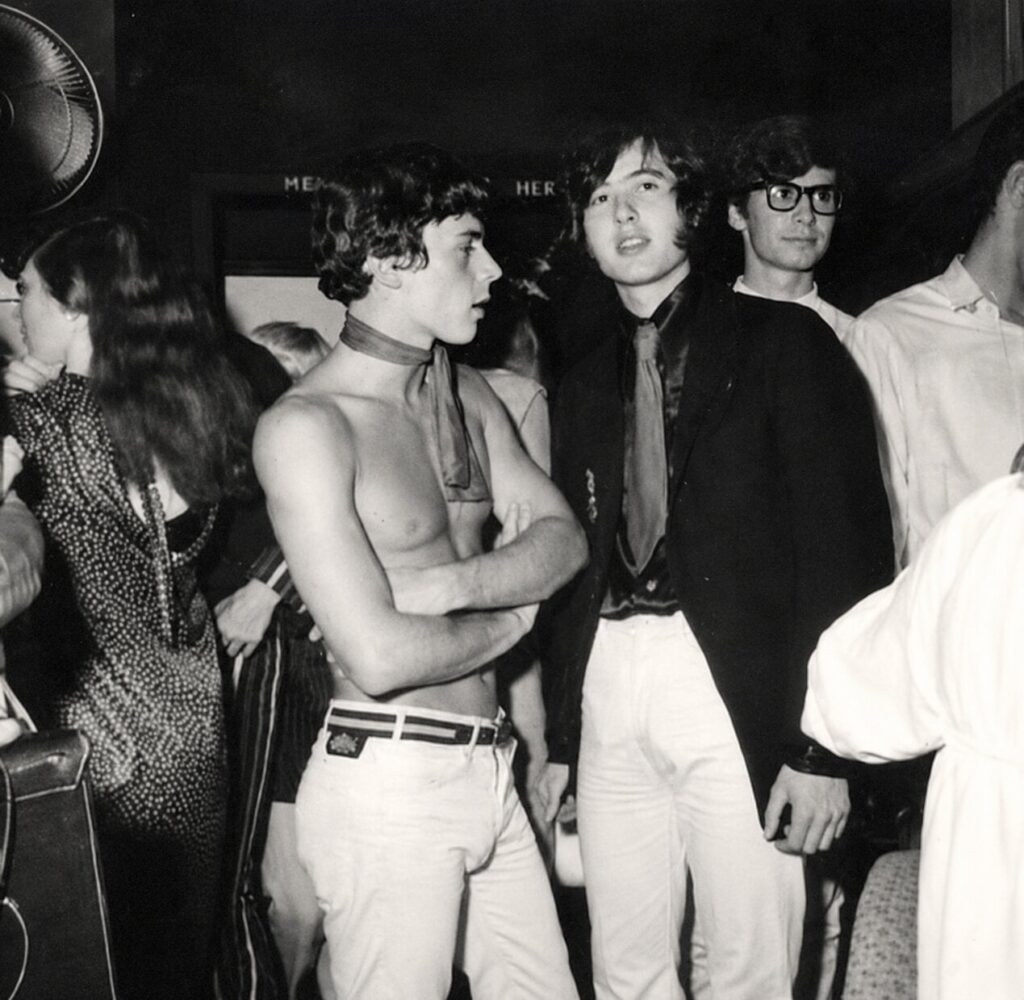
The scene he came up in split, in his telling, along geographic and stylistic lines. “Sydney was more of a blues, R&B oriented city. Melbourne was more of a very polished pop scene. The Twilights, they were a magnificent harmony band, and Glenn Shorrock came out of that band, who went into Little River Band, as did my lead guitarist. And they had magnificent harmonies, and I remember they even did a show for a while where they dressed up in Sgt. Pepper’s outfits and did a whole Beatles thing.”
Sydney itself was a smaller, tighter, more competitive world. “There were three bands who were extremely competitive. There was me in Phil Jones and the Unknown Blues, we were more hardcore blues. There was Python Lee Jackson, which David Bentley came out of, and he wrote ‘In a Broken Dream’, for Rod Stewart and he was a friend. And then there was Jeff St John and the Id, who had a brass horn lineup. So we were very competitive, in a nice way.” All three clubs packed out most nights, by his account, and all three bands broke up at roughly the same point, which is when word went round Sydney’s musicians about a ship bound for London that needed a covers band for the crossing. The repertoire on offer did not appeal to a self-described blues man. “You got to play the Autumn Leaves and things like that. I was like, oh, you’ve got to be kidding. Of course I love those old standards now.”
He went anyway, assembling a group from what was left of the Unknown Blues, Python Lee Jackson and the Id, and sailed by way of Athens before travelling overland up through Italy and on to London. “We landed there with nothing. We didn’t have management or anything. And we all just made our own connections just by being grassroots on the scene.” His saxophone player ended up in Manfred Mann’s band. David Bentley went on to write songs for Rod Stewart. Jones ended up joining Quintessence.
Phil/Shiva was living in Ladbroke Grove within a couple of months of arriving, in a flat he remembers costing something like a few hundred pounds a month, in a neighbourhood then known for cheap rent rather than the grand stucco terraces it has since become. By day he worked in a picture framing factory on Kensington Church Street. “I wasn’t very good at it, I broke a lot of glass, a lot of frames.” It was on a lunch break there that everything changed, when he picked up a copy of the local paper. “I saw a copy of the local Ladbroke Grove paper, I’m reading it, and there was an ad there that said, hip musicians wanted, Ladbroke Grove area, and I thought, well, I’m hip, I’m a musician, and I live in Ladbroke Grove.” The ad had been placed by the flautist Raja Ram, born Ron Rothfield, and the two of them started jamming, with people drifting in and out of the sessions until a settled core emerged. “Initially I think Alan, who’s the lead guitarist, was playing bass at the very, very beginning, and one day he picked up a guitar, and he just tore it apart, and he said, and we said should be playing guitar, not bass. So Shambhu, who was on rhythm guitar at the time, went over to bass, and Alan became the permanent lead guitarist, who really took the band into a new level. And Dave (Maha Dev) came in on rhythm guitar.”
The spiritual language that would define Quintessence’s records arrived through their spiritual teacher Swami Ambikananda. “I’d always had a fascination with Eastern philosophy. I had always felt there would be a master for me, a teacher that could open up a gateway to a broader way of thinking on life and reality, and why am I here, and what is the purpose of human life, above and beyond what I’d come out of which was a patriarchal philosophical background. And so when Swami Ambikananda came on the scene, he just changed my whole outlook and approach to life.” He is careful to correct the compressed version of the teaching that appears in the new book. “I think in the book it says he abbreviated what Swamiji said, the purpose of life is to bring heaven on earth. Well, the full quote was, the purpose of human life is to realise the absolute reality of the divine whilst in the relative form of the human body, and in that experience be overwhelmed with the ecstatic joy that we’re all connected to an infinite ocean of divine love and creative expression. So that was what he said to me. And that kind of like, whoa, that sounds really good, how do I do that? That was the next step. And he said, well, overcome your obsession with attachment to sensory gratification. And I thought, okay, yeah, I’m going to work on that. But in the meantime, I will somehow, some way, filter it into the music that we are doing right now. And through my songwriting, and the band’s songwriting, and the band’s musical influence, we were able to convey it pretty well for the time, really well. And they were exciting performances, they were charged. We were never able to capture on record what we had in live performances. They were outrageous. Those were the days.”
Chris Blackwell saw Quintessence during that formative period and moved quickly to sign them to Island. “Island Records was the uber label. Yes, record sales were very important, but creativity was a major part of this. It wasn’t cookie cutter music, it wasn’t pop music. It was what artists were doing in this revolutionary time that was creative and very different. And Chris Blackwell knew that. He knew what originality was, he knew what talent was, he knew that if he promoted it, more than likely it would be popular. So when he heard the band, he knew we were different, and he figured there was a place for us.” There had been interest from Warner Brothers too, relayed through Raja Ram, which may have concentrated Blackwell’s mind further. “Chris said, well, what do you want? And we said, complete artistic freedom. He said, okay, you got it, come up to Island Studios and we’ll sign a contract. So when we did, he got the recording rights, he was our booking agency, and management for a period of time.” The rise that followed was fast enough to disorient the newer members of the group even more than Jones himself, who had already toured hard and had a hit in Australia. “For me it was a journey down a road I was very familiar with. So when I hit England I was a pretty well seasoned kid in terms of music. It was pretty much something new for them. From being living room musicians to, you know, on Island Records and having your first album in the charts, it’s a really, really big deal.”
Glastonbury came twice in those years, and Jones remembers the two festivals as barely related events. The first, in 1970, happened almost by accident. “I think we filled in for the Kinks, who decided they didn’t want to do it, so that was a good break. And word of mouth, people just came from all over the place, walking through the fields until they got to the place where the stage was. It was a really cool event.” The second, in 1971, was a different order of experience entirely. “That’s the one where they built the stage in the shape of a pyramid, covered it in clear plastic, and placed it where two ley lines out in the middle of a field, and the energy was so strong. I think it was on a full moon. And so you look in the distance, you see this pyramid just glowing because it was all lit up.” Traffic and Marc Bolan played the same festival, which was filmed and released as the documentary Glastonbury Fayre. “Another amazing experience, a much bigger crowd the second time around.”
By Christmas Eve 1971 the band was selling out the Royal Albert Hall. “You walk out on stage, right, and there’s a sea of applause that sounds like the ocean, waves of the ocean. I can remember, like, whoosh. And they were ready for us, they were waiting for us to come on stage and experience another crazy gig where people just went wild.” The headline the next day announced the sellout, and, in the same breath, that the band had been banned from the hall, after their management had handed out sticks of incense to the crowd on the way in. “Not a light, but giving it out as a gift as you came in. But I guess the people who owned the Royal Albert Hall thought, well, someone might get the bright idea to light it. Looking back on it, it was kind of a silly thing to do. But it made a headline. All publicity is good, they say. I don’t know.”
If one figure shaped the sound of those Island years as much as the band did, it was the producer John Barham, and Jones talks about him with warmth. “John’s got an amazing catalogue. He worked extensively with George Harrison, not just on All Things Must Pass, but I think his first musical connection with George was on Wonderwall, where that Eastern influence came in. John is a classical piano player. I always told him he had a bust of Beethoven on his piano, I said, man, your profile looks just like bim, maybe you were Beethoven in another life. An amazing classical pianist, with a deep Eastern musical background. He worked with Ravi Shankar extensively, he worked on that album, West Meets East, with Yehudi Menuhin and Ravi Shankar. So John is still a close friend of mine, we talk occasionally on the phone, I sent him a copy of the book, which he likes a lot.” Their introduction, Jones recalls, came through the group’s manager. “I think we were introduced to him through Stanley Barr, who was our manager at the time, and Stanley was a friend of John’s.”
What Barham brought to the recordings still sounds, in Jones’s description, like the single proudest achievement of the whole Island period. “The way he brought those tamburas in at the end on ‘Midnight Mode,’ where he slowed them down in such a way, I don’t even know how he did it, but he always had these great ideas and musical contributions to the band. He was our George Martin, basically. It starts off with me just doing an alap, a Vedic little piece, and then it goes into a long flute solo, really nice flute solo, and then the band takes off with Alan on electric guitar and he just tears it apart, he just rips it up, and I think I’m on Hammond organ in the background, and then it just fades out and slowly disappears into this void of tambura that goes on for like five minutes. So to put a track that has one note on it, but millions of harmonics ringing out, of course, on your first album in a Western rock band, was really revolutionary.” Years later, he says, a friend brought the joke full circle. “A friend of mine, Steve Housden, and lead guitarist for Little River Band, who was also in the Phil Jones band. His wife said, well, was that your album that had one note on it for five minutes? I said, yes it was. She said, oh okay, well, that was different. Yeah, it was.”
Asked how the records developed across the three Island albums, Jones talks about musicians constantly trying to close the gap between the studio and the stage. “We always were trying to capture what we did live, so I think we probably were allowing ourselves to jam even more. On the second album we had, I think there’s a really good jam on ‘Sea of Immortality.’ Some of the songs on the second album, the Quintessence self-titled one, were solo songs that I’d written, ‘Jesus Buddha,’ ‘Sea of Immortality,’ ‘High on Mt. Kailash.’ So what we’re trying to do is just expand everything as much as we could, but you’re always limited to time lengths.” The album Dive Deep pushed further still. “The third album, I think we expanded it even further, with songs like ‘Dance for the One’ that starts off with a really beautiful long flute solo, and then goes into a strange mellotron thing that I put in there to join it into the song itself. It goes into the song and then tears up into a great guitar solo. And a lot of the stuff we did, we improvised in the studio in one take, we didn’t like labor over things. The guitar solo in ‘Dance for the One,’ that I was singing with him, we did that in the moment, and Alan was just mimicking me. I mean, we had such a connection, intuitively, all of us, that we could listen to each other, look at each other, and follow each other and know where to go. So we tried to capture that in the studio as well, and we did, on some of the tracks.”
It was around this period that John Lennon entered the story. Recording at Trident Studios in Soho, he took a lunch break at a Chinese restaurant a few streets away and noticed a man across the room watching him. “There’s a guy on the other side of the restaurant in the corner, in white clothes, long hair and a beard, and he’s looking at me, and I’m thinking, okay, well, you know, I’m kind of used to this, people, because I was well known at that point. If he comes over, well, I’m happy to sign something, but I’m going to finish my food, because I’ve got to go back and finish recording.” The man eventually crossed the room. “He says, hi, you’re Shiva, right? I said, yes I am. And so I’m reaching over for the pen, getting ready to sign a napkin or something. He says, you’re Shiva, right? I said, yes. He said, oh, we like you. I said, okay. I said, who’s we? He said, me and John. I’m thinking, oh, okay, who the heck’s John? He said, John Lennon. I said, huh, excuse me? He said, yeah, we like your band. I said, okay, well, gee, that’s great, I didn’t say, what can I do for you, I was speechless.” The man explained he looked after Lennon’s English estate while Lennon himself was stuck in America. “John can’t come back to England because he’s kind of stuck in the States due to the visa problems. And he said, yeah, come down here, be our guest, come down to Tittenhurst in Virginia Waters near Ascot, and you can hang out and just enjoy. I said, sure, why not. So I did. And it was an experience.”
What he found there has stayed with him in vivid, specific details. “In that video of ‘Imagine,’ you see the white mansion in the background, you see the white piano in the main living room area. Everything’s carpet’s white, ceiling’s white, piano’s white. Julian Lennon’s gypsy caravan was still on the property. I mean, it was like seventy acres plus, in an area that if you just had a house with a nice big backyard, you were doing pretty good. This was a huge place. There was a little gazebo in the middle of a kind of small lake. So going into the main room, you saw the white piano there, and a big giant picture of him and Yoko on the wall, bigger than life size, because in those days full frontals and full rear end shots were not a big deal. There was this giant picture of them naked, with their accountant kind of superimposed in between them, with his arm around them, and this was apparently his gift to them, so they stuck it on the wall.” He did not perform anything on Lennon’s piano. “Then I got to sit down and play, I didn’t play it, I just kind of hit a couple of notes on the white grand piano just for the heck of it. Just his energy being there was really cool. I was sorry I never got to meet him, but that’s the way life goes, you know.” He turned down a standing invitation to George Harrison’s house during the same period, for reasons that say as much about the group’s schedule as anything else. “I had been invited to George’s house several times, because I had the connection with John Barham and so forth, but I never had the time to go down. We were really busy with Quintessence, really busy. If we weren’t touring, we were rehearsing. If we weren’t rehearsing, we were recording. And if we weren’t recording,we were writing new material and those of us who were into the spiritual side of it were at what we call kirtan.”
The band’s fourth album, Self, was made for RCA after a prospective American breakthrough on Island fell apart, for reasons Jones is open about. “We went over to RCA. Chris Blackwell was disappointed that we didn’t take the US deal that he’d gone out of his way to get for us, because to be honest with you, I wasn’t even aware of what was going down at that point, because I didn’t take care of much of that, it was between Raja Ram and management and things like that. So I just kind of went with the flow, my main focus was on the music. So we got dropped, and I thought, well, I wonder why that happened. Well, I found out years later that’s why it happened.” RCA, by his account, had little idea what to do with a band built on extended raga structures and sustained drones. “That really wasn’t a progressive rock label, so I’m figuring they probably didn’t really know how to promote us the way Chris did.” He rates the record itself highly, and puts the blame for its relative obscurity squarely on the label rather than the material. “The self album actually was one of the best albums we did, from my perspective. There was a song written by Maha Dev, Dave Codling, called ‘You Never Stay the Same,’ and I tagged a Vishnu Narayan chant on the end that we just made up in the studio, and a great guitar solo, the band played so well on that, the solo, I could highly recommend If you want to listen to a great solo and great live ensemble playing that the band did, all improvised in the moment check it out …we never went over it, we just played it and in one take got a memorable track. And ’Cosmic Surfer,’ the title of the book, I wrote that song for the band, that’s on that album. Shambhu wrote a really beautiful ballad called ‘Wonders of the Universe,’ which is really popular, that was on there too. ‘Hallelujad,’ I wrote that for the band, I redid it with Rudra Beauvert in Switzerland, he did a really nice version of it with me, and he did a great version of ‘Cosmic Surfer’ too, he rearranged it, slowed it down, put a lot of tamboura in it and big harmonies. So I got to redo a lot of those songs with Rudra. Yes, I think the self album really was really great, a really good album. Shame it wasn’t on Island Records, it would have got out to more people.” He remembers Codling’s own songwriting on the Kala record with real fondness, and half sings it to me. “It’s called ‘Thirsty Generation” was on the Kala album. And I got to use my voice in a whole different way, and do harmonies that I hadn’t used before, so that’s a really nice song.”
Within months of the album’s release, Jones and Codling were out of the band they had built. He first understood how the split looked from the outside through the artist who had designed the group’s early album covers. “A friend came up to me, he was an artist who had worked on those extravagantly beautiful album covers for Island, the first two. He said, I can’t believe they did that, they just decapitated the band, they just cut the head off the band, why’d they do that?” Jones is unsentimental about the causes. “Just differences, ego differences, musical direction differences, personality differences. We’d been together at least three years or longer. When you’re in a band it’s like being married to somebody, you get to see all the warts and whatever, you know, you either get on with people and you move along or you don’t. I think in retrospect it was a mistake, we should have stayed together a bit longer, because we could have got a US tour, and we were ready to make the major breakthrough in the US, we were ready for it, but it never happened. But it didn’t matter, because life took a different turn for me, and I started doing things that were very fulfilling in terms of uplifting my consciousness, and everyone else who would come to my workshops.”
The different turn began almost immediately. “Dave and I put together this band called Kala. Kala was another name for Shiva. I didn’t want people to think that this was Quintessence, me copying what I’d done then.” Signed to Bradley’s Records, a subsidiary of Lew Grade’s ATV, the band cycled through several lineups while recording material that was mostly Jones’s own, alongside two songs Codling contributed. “Dave contributed two really good songs, ‘Travelling Home,’ which is kind of like a boogie rock thing, and ‘Thirsty Generation.’” Two weeks before the band’s first proper UK tour, funded rehearsals came to an abrupt halt over an unlikely benefactor’s money. “We were all set to do a major tour, the record label had advertised it, the Marquee club and so on. I had somehow met Michael Caine’s manager. I can’t remember how I met him, in the book it says, deals were signed in a pub over a beer and a handshake, well, maybe that’s how it happened. Michael Caine’s manager thought this was a great thing to get involved in, and he gave me, like, I don’t know, ten thousand pounds, to float the band. That’s a lot of money back then, a lot of money now. We could rehearse, the guys were free to play anywhere else they wanted, just be ready for the tour.”
The arrangement lasted until, with the tour already booked, one band member delivered an ultimatum on behalf of the whole group. “One of the guys in the band came to me and said, hey listen, it was only like two weeks away from the tour, we have decided that you need to pay us more money, or we’re not doing the tour. I said, excuse me, you’re not doing the tour, it’s coming up, it’s advertised, we’re doing the tour. He said, well, unless you come up with more money we’re not doing the tour.I said, you mean the whole band, he said, yep, the whole band. I said, you know what, there is no more money.And he “you know what, we want to get what you’re getting”. I said that we’re all getting the same, I said, I could take more because I borrowed the money, but I’m not. He said, well, we’re not gonna do it. I said, there’s no more money, that’s it, we’re gonna go out and tour, and it’ll all start again. He said, well, sorry, you’re gonna have to come up with more money.”
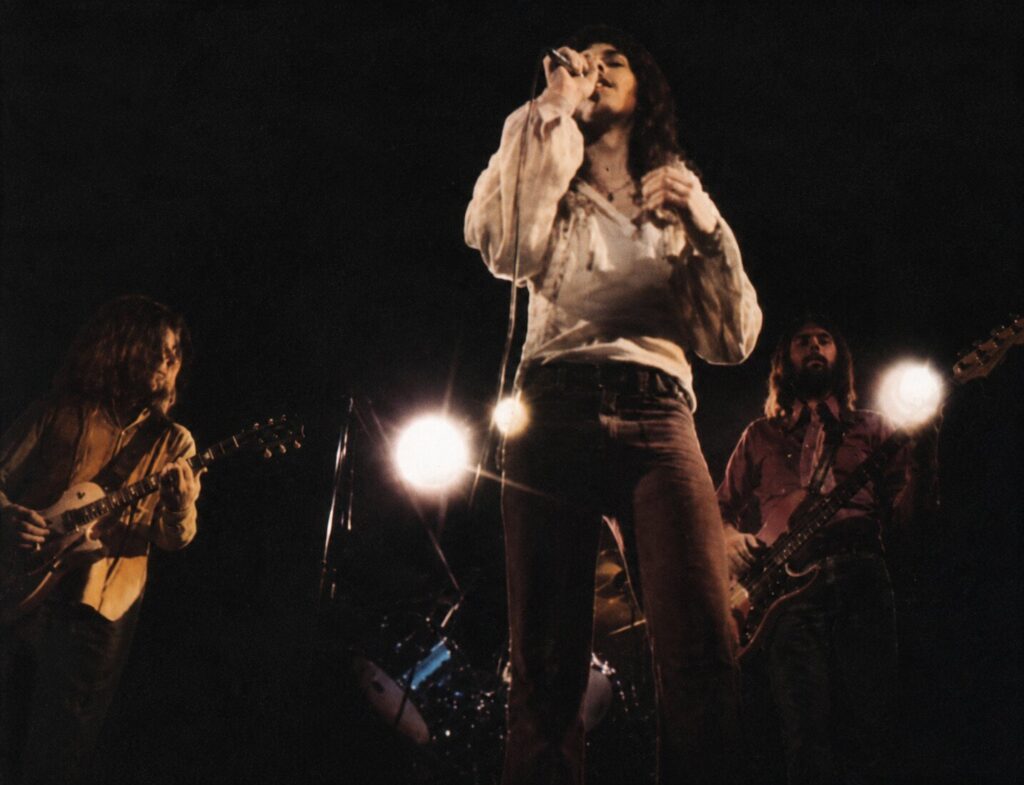
What happened next still sounds, in the telling, like the kind of coincidence now, Jones has learned to expect. “I’m in panic mode, what the hell am I gonna do, what am I gonna tell the record label, management, agents. Just at that moment, within a day or two, Chris Brown, lead guitar from the Unknown Blues, calls on the phone. He said, oh, g’day mate. I said, who’s this, he says, Chris, Chris Brown, Unknown Blues, remember? He said he was in London with his bandmates and wanted to play. He asked me whether I had any ideas. I said, do I ever, my band just went on strike. Do you think we can pull something together in two weeks?” The band member who had led the walkout got his response. “The guy who’s created the revolution in the band came back and said, well, what’s the answer? I said, you know what guys, I said, I’m really sorry to say this, but I gotta let you go, it’s not gonna work, I don’t have any more money. So bye. That was the end of them, and Chris Brown jumped on board with a red hot Aussie band, and some of those live recordings are on that Kala album. Oh man, it was an ass kicking rock band from down under.” The live tracks from that rescued lineup, recorded at the Marquee, were produced without credit by a familiar name from the Yardbirds. “Keith Relf did the same, he never got a credit on the album, he did the sound and the production on those live tracks.. If you want to hear it, I have it on my YouTube channel, one was called ‘Before You Leave’ and the other one’s called ‘Come On Around to My House.’”
Kala’s end was driven by the label rather than the group. Jones dates it to the moment ATV fired the general manager who had signed him as an album band and not a pop group. “ATV, the parent of Bradley’s Records, fired the general manager who signed me. He believed in my talent, and said, you’re an album band, you’re not a pop singer, and I said, no, I’m not, I said, we do serious music. So I signed up under those conditions. When they got rid of him, the management of ATV, who I consider old geezers, they were like in their late forties, in suits and ties, they called me in for a meeting, and they said, you know what, we’re gonna dissolve the band. I said, okay, why are you gonna do that? So, well, the way things are going, we just want you, and you’re the only one on contract anyway, so we’re gonna take all the equipment back.” What they wanted instead of a band, it turned out, was a very different kind of frontman entirely. ” They said, we want you to come up with a pop single. I wrote a couple of songs that I thought were good, but did not impress them enough, because I think it probably still had too much of a blues influence. They said, look, this is really what we want you to do. We want you to put on a glitter suit. And I’m looking at them thinking, these old geezers, they’re freaking nuts. We want you to put on a glitter suit and stuff a banana down your trousers. First of all, I thought, well, you think I’m not well enough endowed to put on a glitter suit, do I need a banana? And I was stunned, I was looking at him thinking, you guys are morons, you’re twenty years older than me, and you’re talking like you’re twelve years old. I said, I don’t think I can do that, no, that’s a big no. And they said, well, no, this is what we want, this is the way the trend, the music business goes, glitter, and Marc Bolan, and everyone, even Bowie, everybody, you gotta do this, otherwise, you know, we’re not interested. I said, well, I’m not doing it and they said that they weren’t interested. I asked them to let me go but they refused, they said, we’re gonna put you on this shelf, you’ll be a tax write off. I said, I’ll sue you, they said, go ahead, we’re ATV, give it a shot. So that was really the end of my career in England. I went back to Australia and formed the Phil Jones band.”
Back home, he started and formed a group with Steve Housden and Mal Wakeford, who both played with the Little River Band. “They really knew how to play in the pocket, always really right there for me as a singer, but just drove the music without overplaying. And it was a great band, we had a good run there. We played at what was known as a very popular venue called the Palm Beach RSL Club, and we packed that place out. We played at another good club in Sydney called French’s, packed that out too. We went down to Thredbo, the Snowy Mountains, the ski valley, and we did a residency there. We played a lot together, and Steve and I and Mal have remained really good friends over the years.” The band also recorded a live radio session that would resurface decades later. “We did a live radio show on 2JJ. It was a government run station, so there were no commercials, and it was purely devoted to rock music and creative expression. We did, I think, six live tracks, it went down well, helped us get more gigs. And I forgot about it. And then, it must be forty or fifty years later, Steve told me, I’ve still got those shows on cassette, he said, do you want them? I thought they’d sound like shit but were really good.”
America came next, first for a recording project that never materialised, then for good. In Woodstock he crossed paths with one of his own formative influences. “I met one of my early influences in the Unknown Blues with Paul Butterfield. It’s just nice to touch base with someone who influenced their music.” A stretch living in Manhattan produced two of the songs he now says get the most attention on his YouTube channel. “’Millionaire’ is, believe it or not, it’s become the most popular song on my channel. Everybody wants to be your millionaire, everyone doing all they can, but the last laugh is on us for causing such a fuss, there’s nothing else in the world you get so little for so much, will always be a star.” Later sessions in Pensacola, Florida, teamed him with the guitarist Ronnie Levine, and produced, almost by accident of geography, one of his own favourite pieces of songwriting from the whole American period. Driving down Interstate 40 through Tennessee, Jones passed a road sign for a place called Buck Snort. “I said, who would call a town Buck Snort? That is a ridiculous name for a town. I thought, I gotta put it in a song.” A little further along came a second gift, in a town called Toad Suck, and around the same drive he had fallen in with some travelling carnival workers on the road. “It’s how it is in America, funny names of towns. Well, Australia’s pretty funny too. So I put it in the song. I hooked up with my really great guitar player and good friend Ronnie Levine, he’s in Pensacola, he’s a great slide guitar player, you’ll hear that on Buck Snort, Tennessee, and it’s called, Snake Oil.”
The didgeridoo entered his life once he was back in Australia for a stretch, and he describes recognising it less as picking up a new instrument than as meeting an old idea in unfamiliar wood. “There’s something about this instrument that reminds me of a tambura, the drone. So I identified it as the harmonic resonance, aside from the one continuous note, there are these harmonics that ring out around the didgeridoo, around the tambura, and the one note in blues.” For the next decades, he and his wife took that instrument, and the breathing techniques behind it, across the United States in a motorhome. “My wife Jennifer and I, travelled for twenty years in a motorhome, sometimes doing three workshops a week. A lot of churches, universities, yoga studios, wellness clinics, schools, seminars, we took it everywhere.” He talks about the physiological case for the practice with the same unforced confidence he brings to everything else, and offers, without much prompting, one particular measurement of it. “We were at Olivia Newton-John’s house in Malibu one time, one of her healer friends was there with an EEG machine, he said, let’s measure your brain waves while you play, and after not even a minute or two, the theta wavelength flat lined, which is kind of like that point of deep, clear, focused consciousness.” What the work gave him, in the end, was something he says the band years never quite offered. “In a band, there’s you, and there’s a space, and then it’s the audience. And, you know, usually if you’re in a bigger band, you’re whisked off, you don’t get to see anybody. With this, I got to have some really personal contact with the people. I would be talking to them in the workshops. Yeah, so very fulfilling. It took the Quintessence experience to the next level, where it needed to be.”
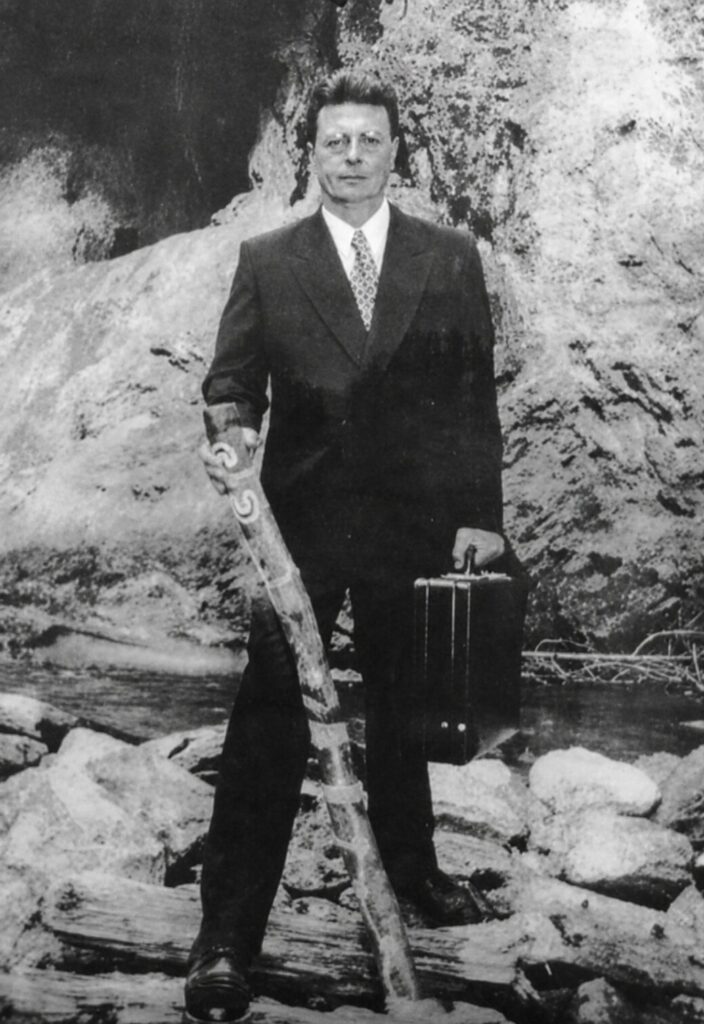
Asked why a group that filled the Royal Albert Hall and counted John Lennon among its admirers never quite achieved the lasting recognition of contemporaries like Hawkwind, Jones locates the answer in how abruptly Quintessence ended rather than the music. “They were definitely our peers, we’d double bill with Hawkwind, and we knew them. The difference was they stayed together. Had the band stayed together, we would have the same kind of legacy. Once I left, it didn’t last long. When you lose a key member of a band and you can’t replace it, it kind of takes a nosedive. And that’s why it ended so quickly, and that was the end of the legacy, other than what we left behind.” Quintessence lasted about four years. The songs, and the man central to the group, are still here.
Further information
COSMIC SURFER by Philip F. Marks (Author)