What’s the first thing that comes to mind when you think of classic rock? Definitely not horses, right?
You’re probably thinking about electric guitars, people with long hair, and shoulder amplifiers. But if you look closely, you’ll start to notice that horses are everywhere in the genre.
Okay, we’re not talking about literal horses charging down Churchill Downs, but symbolic horses. Wild ones, restless ones, freedom-chasing ones. And it kind of makes sense. Horses carry powerful symbolism, and it has been passed down for generations.
So, how did it end up in classic rock? Let’s find out.
“Wild Horses” Was Never Just About Horses
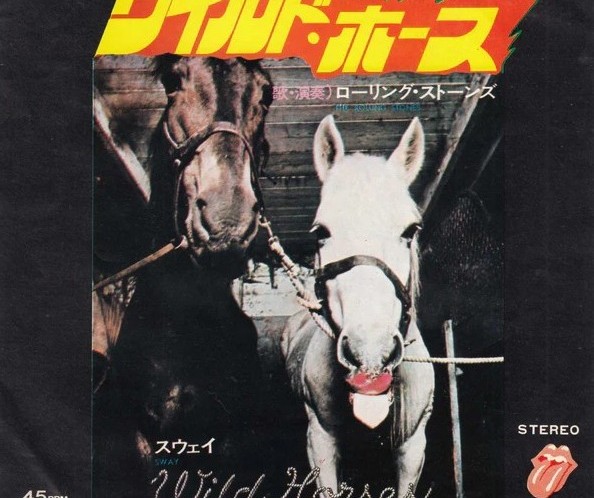
We first need to talk about the biggest example in rock that includes horses, at least in the name. Wild Horses is a song released by The Rolling Stones in 1971, and they weren’t writing a country song about livestock. They used wild horses to carry the symbolism.
There is a line saying, “Wild horses couldn’t drag me away,” which became one of the most recognizable metaphors in rock history. But what does this song represent?
Well, it is all about loyalty, stubborn love, and something untamable. What do you think when you imagine wild horses? Probably freedom, passion, choice, and power, right? Well, that’s exactly what the song is about.
It’s emotional and not really connected to horses. It just carries their symbolism most perfectly. Hearing the song sparks so many emotions. Some want to break free from life’s chains, while others get more equine vibes, and they’re looking to make a bet on an upcoming race like the Kentucky Derby.
Wild horses might not be part of the Kentucky Derby, but somehow, Wild Horses sparks up betting vibes or just horse racing vibes.
Yes, even betting is part of equine culture, and it also carries a lot of symbolism. If you don’t know much about wagering on racehorses, maybe you should check TwinSpires, just so you get the best expert advice before you make your final betting decision.
So, this song is all about strength, distance, power, and freedom, and it blends rock and horses perfectly.
“Chestnut Mare” and the Pursuit of the Unreachable
Then you have “Chestnut Mare” by The Byrds.
This is a song that gets closer to literal storytelling instead of being a piece full of symbolism. Just like the name suggests, this song is all about a man chasing a wild mare, trying to win her trust. Sounds familiar?
On the surface, it sounds like a folk tale, but once you dig deeper, you’ll understand that it feels like something else entirely. Again, we have to talk about symbolism. What did the writer try to say?
Well, the mare becomes a symbol for longing. For something beautiful that can’t be possessed easily. And when it comes to classic rock, this culture loves that kind of feeling.
The idea that freedom is both romantic and impossible to fully control inspired so many classic rock songs, and horses are the perfect way to explain this feeling.
Horses as Symbols of Escape
Now we’re going to a different era.
We’re traveling back to the late 60s and early 70s, which many might argue was the prime time of classic rock.
This was the time when being in a rock band meant you were instantly cool, and it was a time when young people were questioning everything.
But one thing people didn’t notice is how horses fit perfectly into that emotional landscape. Think about it. They represent motion, escape, wild-open fields, and breaking free from fences, which kind of reminds us of the 70s era, when all people wanted was to be free.
Even songs that didn’t explicitly mention horses but focused on the motion (running, galloping) captured the same energy and imagery.
The American West and Rock Identity
Ahh…we move to a sensitive topic for global rock fans. It’s safe to say that classic rock leaned heavily on American imagery. You have deserts, highways, choppers, open plains, and horses.
They evoke the West, individualism, and the frontier spirit.
Artists borrowed that symbolism because it reinforced the larger narrative: freedom over conformity.
A horse running across open land says something instantly, without explanation.
You don’t need a footnote. You feel it.
Why the Image Still Works
Here’s something interesting. Even decades later, those songs still resonate.
Why? Because the symbolism hasn’t faded.
When someone hears “Wild Horses,” they don’t picture a stable. They picture something untamed and emotional. Equine imagery survives because it taps into something primal.
Movement. Strength. Independence. Those themes don’t age.
It Wasn’t Accidental
Classic rock writers were deliberate.
They could have chosen cars, trains, or planes, and sometimes they did. But horses carried something more timeless. Machines represent speed. Horses represent spirit.
There’s a difference.
And rock music, especially in its golden era, often aimed for the emotional rather than the mechanical.
That’s why the imagery stuck.
Final Thoughts
So, horses heavily influenced classic rock, whether you like it or not. We think that horses played an important role in artists’ expression in songs, all because of how great they are at carrying symbolism.
Horses have been around us for thousands of years, and they are still here for a reason. Classic rock always had one core idea: “run free,” and horses are the best way to explain those emotions.