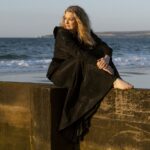
1971, Tom Newman at the Majestic console in Shipton Manor house (Photo credit Simon Heyworth)
By Jason Barnard
There are few figures in British music whose fingerprints run so invisibly yet indelibly through music history as Tom Newman. You may know Tubular Bells as the record that launched Mike Oldfield and bankrolled a Virgin empire. But what’s less remembered is the fact that Richard Branson only had a studio because it was Tom Newman’s idea to build it. And the first person to see the potential in the Tubular Bells demo? Yes, that was Tom too.
Newman’s memoir, Fine Old Tales, captures a life that veers from psychedelia and DIY innovation to raucous misadventure and quiet obsession with sonic detail. Speaking with the same mixture of honesty and mischief that made his production style so human, he reflects not just on the making one of the most improbable blockbusters of the 1970s, but on the strange journey around it.
This is an interview extract of a full interview on The Strange Brew.
How did you meet Richard Branson for the first time?
I had a girlfriend called Jacqui Byford, and I was living with her in a flat in Cleveland Square. I’d brought in two old military ferrograph tape recorders and I was bouncing from one to the other, trying to experiment with the sitar and all sorts of stuff. She was completely pissed off with me, it was upsetting her entire lifestyle. So she introduced me to Richard mainly to get me out of her flat. It wasn’t a lifetime romance, it was a youthful thing. Through that introduction it started the whole Manor thing. I moved out of her flat immediately, to her great relief and it all went from there.
Because you had an idea to build a recording studio and wanted Richard to fund it, is that right?
Yes, Jacqui introduced me to Richard, he had a magazine called the Student Magazine, and Jacqui was part of the team who went out selling it on the streets. I recognised instantly he was a true entrepreneur. I thought, “This guy can’t fail, he’s bound to be big.” So it occurred to me that if I could get him involved in building a studio, it would benefit me. And he was very susceptible to that idea. That’s how The Manor came about, really.
And you were involved in building the first studio.
Yes. Richard bought The Manor with a loan from his auntie Joyce. It was £30,000 for 20 acres of land, a 20-bedroom house and a swimming pool. Ridiculous, really, the value, it’d be worth several million quid today. Once Richard got it, I moved in. Fortunately it had a great big squash court building outside the house, a perfect situation for a studio. So that’s where we built The Manor studios, and it all started from there.
Because you first worked with the Bonzo Dog Band, didn’t you?
Yes, they were the first official band. John Cale came and Robert Palmer came while we were still building it. We did some sessions with them, but they never got signed to Virgin because the record company hadn’t developed at that time. The record label didn’t really begin until I found Mike Oldfield and we started Tubular Bells. That was the first time Richard was convinced he could build a label and start something big from Michael.
Was it right that Mike arrived at The Manor as part of a different group? Was he doing session work?
Yes, he was just trying to make a living doing jobbing guitar playing. He was playing with the Arthur Louis Band. I never actually met Arthur, but Michael was playing with him. It wasn’t even in the proper studio, I’d set up some equipment in the library of The Manor and we were working there. Michael came up one day and gave me this tiny three-inch reel of demos he’d done. He wanted me to listen to it and he pestered me constantly. Every day he would come up and say: “Have you listened yet? You’ve got to listen to this because it’s good.” Eventually I did listen to it. In fact, I’ve just discovered the original tape recorder I listened to it on. It’s upstairs now, and I’m cleaning it up and making it work. I was so impressed with his demos that I went to Richard and said, “I really think this is worth looking at.” Richard didn’t really take much notice, but his cousin Simon Draper had just joined the organisation. He was a South African with gigantic musical knowledge and experience. He recognised the potential in Michael, and he encouraged Richard to let me produce Tubular Bells. That’s where it came from really.
How close were those demos in sound to what you eventually produced with Michael?
Honestly, I can’t remember the demos now. Apparently they’re available on YouTube, but I haven’t heard them. All I knew was that I was so impressed with Michael’s guitar technique and his ability to just produce melody and bits of stuff that they reached into my soul. I was very impressed. I can’t remember the demos but I knew that he was something special. So I was totally behind the whole production once Richard said, “Give him some time, but don’t let him get in the way of earning money.” Richard saw The Manor as a money-making scheme, and he didn’t want to risk me wasting time and money on something that might not happen. But luckily Simon Draper saw Mike’s potential almost immediately. So we started, and it soon became obvious it was something special. So that’s how it evolved.
On the one hand, the music wasn’t commercial in a traditional song structures, but you could tell there was something special I assume?
Exactly. That was the risk factor that Richard was worried about. Luckily Simon Draper had far more musical experience than Richard. At that time when we offered up Richard the idea, his favourite tunes were the ‘Theme from Borsalino’ and ‘Bachelor Boy’ by Cliff Richard. That was the entire extent of Richard’s musical understanding. We were a bit worried about that but luckily Simon backed us up 100% so we could override Richard’s inability. It was funny, when we were doing Tubular Bells, Michael and I developed this idea that anyone who didn’t like it was “cloth-eared nincompoops.” So it applied to anyone who didn’t get it. Richard was definitely a cloth-eared nincompoop, but Simon wasn’t! Nobody working at The Manor imagined it would do what it did. I can’t take Richard out of that loop because once he recognised that there was something there. His recognition of it was mainly 70/80% due to Simon Draper’s conviction. Richard grabbed the idea and went for it. He took it to MIDEM and everywhere. He didn’t understand it but because others were convinced he took on the whole idea and went for it.
And you recorded when other bands weren’t booked in, during the off time.
It was very early days, we’d just taken delivery of an Ampex 16-track so it was all done on 16 track. The first band in was the Bonzo Dog Doo-Dah Band. I was recording Legs Larry Smith and the whole of that crew, it was great fun. It was very useful because we only had Michael in the down moments when the Bonzo Dog Band went off to asleep for 24 hours, we’d do Michael’s stuff. But the contrast between the Bonzo Dog Band and Tubular Bells, was a bizarrely interesting dichotomy muscially. It relieved me from the concentration on Michael’s things as I had to concentrate deeply to get all that stuff right. Tubular Bells was a very difficult album to produce because there was engineering as well. It was complex, musically it was like a piece of classical music. So having the contrast of the Bonzo Dog lunacy was a great relief and very helpful for my psyche, to keep me sane. [laughs]
The caveman section is quite a different part.
That happened because the management, Richard and Simon, were worried there were no words, nothing apparently commercial. The caveman bit was the idea of Michael kind of coming out of his world and applying something creatively to the rock world. It was a rock piece that we stuck in. Having put the whole backing track in. I took Michael down to the Jolly Boatman pub down the canal from The Manor and got him drunk one night and bought a bottle of whisky on the way back. He went in and did the whole caveman thing by himself. I set everything up for him all he had to do was press the record button and go for it. He had some pornographic magazines, well not really pornographic, tits-and-bum magazines that he looked at while he was shouting and screaming while doing the caveman bit. I don’t think anyone really knows that, so I’m not sure whether I should have told you! [laughs]
And Michael’s guitar sound, did you help shape that?
Oh yeah. We tried all sorts of stuff. There’s a little amplifier I’m selling in America right now that was the best amp he could have played through. But for some reason he didn’t like it because it was too small. He had a thing about everything needing to be bigger than it should be. So we DI’d the guitars into the mixer by fiddling the midrange. That made him happy so we used that for everything. He’s kept the same sound and has now got it computerised. He can plug in anywhere and get the exact same sound.
Given that Tubular Bells was almost classical in construction, how was it working with tape? That must have made things harder to work with.
No, we had Dolby. It was two-inch tape and a set of sixteen Dolbys, which nobody uses now because it’s all gone digital. The Dolbys were beneficial on the quiet part, particularly on Side Two. It was very different to the end of Side One. It’s a lyrical and gentle piece, the opening section of Side Two. It was important to have the most dynamic range we could get. But the Dolbys worked fine for that. One of the biggest problems we had from it was the mastering and cutting of it. EMI who were the only mastering and cutting company that Richard had a deal with. They refused flatly to cut anything they considered as rock to cut it on virgin 80-gram vinyl with classical protocols. The first test pressings they did make were terrible, noisy, unusable, especially Side Two. Richard eventually got heavy with EMI and got them to cut it on virgin vinyl, that sorted it.
And the mixing process, was it all hands on the desk?
Oh God, yes, it was a complete nightmare. There were four or five ladies who looked after us at The Manor back then, and a couple of guys who looked after the cars, and someone else who looked after plumbing and electricity and stuff. We had everyone in the studio for the mixes. I devised a great long track sheet by sticking a load of A4s together and drawing a great long line down the middle so we could do the whole of one side in one go. The track sheet was marked out where things had to change in a radical way. Everyone was up behind the mixer. I’d say, “Right, Penny!”, and Penny would turn up the echo on something at a certain point. It was fairly well organised and exciting because nobody really knew what they were doing, except they were told to turn a particular knob on the mixer when I told them to. It all worked out. We must have done 30 or 40 different mixes, and then I edited it all together.
Were you surprised when it became as successful as it did?
Oh God, absolutely. [laughs] We had no idea that it was going to work. But that’s all down to Richard really. He’d made all this commitment to expenditure, time, energy letting me build The Manor in the first place. I’m sure there were times he doubted whether he’d made the right decision. But once we’d come up with the product, Richard wouldn’t let go then. He was a very determined and lucky chap. He took it everywhere and to everybody. That’s what made it work. I just provided the product but Richard made it work.
Further information
Tom Newman Autobiography: Fine Old Tales
Full interview here at The Strange Brew
Interview undertaken on 17 October 2025