By Scott Shea
The 1960s was truly a unique decade. It was a cultural, social and political melting pot unprecedented in the modern era, but inevitable as the influence of mass media continued to blanket Western culture like morning dew. Because of film, television and radio, icons, legends and villains rolled in like thunder, embedded in the social fabric at breakneck speed and became better known than luminaries like Abraham Lincoln, Napolean and Alexander the Great. It’s why when I write a title like the one that accompanies this article, many people will scratch their heads and wonder who this could be, because these are three artists who land in opposite corners of the musical landscape. But inspiration can make for strange bedfellows, and for these three, it came from a little-known Greenwich Village folk singer named Jake Holmes, who could often be found at the Bitter End and other local clubs, captivating audiences. With his help, the Four Seasons and Frank Sinatra created their most ambitious albums, and Led Zeppelin composed their first bona fide classic. So, how come so few people know who he is?
Once Upon a Coffee House
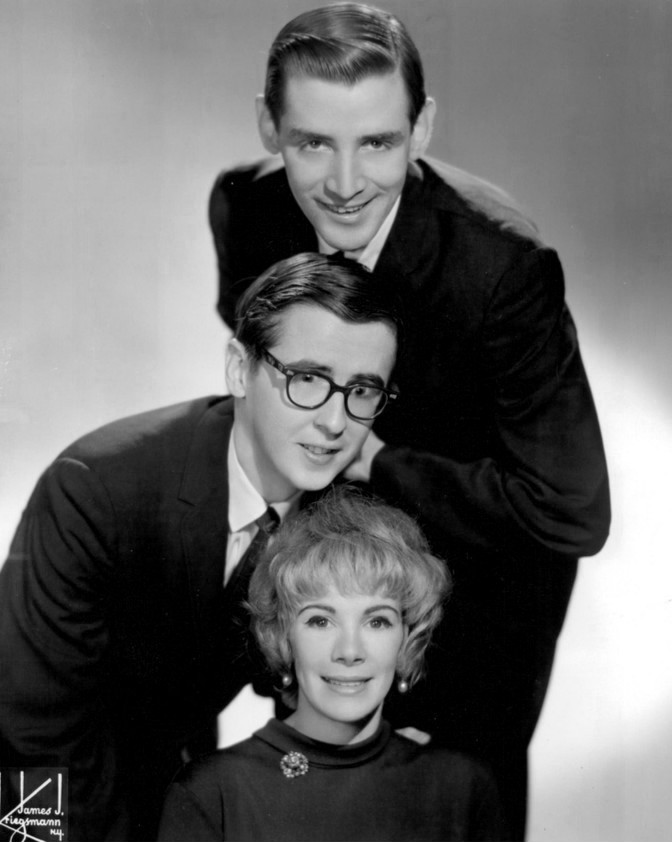
Jake Holmes came to New York City from San Francisco by way of Bennington College in Bennington, Vermont, at the height of the folk boom in the early 1960s. He was one half of the singing folk comedy duo Allen & Grier with his then-wife, Katherine, who released one album on the FM called “It’s Better to Be Rich Than Ethnic” before splitting professionally and personally. For a short period, Jake joined folk singer Tim Rose’s backing band the Thorns right around the time he reworked the Billy Roberts song, “Hey Joe” into a slow, dark blues that Tim would claim ownership of, only to have the Jimi Hendrix Experience co-opt his arrangement a couple of years later. Fred Weintraub, owner of the Bitter End, fancied himself the next Albert Grossman and became Jake’s manager when he branched out into a solo career after his divorce. In 1964, he put him together with stand-up comedians Jim Connell and Joan Rivers to form the comedy trio, Jim, Jake & Joan. The team lasted approximately one year but were together long enough to have their trademark “News, News, News” bit filmed for the 1965 low-budget folksploitation film, “Once Upon a Coffee House.”
After a failed attempt with a rock and roll combo, Jake decided to go solo again at the urging of his then-girlfriend. It wasn’t anything he hadn’t already considered. He’d even written and performed a few serious songs that met with good audience response at the Bitter End, so he decided to pursue it. His music was heavily, but not completely, folkish, with a sharp edge that was more reminiscent of Gordon Lightfoot than Bob Dylan. He had an incredible advantage in Weintraub, who booked him twice a week at the Bitter End and whose tenacity secured him a record deal with Tower Records, an EMI American subsidiary best known as the U.S. distributor for Freddie & the Dreamers, mostly based on his potential. Up to that point, Jake had little to show but his creativity and a small but growing fanbase. Nevertheless, EMI wanted in on the American folk scene, so they offered him a two-record deal in late 1966 and released his debut single in February 1967. In June, as the Summer of Love was blossoming, his first album, “’The Above Ground Sound’ of Jake Holmes” was released, followed by promotional efforts at folk festivals and in folk clubs across the country. In November, he could even be seen on Clay Cole’s Diskotek on WPIX-TV in New York alongside artists like Aretha Franklin, the Association and the Doors.
Jake’s two albums for Tower are, in a word, unclassifiable. “The ‘Above Ground Sound’ of Jake Holmes” featured a two-guitar and bass ensemble that played on an eclectic mix of original psychedelic folk songs, which ranged from gentle ballads to social commentary to trippy, in-your-face rockers. The entire album possessed a dark moodiness encapsulated by not only the music, but also by Jake’s thin, disembodied vocals. His follow-up, “A Letter to Katherine December,” was a continuation of his acid-folk direction with several songs, particularly “Leaves Never Break,” aimed at his ex-wife.
Jake could still be seen regularly at the Bitter End, with the audience growing a little more packed each time. There he would stand, lean and lanky in a suit and turtleneck, with a modified Beatles haircut and long sideburns pressed up against the microphone with an acoustic guitar. With Rick Randle on bass and Teddy Irwin on lead guitar, he’d stare intently at the audience while performing one of the highlights from his first album, “Genuine Imitation Life.” The harsh social commentary pointed an accusatory finger at suburban ambition and hypocrisy in a minor chord progression that gradually built to a soft crescendo, which captivated audiences. One new fan who could often be seen at Jake’s Bitter End shows was Bob Gaudio, founding member of Frankie Valli & the Four Seasons and their principal songwriter. He became obsessed with “Genuine Imitation Life” and imagined its possibilities. He’d been looking for a way to move away from the standard Four Seasons fare and believed that Jake Holmes provided an opportunity. In the spring of 1968, he invited the Greenwich Village folk singer to write an album’s worth of songs with him. Jake accepted.
Changing Colors
Frankie Valli & the Four Seasons took a long time to get going. By the time of their debut hit “Sherry” in the fall of 1962, three-quarters of the group were already in their 30s and had been making records under various names for the better part of a decade. Bob Gaudio was a lot younger at age 20 but was already a music veteran with his band the Royal Teens, who’d gotten started professionally in 1956 while he was still in high school. Founding Four Seasons Frankie Valli and Nick Massi both grew up in the Italian First Ward in Newark, New Jersey, while Tommy DeVito grew up in nearby Belleville. Bob came from Bergenfield, up in the northeastern corner of New Jersey, right across the Hudson River from the Bronx. Frankie was gifted with a powerful falsetto and started out singing at the age of 17 in the Variety Trio, which already featured Tommy and would eventually include Nick. Together, they sang all the songs in the Hit Parade and, of course, the Italian classics.
Frankie and Tommy graduated to rock and roll in 1956 when they formed the Four Lovers with Henry Majewski and Tommy’s twin brother Nick. They cut an album full of R&B covers and a few singles for RCA Victor that all sank without a trace. At the same time, up in Bergen County, 15-year-old Bob Gaudio, his friend Tom Austin and the Royal Teens had much better luck with their campy original hit, “Short Shorts.” It peaked quickly at #3 on Billboard during the early months of 1958, and earned them a contract with ABC-Paramount and a signature song of the early rock and roll period. Nearly two years later, after the fruits of “Short Shorts” had run out, Bob Gaudio left to replace Nick DeVito in the Four Lovers shortly after the two groups appeared together on “The Buddy Deane Show” on WJZ-TV in Baltimore, Maryland.
A few months later, the quartet signed a three-year contract with producer Bob Crewe, also a Belleville native, to be his male backup singers. In an effort to make lemonade out of a lemon, they’d recently changed their name to the Four Seasons after a failed audition for a cocktail lounge in a New Jersey bowling alley that bore the same name. The dashing 30-year-old producer who looked like he belonged in Henry Willson’s stable of beefcake actors had been active in the music industry since 1953 as a writer, arranger, producer and singer. But writing and arranging was his strong suit and, along with Frank Slay, he’d composed and/or produced nearly half a dozen hits by the time he teamed up with the Seasons, including “Silhouettes” by the Rays, “Lucky Ladybug” by Billy & Lillie and “Tallahassee Lassie” by Freddy Cannon. The pairing was kismet for Bob Gaudio, who was still honing his own songwriting chops, but the payoff of their new partnership would take a couple of years to hit.
They released a series of failed singles under names like Billy Dixon & the Topics, Alex Alda, the Village Voices and Turner Di Sentri, and sang behind a litany of nobodies like Lenny O’Henry, Virgil Holmes and Miss Frankie Nolan. It may have seemed arduous at the time, but the experience honed their harmonies and got them comfortable with Crewe. Things started clicking when Nick Massi, who Frankie Valli has referred to as his mentor, replaced Henry Majewski in the summer of 1961. They finally took off when their Vee-Jey Records debut, “Sherry,” written by Bob, hit #1 in late 1962 and stayed there for five weeks. Almost immediately, Bob Crewe and Bob Gaudio formed a songwriting partnership that triggered an incredible run of Top 40 hits for the next five years, including the four additional #1 hits “Big Girls Don’t Cry, “Walk Like a Man,” “Rag Doll” and “Let’s Hang On.” Their union kept the Seasons relevant in an incredibly competitive mid-1960s market that also featured self-sustaining hitmakers like Brian Wilson and Mike Love of the Beach Boys, Felix Cavaliere and Eddie Brigati of the Young Rascals, John Lennon and Paul McCartney of the Beatles, and Mick Jagger and Keith Richards of the Rolling Stones. The Four Seasons’ approach to their singles and albums progressed just as ambitiously as their competitors’ and met with equal success. Bob Crewe’s unique original arrangements ran neck and neck with top contemporaries Burt Bacharach, Teddy Randazzo and Smokey Robinson, and his magnificence can be heard on big hits like “Tell It to the Rain,” “Save It for Me” and “Opus 17 (Don’t You Worry ‘Bout Me).”
But in June 1967, the Beatles changed the game once again with the release of “Sgt. Pepper’s Lonely Hearts Club Band,” a vast musical departure from their mop-top sound that kicked the doors wide open for backwards guitars, harpsichords, contrasting scales and concept albums. It caught many of their contemporaries off guard, who scrambled to their respective studios and holed themselves up for months until they came up with a fitting response. From it, we got the Rolling Stones’ “Their Satanic Majesties’ Request,” The Who’s “Sell Out,” the Kinks’ “Village Green Preservation Society” and the Four Seasons’ “Genuine Imitation Life Gazette.” That’s when Jake Holmes came in. He’d spent his entire career rubbing elbows and hobnobbing with Greenwich Village folkies and comedians. Now, he found himself spending most of his days in Bob Gaudio’s Montclair, New Jersey mansion, sharing space with bennies, mobster wannabes and bone-crushers in three-piece suits. It stoked his high anxiety, but Bob kept the environment cool, calm and creative, and the result was an incredible batch of songs of which any artist would’ve been proud. The crown jewel was Bob’s majestically reworked version of Jake’s “Genuine Imitation Life,” which featured a cool vocal from Frankie and a faux “Hey Jude” coda. Still inspired by the song, he titled the album “The Genuine Imitation Life Gazette.”
Their shared goal was a contemporary statement on the rapidly changing social landscape and tearing down of cultural norms that the Western world was currently witnessing, and Jake welcomed the project. He’d been writing songs like this since the early 1960s, and his “It’s Better to Be Rich Than Ethnic” album with his ex-wife was loaded with sardonic social commentaries that took shots at the wealthy, racial stereotypes, white Southerners and even folk singers and folk songs, albeit in the name of comedy. Jake was in his wheelhouse, but this approach was completely new to Bob, and he welcomed the challenge. “The Genuine Imitation Life Gazette” marked a notable departure for the band stylistically, but their signature sound was still present. Even through early 1968, the Four Seasons’ singles were still charting in the Top 40, but things had slowed down, and it looked like rough waters were ahead. Bob’s vision was not going to reverse that trend, but that was deliberate. He desired that the Seasons take a bold step into the emerging post-Monterey Pop underground rock scene. It was their first record without Bob Crewe in the producer’s chair, but he did serve in a supervisory capacity, and his influence on Bob Gaudio could still be felt in his lavish arrangements. Jake’s lyrics cut through the Four Seasons’ previous parameters with songs that dealt with the complexities of relationships, not just between lovers, but also among family, neighbors, and subcultures. The album shocked longtime fans who were collectively confused at its content, from its provocatively titled opening track, “American Crucifixion Resurrection,” which sounded like an opening number to a musical, to its long song lengths and lavish album cover. Before this release, outside of their 1965 mock live LP, their longest song was their 1966 hit version of Cole Porter’s “I’ve Got You Under My Skin,” which clocked in at 3:30. “The Genuine Imitation Life Gazette” had three songs that were over six minutes long and the average song length was 4:29.
The Four Seasons’ label, Philips, really got behind Bob’s concept and gave him complete creative control over not only the content of the album, but also its extraordinary packaging, which mimicked a daily newspaper three years before Jethro Tull did it with “Thick as a Brick.” Released on January 25, 1969, the record was a sight to behold with a wraparound cover that spanned six pages and was supplemented by an eight-page insert. The 14 total pages featured a front page, sports, financial, and home sections, classified ads, a full-color comics section, and a grocery store circular. To lend an air of authenticity, its articles were specially written for the cover by professional journalists and Jake, and all Four Seasons can be spotted in many of the photographs accompanying them. Phillips went even further by putting $100,000 towards promotion (the equivalent of over $900,000 today), which sounds like chump change now, but was rare in 1969 for a rock and roll act. In addition to hitting all the normal national outlets in major metropolitan areas, they purchased ads in many college newspapers in an effort to reach younger listeners. Philips even paid for a 15-page spread in the January 25th edition of Cash Box Magazine, which featured a range of promotional ads and articles that profiled the group, the album and many of the non-musical people responsible for its final production.
All that was impressive, but the strength of the album still lay in the songs. Bob and Jake took six painstaking months to put something cohesive together, and they delivered. They were indeed a collection of social commentary songs, but many featured parody and satire, and no stone was left unturned. It was a picture of 1969 with topics ranging from the United States’ current political climate, suburban gossip and hypocrisy, divorce, the draft, prejudice, raising children, the Golden Age and life and death. Bob and Jake emerged as a professional songwriting team, utilizing techniques like succinct storytelling, verbal irony, call-and-response and alliteration. My personal favorite, “Wall Street Village Day,” does an impeccable job with the latter.
“Uptown people on the corners watching other people play/
And while the people watch them play/
The players watch the people/
On a Greenwich Village Day.”
Their arrangements utilized tempos never used by the group and incorporated instrumentation like the harpsichord, backwards cymbals, brass and woodwind sections, lower piano notes and a ragtime piano played through a wah-wah pedal. These elements added a dash of psychedelia that wasn’t too overpowering and made the group sound positively contemporary. It was like nothing that came before or after in the entire Four Seasons’ catalog and, in my opinion, the best album that followed the template set by Sgt. Pepper. But despite the album’s quality and Philips’ generous promotional commitment, it bombed. When all was said and done, it only peaked at #85. Three singles were released from the album, and none of them charted any higher than #95. Most major publications blew it off as a protest album or the Four Seasons’ attempt at relevancy. The counterculture newspaper, the Berkeley Barb, put prejudices aside and called it “possibly the greatest piece of combined satire and critical social commentary ever produced by a recording company.” But the overall reception was a disappointment to Bob and Jake, and the lack of success drove a creative wedge between the group and founding member Tommy DeVito, who left in April 1970. Frankie Valli also had misgivings about the album, but eventually came to embrace it.
But the years have been kind to “The Genuine Imitation Life Gazette.” It’s become a fan favorite and has gained a cult following by music lovers. In the years following its release, it acquired several famous fans, including John Lennon, who told Bob Gaudio of his admiration for the album at a dinner party during his “Lost Weekend” period and that its cover served as an inspiration for his and Yoko Ono’s 1972 album, “Some Time in New York City.” Motown founder Berry Gordy Jr. told Bob when he signed the Four Seasons to his MoWest subsidiary in 1971 that he would play “Saturday’s Father” at his Monday morning creative staff meetings to “stimulate them to do something different.“ In a 2007 interview with Jersey Boys Blog, Four Season Joe Long, who replaced Nick Massi in 1965 and served as an assistant producer on the album, told the interviewer that he was very proud of that album and still plays on occasion. But there was another fan of the album, who came from a town only three PATH train stops away from Newark Penn Station, who showed his appreciation more tangibly by enlisting Bob Gaudio and Jake Holmes to fashion a concept album especially for him.
A Pawn and A King
Hoboken, New Jersey’s own Francis Albert Sinatra was the first pop musical icon in a state that’s given us some of the greatest ever and he’s arguably the best of them all. By the time “The Genuine Imitation Life Gazette” was released, he was entering his 30th year as a recording artist. He’d started with Harry James & His Orchestra in June 1939 and graduated to be the male vocalist for Tommy Dorsey’s band six months later, where he stayed until 1942. In that time, he’d become the nation’s preeminent male vocalist, and, when he signed with Columbia Records as a solo artist, he became a Top 10 fixture as well as a movie star. Through the remainder of the decade, he could often be seen dancing alongside Gene Kelly in musical films such as “Anchors Aweigh,” “Take Me Out to the Ballgame,” and “On the Town.” He endured a career slump in the early 1950s but made a comeback with his supporting role in the 1953 Fred Zinnemann classic, “From Here to Eternity,” which won him an Oscar. His fortunes on the pop charts also changed, with hits like “Young at Heart,” “Learnin’ the Blues,” and “Love and Marriage,” and he held his own in the early rock and roll era.
Even the mid-1960s were kind to “Ol’ Blue Eyes,” who continued to chart with big hits like “Strangers in the Night,” “Summer Wind,” and “That’s Life,” but things started to cool off as the Summer of Love faded into the hard rock and sunshine pop of the late-1960s. By 1969, Frank Sinatra was struggling for relevancy. He was still charting, but not as high as he desired, which was hard on his ego, and his last #1 hit, the wistful “Somethin’ Stupid” with his hit-making daughter Nancy, was two years old. Beginning with “My Way,” he began focusing on songs of age and wisdom that were greatly enhanced by his warm, rich baritone. But it peaked at a disappointing #27 and was only his second Top 40 offering in two years. That’s when he was approached with the idea of a concept album by none other than Frankie Valli. The two Jersey boys had gotten to know each other back in 1966 when the Four Seasons filled in last minute for singer Jimmy Roselli at a benefit concert organized by Sinatra’s mother. Sinatra was intrigued and loved what he heard in “The Genuine Imitation Life Gazette” and asked Bob and Jake to write him a batch of songs. He was a songwriter aficionado and throughout his three-decade-long career recorded entire albums dedicated to songwriters like Richard Rodgers and Lorenz Hart, Johnny Mercer, Antonio Carlos Jobim, and, more recently, Rod McKuen. There’s even a school of thought that a few of his past albums, like “In the Wee Small Hours of the Morning,” “Come Fly with Me” and “Only the Lonely,” were the original concept albums, but this project would be something completely different. It would indeed have a dedicated pair of songwriters, but there’d be a story arc that tied it all together, which Sinatra had never done. Bob had grown up a Sinatra fan, so he was at all times honored and frightened by this task. Jake was never really a fan but became one after seeing the care and precision the legend put into his craft.
Sinatra was old school and not tedious when it came to creating product like many modern rock artists, so Bob and Jake had to work quickly. Jake moved into Bob’s Montclair mansion so they could work all day, every day, and to expedite things, Bob handled the arrangements while Jake wrote the lyrics. They came up with something completely different by fashioning a story of a middle-aged man whose wife recently left him and their two teenage sons to become a career woman, and the entire album explores his attempts at picking up the pieces. The first side deals with the shock of her absence, and the second side tells of his desperation and descent into loneliness. It fit Frank perfectly. He’d already had his fair share of broken marriages, and his most recent one with Mia Farrow was still fresh, so he could easily lend authenticity to their songs. They gave the album a small-town feel by placing all of the events in the upstate New York city of Watertown, which they also titled the album.
In less than six weeks, Bob and Jake composed 10 songs that mixed love, heartache, melancholy, denial, self-examination, selfishness, and all the byproducts of abandonment, which ended with a heart-wrenching twist. They presented the demos to Sinatra, and he loved them. Recording commenced in July and August of 1969, and everything went smoothly. Sinatra had earned a reputation of being hasty in the studio and hard-headed, but worked well with Bob and Jake and even agreed to overdubs instead of singing with the orchestra. The most difficult task was arranging the collection of extremely sad songs in such a way that the listener wouldn’t be so bummed out that he’d turn the record off, and that’s where Sinatra’s magic came in. He had the uncanny ability to phrase the lyrics in such a compelling way that the listener couldn’t help but keep the record playing even though his heart was being ripped out. One brilliant aspect to Bob and Jake’s songs is that, from start to finish, it seems as if Sinatra is singing directly to his estranged wife and talking about things important to them, but, in the end, it’s just a compilation of thoughts kept to himself. The album almost serves as one giant letter that was tucked away in a dresser drawer, only to be discovered sometime later. The mendacity shines through in songs like “Michael and Peter,” “What a Funny Girl (You Used to Be)” and “What’s Now is Now.” Jake reached deep down and turned the heartache from his divorce from Katherine years earlier into 10 beautiful songs, which were augmented by Bob’s majestic arrangements, and the final result was fresh and exciting. It didn’t sound as if they were attempting another “Genuine Imitation Life Gazette” or a Frankie Sinatra & the Four Seasons album.
“Watertown” displayed a more vulnerable Sinatra, crushed by the abandonment of his wife, and was a continuation of depressing fare. Some fans surely thought that had run its course with his previous LP, “A Man Alone,” written by Rod McKuen, who himself was no stranger to writing depressing songs, but they were wrong. Unfortunately, “Watertown” performed worse, only peaking at #101 with its highest-charting single topping out at #88 in Billboard and #118 in Cash Box. Although the reviews were mostly positive, sales were disappointing, and the whole lukewarm reaction was eerily similar to “The Genuine Imitation Life Gazette.” Jake and Bob could certainly make quality records, but ones that didn’t sell, and that was a problem. After “Watertown,” they went their separate ways creatively, with Bob getting back to the Seasons’ next album and other side projects, and Jake kicking off a European tour after signing a new record deal with Polydor. Frank’s follow-up was a bossa nova album that charted a little higher than “Watertown” and announced his first retirement in June 1971.
Further information
Part 2: Jake Holmes, Led Zeppelin and the Battle Over “Dazed and Confused”