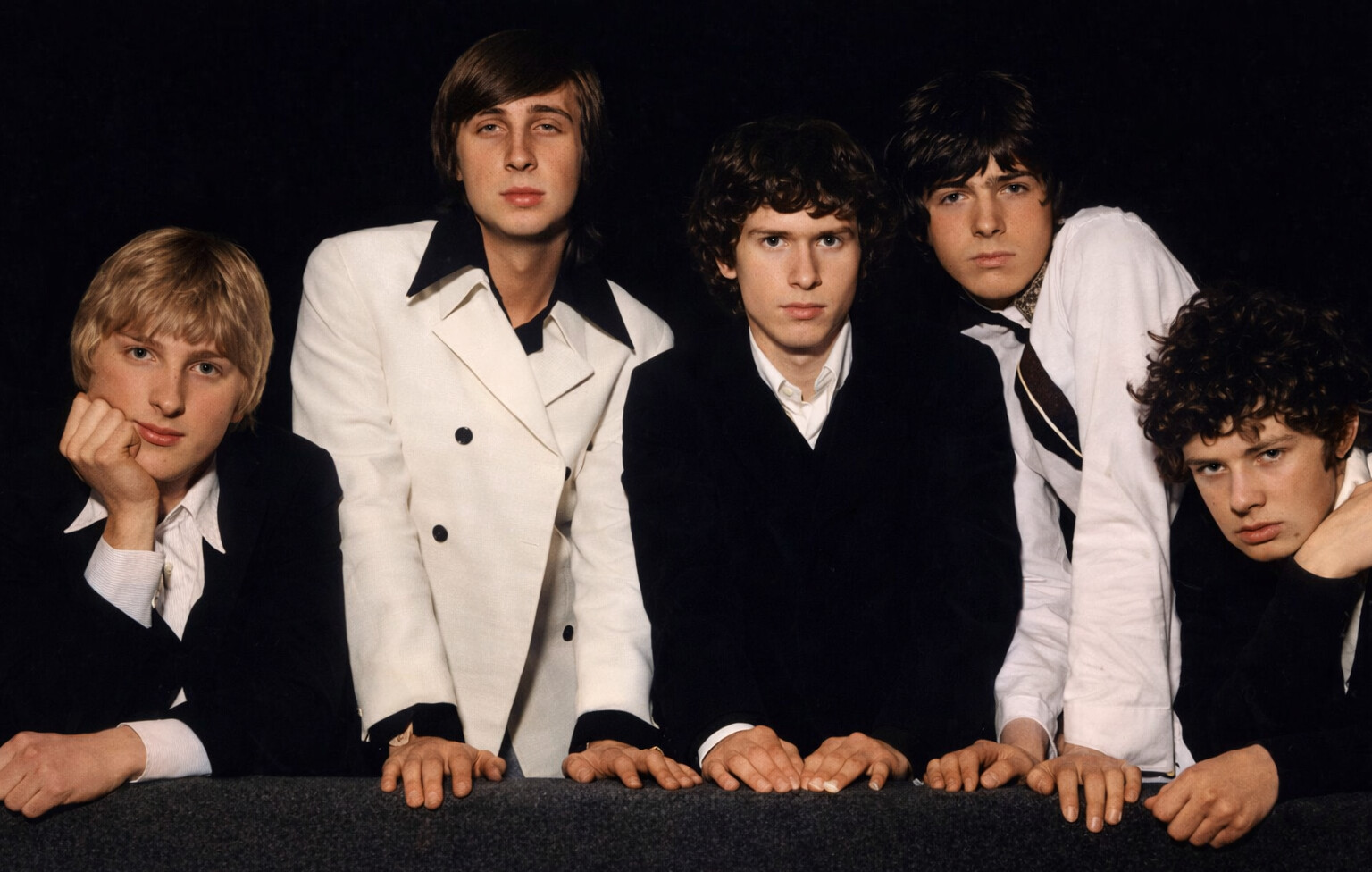
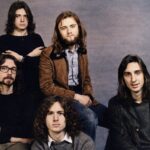
Genesis publicity photo, colourised, 1968: Anthony Philips, Mike Rutherford, Tony Banks, Peter Gabriel, Chris Stewart
Scott Shea charts Genesis’s evolution from private school amateurs to prog pioneers. Part one covers the Charterhouse years through to 1970, just before two working-class musicians arrived to complete the group’s most celebrated lineup. It begins, as all the best origin stories do, with youthful ambition, setbacks, and a meddling pop svengali.
In The Hands Of Destiny: How The Classic Lineup Of Genesis Came Together
By Scott Shea
There almost always seems to be a common thread that runs through every successful musical artist. Whether it’s an individual or a group, a unique set of circumstances brings the right people together at just the right time. Bands have a quality of people falling into place, and there’s always a serendipitous moment. In more romantic terms, the stars align, and a spark ignites, propelling these players to stardom. For instance, in July 1957, 15-year-old Paul McCartney just so happened to be walking by a stage on the grounds of Woolton Parish Church in Woolton, Liverpool, right as 17-year-old John Lennon was belting out a crude version of the Del-Vikings’ “Come Go with Me” with his group, the Quarry Men. The two were introduced later that day by a mutual friend, and Paul soon joined the band after impressing John with his musical chops. Mick Jagger and Keith Richards went to the same primary school as youngsters, but lost contact after moving to different secondary schools. Several years later, the post-graduate teenagers had a chance encounter waiting for a train at Dartford Station in Kent. Keith, who was lugging his guitar, noticed the Chuck Berry and Muddy Waters albums under Mick’s arm, which sparked a conversation about rhythm and blues. A few days later, Keith was playing in Mick’s band, Little Boy Blue & His Blue Boys, and six months later, the pair caught Alexis Korner’s Blues Incorporated at the Ealing Club in London, which featured a couple of guys their age named Brian Jones and Charlie Watts. Soon after, Jones started the Rollin’ Stones and invited Mick and Keith to join, and the rest is history.
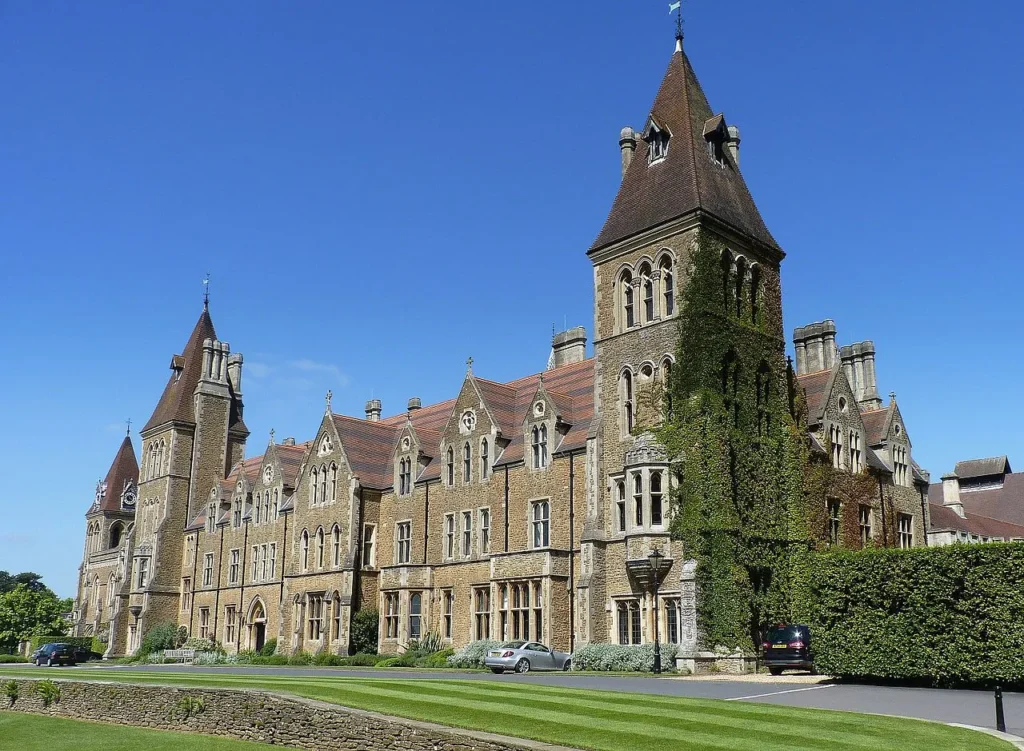
The rock and roll world is full of stories like that, with many groups forming during those impressionable teenage years. Another one that came together as pimply-faced English school kids was the prog-turned-pop band Genesis. When most people hear that name, they immediately think of the arena-filling, synth-pop 1980s incarnation featuring the trio of singer/drummer Phil Collins, keyboardist Tony Banks, and guitarist Mike Rutherford, who lit up the charts with hits like “Misunderstanding,” “Abacab,” “Mama,” “Land of Confusion,” and over a dozen others. And they would be right to think that, because not only were they racking up hit after hit, but they were also bolstered by the successful solo careers of Phil Collins and Mike Rutherford’s Mike + the Mechanics. However, what most people don’t know is that this group first came together in the mid-1960s on the grounds of Charterhouse, an elite boarding school in Godalming, Surrey, as the Beatles and Stones were setting the world on fire with British blues, Merseybeat, mop-tops, high tide, and green grass. And to add an exclamation point for all the Genesis casuals, Peter Gabriel, the pleasantly avant-garde humanitarian solo star whose hits “Shock the Monkey,” “Sledgehammer,” and “In Your Eyes” sat comfortably alongside Genesis’ on the pop charts, was their original lead singer!
In its roughly 55-year history, Genesis has undergone five incarnations, each unique yet complementary to the others. To many fans, including this one, the classic lineup existed from January 1971 to August 1975. It consisted of Peter Gabriel on lead vocals, Tony Banks on keyboards, Mike Rutherford on bass, Phil Collins on drums, and Steve Hackett on guitar. The latter two arrived three years after the band formed, within a couple of months of each other, and added a blue-collar, workmanlike quality to the music of three rich public-school kids (note to our American readers: In England, private school is often referred to as public school). In their four-and-a-half years together, the classic lineup of Genesis released four studio albums and one live record, and their repertoire encompassed ancient art, literature, mythology, dark humor, science fiction, and more. In that short time, Genesis was the epitome of progressive rock, challenging contemporaries like Yes, King Crimson, Emerson, Lake & Palmer, and Jethro Tull. Their live performances were finely tuned and precise, with Peter Gabriel setting himself apart from his prog contemporaries with his incredible onstage charisma, often dressing as many of the characters in their songs and telling tawdry tales between numbers while the others retuned their instruments. They were five incredibly gifted musicians and songwriters who wove fanciful tales wrapped in classical chords, rare time signatures, and unique tempo changes, lasting anywhere from 5 to over 20 minutes. And, like many of the bands of that era, it all came from relatively simple beginnings; that is, if you had several thousand extra pounds to spend on your children’s education in the 1960s.
Charterhouse Days
Peter Gabriel and Tony Banks were the first to arrive at Charterhouse for the start of the autumn term in September 1963. Both came from affluent families. Peter’s father was an electrical engineer from a wealthy timber-merchant family, and both of Tony’s parents were prominent prep school teachers. They met on the first day of classes and quickly discovered a mutual love of music, particularly the piano. It started as a race to see who could get to it first until Peter realized Tony was a much better player. He’d been trained classically from age seven and continued his education at Charterhouse under Leonard Halcrow. Peter already had a smoky, soulful voice and moved over to sing while Tony played. It wasn’t long before the two began writing songs together.
Although he was the same age as Peter and Tony, Mike Rutherford arrived at Charterhouse a year after they did and quickly befriended Anthony Phillips, who was a grade below and one of the few kids on campus who owned a guitar. That was until Mike showed up. He was a first-class military brat whose father had risen to the rank of captain in the Royal Navy. He came from Cheshire and was immediately scolded by his housemaster as a ne’er-do-well, promptly banned from playing guitar in his house, and often had it confiscated. Ant’s father made his fortune in banking and was the president of an insurance company when he enrolled his son in Charterhouse. Ant grew up in the wealthy London suburbs of Putney and Roehampton and began studying the guitar while attending St. Edmund’s preparatory school in Hindhead.
In the early 1960s, rock and roll in England was in its infancy, emerging from the shadow of its American cousin and carving out a sound of its own, as the Beatles, the Dave Clark Five, and the Searchers drew on the stock of Chuck Berry, Little Richard, Buddy Holly, and several others. English prep schools were historically adept at shielding the children of the British upper class from the sensual habits of the outside world, but that became increasingly difficult in the era of mass media. Rock and roll came crashing through like floodwaters over a dike, reaching every conceivable campus corner, and Charterhouse was no exception. A few of the original members of Genesis had been in fly-by-night groups with names like the Spiders, the Spoken Word, and the Milords, but things started coming together more clearly in 1965. Mike and Ant formed a group they called the Anon (short for “anonymous”), with fellow students Richard Macphail on vocals, Rivers Job on bass, and Rob Tyrell on drums. Tony and Peter joined the jazzy Garden Wall, along with classmate and drummer Chris Stewart, and transformed it into a poor schoolboy attempt at soul, particularly Motown and Stax.
The Anon was the more ambitious of the two groups, playing a total of two live gigs, both on school grounds. More importantly, they recorded a song at Tony Pike Studio in Putney, an Anthony Phillips original called “Pennsylvania Flickhouse,” featuring Richard Macphail on lead vocals. The other performance was a double bill with the Garden Wall for the school’s Carthusian Day celebration. As both groups began to break up over the course of 1966 because of graduation, suspension, and attrition, Peter, Tony, Ant, and Mike were the only ones left standing. That experience forged mutual respect and brought them closer, but, for the most part, they remained separate duos: Mike and Ant, and Peter and Tony. For the time being, the four had songwriting ambitions but never considered themselves a band. In December 1966, the four, along with Chris Stewart, gathered in a makeshift studio assembled by schoolmate Brian Roberts and recorded a five-song demo to pitch their songs. Four of the songs were written by Ant and Mike, and one by Peter and Tony. Their first opportunity presented itself at the annual Carthusian Day, a sort of winter homecoming, when Charterhouse alumnus Jonathan King, fresh off his massive hit “Everyone’s Gone to the Moon,” returned as a proud “old boy.”
King attended the school from 1958 to 1962 and was accepted to the prestigious Trinity College, Cambridge, but caught the music bug before setting foot on campus. In 1964, as international Beatlemania was heating up, he met Beatles manager Brian Epstein and press agent Derek Taylor in Hawaii while traveling on a round-the-world ticket. They encouraged him in his musical pursuits. At Cambridge, he joined a group called the Bumblies and began writing songs in hopes of getting one to renowned producer Joe Meek, but he was laid up with Meckel’s diverticulum. While convalescing in the college sanatorium, the gifted academic completed all his course assignments in two weeks and focused solely on pitching himself by sending his demo to various music labels. Against all odds, Decca UK executive Tony Hall responded and invited him to visit his office after his recovery. That led to a recording contract with the label, and King came out hot with “Everyone’s Gone to the Moon,” which peaked at #4 on the British charts in the fall of 1965 and even hit the U.S. Top 20.
For the ex-members of the Garden Wall and Anon, Jonathan King being on campus was like having Col. Tom Parker show up, and they planned to hand him a demo tape. Little did they know how significant this decision would be. The bespectacled young singer was in a career downturn. Of his four follow-ups to “Everyone’s Gone to the Moon,” only a cover of Bob Dylan’s “Just Like a Woman” charted, and it came nowhere near breaking the Top 40. It wasn’t all bad, though. A couple of months after his initial chart success, a song he authored, “It’s Good News Week,” was released by a Decca studio amalgamation of King’s called Hedgehoppers Anonymous. It hit #5 on the UK Singles Chart and gave Decca executives a reason to continue believing in him. With his own singing career floundering, King was looking to add management and publishing to his resume, but finding his first big break at his old school was the furthest thing from his mind. On the afternoon of his arrival, a young student named Jonathan Alexander boldly walked up to him as he stepped out of his car, handed him a tape, and hyped up his friends, an unnamed band made up of Peter, Tony, Mike, Ant and Chris, who watched curiously from behind a tree. King was caught off guard but promised to listen.
When he got around to it, King was less than impressed until he reached “She is Beautiful,” the one song written by Peter and Tony, on which Peter sang. The music was so-so, but Peter’s vocal gripped the music mogul wannabe and piqued his curiosity about the band. Scrawled on the tape box was the phone number for Girdlestoneites, the house where Peter and Tony lived. King eventually connected with the unnamed group and invited them to London to discuss a publishing deal. Upon further review, he saw potential in all their songs, which offered a hopeful glimpse of what was currently being released by the Moody Blues, Cream, and even the Beatles.
Revelations
Jonathan King signed Peter, Tony, Ant, Michael, and drummer Chris Stewart to a publishing contract through his Jonjo Music, co-owned with Joe Ronocoroni, and began shopping their songs around. The boys had recorded dozens of demos at Brian Roberts’ studio, but King took them to Regent Sound Studios in London in the summer of 1967 to give the best ones a more polished, professional sound. King had heard them play as a unit and wasn’t very impressed. They were loud and out of tune, still learning, especially Michael. For the demos, he persuaded them to record acoustically, which gave them a better understanding of how to play as a group and accelerated their progress. Afterwards, the boys went back to school, King went to work, and then… nothing.
Time marched on, and, fearing their new leader had lost interest, the four musicians got back to work and sent him a new batch of demos in hopes of rekindling his interest. Through osmosis, they sensed King had grown frustrated with their new, more complicated direction. Instead of writing pop songs, his group presented him with “The Mystery of Flannen Isle Lighthouse,” an eerie, ghostly horror ballad based on real events, and “Hair on the Arms and Legs,” which showcased their musical ambitions but ultimately fell short. Their new songs offered no hook or chorus for King to sink his teeth into. He expressed his frustration in a letter to Peter Gabriel at the end of November 1967 and suggested they get together before the Christmas holiday. They had to move, and fast.
In their short time together, the boys had come to know Jonathan King’s musical tastes and his keen ear for hits. Over the better part of a year, one of England’s hottest groups, the Bee Gees, had come from Australia, and King loved the harmonious brotherly trio. He was particularly taken with Robin Gibb’s vibrato-heavy vocals, which were prominent on “To Love Somebody” and out front on “Holiday” and their most recent release, “Massachusetts.” Acting pragmatically, Peter and Tony wrote a Bee Gees-style song, “The Silent Sun,” and pitched it to King. Whether the subconscious Bee Gees effect worked or not, he loved it, and once again it was a collision of two fateful events. He’d had no luck pitching their songs to anyone and was contemplating what to do with this group, which seemed on the verge of something but also kind of languid. “The Silent Sun” pushed him in the right direction, and he decided to take them back to Regent Sound to record it as a single, along with a B-side and two tracks for a follow-up. Now, all they needed was a name.
In retrospect, their experience with Jonathan King was a mixed bag for all involved, but it did result in their receiving their legendary name, Genesis, which first saw the light of day in February 1968 on their debut single, “The Silent Sun,” coupled with “That’s Me.” As usual for King, it was a bit self-serving. It wasn’t necessarily for their sake that he branded them after the first book of the Old Testament, which told of the beginning of God’s relationship with man. Rather, it reflected his emergence as a producer, but it worked better for them in the long run, as their name has become synonymous in the worlds of progressive rock, classic rock, and 80s pop. Although both singles flopped, King was all in and, to prove what a master salesman he was, managed to convince Decca to green-light a full-length LP. In August, he took the newly named Genesis back to Regent Sound Studios and got to work on a concept album. Continuing with the religious theme, King decided their album would have a biblical theme that would cover everything from the Book of Genesis to the Book of Revelation.
Following the release of the Beatles’ “Sgt. Pepper,” which loosely told the story of an old-fashioned band concert in the park without a clear plot, many other bands followed suit. King was no stranger to bandwagons, and he jumped right aboard that one. In the months between the release of “The Silent Sun” and the album sessions in mid-August, Genesis rehearsed in various parents’ homes, including new drummer John Silver, whom Peter had met while studying for his A-levels. Chris Stewart never really materialized as a drummer and was sacked after the December sessions. He’d go on to become a writer and author of the 2000 international best-selling memoir, “Driving Over Lemons: An Optimist in Andalucia.” A batch of songs was selected, though there was no clear theme among them that fit King’s vision.
They booked a studio at Regent Sound for 10 days, arriving with 15 songs they’d rehearsed for six months and had down pat, and finished them in three days. The basic tracks languished for three months until Jonathan King brought in a large string and horn section, under the direction of veteran conductor Lou Warburton, for overdubs arranged by the legendary Arthur Greenslade. The band wasn’t completely against the idea. After all, the Moody Blues had recently used them to great effect on their instantly beloved and monumental 1967 coming-out LP, “Days of Future Passed.” But to Genesis’ ears, Greenslade’s arrangements seemed better suited for Johnny Mathis. The overdubs were as noticeable as a bump on the head and were layered so thickly and heavily that Genesis sounded like they weren’t within 100 miles of where they were recorded. Whereas the Moody Blues’ strings were complementary and classical in nature, these were often overbearing and intrusive, and didn’t work more often than not. The result was something none of the members of Genesis had expected when it was finally released, nearly seven months after the sessions concluded.
However, for a debut album, “From Genesis to Revelation” is nothing to be ashamed of. Although I can understand why an informal band of public-school classmates, educated on the Beatles, Stones, and Eric Clapton, might’ve been disappointed in it when compared to the White Album, “Beggar’s Banquet,” or Cream’s “Wheels of Fire,” it’s a very pretty collection of songs. They’re a pleasant mix of folk, pop, and heavy rock and roll, woven into a tapestry of baroque art pop that fits nicely alongside albums by the Stone Poneys, the Left Banke, and Mary Hopkin. Although their youth and maturity are betrayed in the lyrics, there are times when they’re downright advanced and profound, and many moments, both musically and lyrically, point to the direction they were headed. Songs like “In the Beginning” and “In the Wilderness” are driving and downright rocking. The band members themselves have been critical of it but have softened over the years. Anthony Phillips disliked it more than any of them, particularly the string overdubs, but in a 2014 interview with Mark Powell, he said he’d recently listened to it and came away thinking it wasn’t that bad. In their 2007 group autobiography, “Chapter & Verse,” Tony Banks stated that he had a lot of affection for the album and considers it part of his childhood. In 2014, reflecting on his legendary band’s inauspicious debut, Mike Rutherford remarked that it was “better and darker than I thought.”
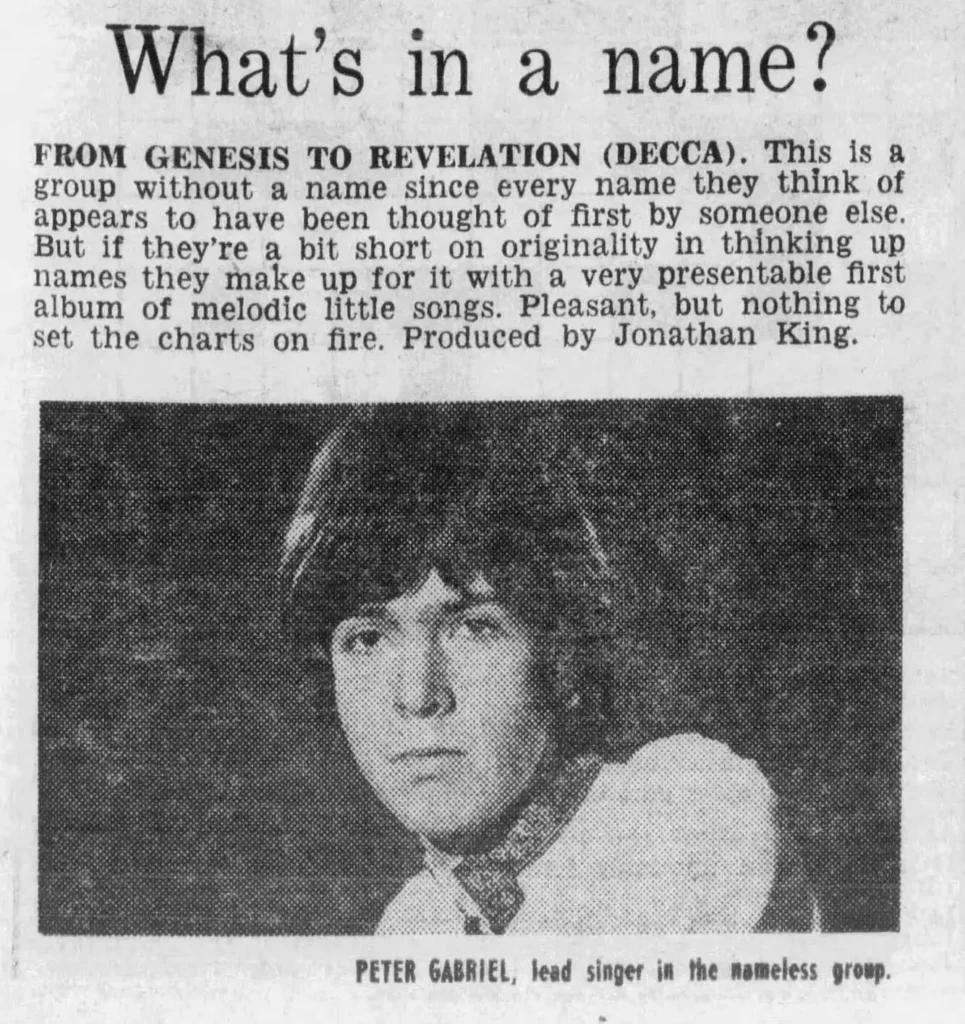
When it was released on March 7, 1969, “From Genesis to Revelation” fell flat, selling only about 650 copies. It received a favorable review from Mark Williams of the radically countercultural and risqué International Times, who called it “wholly fresh” and praised Greenslade’s string arrangements. Decca’s promotion was criminally minimal, underscoring their lack of faith. The only other notable review was a short paragraph in the July 6th edition of the Evening Standard, which called it a “presentable first album of melodic little songs.” The band didn’t do any live performances, tour dates, interviews, or TV appearances in support of the album, and it disappeared without a trace, leaving a bitter taste in their mouths. Doubt now festered among them, and for the time being, making music was set aside in favor of their studies, but for the four founding members, the desire never went away.
A Place To Call Their Own
On October 23, 1970, Genesis released their second album, “Trespass,” a remarkable feat for a group that wasn’t even sure it existed a year and a half earlier. The release of “From Genesis to Revelation” was anticlimactic in many ways. The lack of success wasn’t completely unexpected, but it was still jarring. Genesis would eventually become a collection of extremely skilled and charismatic musicians, but in the Spring of 1969, they were still unrefined and barely more professional than a high school marching band. Not long after the album’s release, they discovered there was an American group named Genesis signed to Mercury, so they were forced to change their name to Revelation. The move was largely unnecessary because they didn’t play live, had no prospects in sight, and all seemed to be going through the motions of moving on to college. Tony Banks moved on to Sussex University to study logic with physics, while Mike began attending Farnborough Technical College. Ant and Peter remained at Charterhouse to study for their A-levels, hoping to follow Tony into a prestigious college.
Nevertheless, they got together on weekends and holidays, continuing to practice, write, and consider going professional. Mike and Ant met regularly to practice their 12-string guitars and write songs, and a couple of future Genesis tracks emerged from their collaboration. Tony moved a Hammond L122 organ into his dorm room so he could keep mastering it. Peter worked on his flute and vocals. For him, a career in the arts was imminent, either in singing or in film school. It all came to a head that summer in Anthony Phillips’ kitchen, where all four gathered for yet another musical discussion. Tony Banks asked Mike Rutherford whether they were going to continue as a band, and Mike answered yes. Ant agreed.
“If Mike had said ‘No,’ I would have said, ‘No,’” Anthony Phillips wrote in 2007. “Mike’s response was crucial because he was a bit of a father figure to me.”
With this decision, certain musical realities had to be addressed. First, they were down a drummer again. John Silver had decided to pursue his studies abroad after being accepted to Cornell University in Ithaca, New York, so another search began. Second, and more importantly, they were still under contract with Jonathan King’s Jonjo Music and didn’t want to continue with him. King’s direction and musical mood swings were the opposite of theirs, so they presented him with songs featuring more complicated arrangements and no hooks, which he hated, along with a few deliberate stinkers. When the contract expired in August, neither party was interested in re-signing, and Genesis was a free agent. Lastly, they would have to put together a live act and book gigs, which meant a lot of practice and rehearsal. They immediately got to work and set a goal for autumn.
Their decision was bolstered when an old schoolmate and former lead singer of Anon, Richard Macphail, reunited with them and became their manager, roadie, technician, and cheerleader. Frustrated by his desire to make music his career, his parents transferred him to Millfield School in Somerset and then sent him to a kibbutz in Israel for much of 1968. They changed their tune upon his return, and his father even lent the band a bread truck to make it easier to lug themselves and their equipment around. In August, they advertised in Melody Maker for a new drummer but ultimately hired John Mayhew through word of mouth. John was a handsome guy with long hair, three to four years older than the rest, and had been part of several bands with common names like the Epics and the Clique. His most recent gig was with a Scottish group called Milton’s Fingers, which had moved to London a year or two earlier and played live regularly. John was looking to move on and had given his phone number to any prospective group willing to take it. Mike Rutherford got hold of it and pursued him. He invited John to audition, and Genesis offered him the job in August.
Initially, they rehearsed at Ant’s parents’ home in Woking, but that was only a temporary solution. From there, they moved to the home of Brian Roberts’ grandmother in Dormans Park, Chiswick, until a fantastic opportunity arose when Richard Macphail’s parents’ Christmas cottage in Wotton, Surrey, became available. It was cramped and cold, but also private and secluded, and just what they needed, with no adult figures to consider. They arrived in early October and brought everything they had, including Tony’s Hammond organ, Mike’s Gibson bass, Peter’s bass drum, Ant and Mike’s 12-string guitars, John Mayhew’s drum kit, several amplifiers, and a Ferrograph tape recorder for demos. They rehearsed in the morning and afternoon and subsisted on yogurt, bread, and sausage. All five agreed to dedicate themselves solely to this, bring no girlfriends, avoid outside influences and the pub, and visit family only during holidays.The living room served as their rehearsal space, where they initially prepared for their first paid gig, a 21st birthday party for Anthony Balme, the son of Peter Gabriel’s parents’ neighbors in Chobham, on Sunday, October 26th. The gig netted them £25, and they performed under their original name, Genesis. The American group had folded. Afterwards, they hunkered down until early Spring, when the cottage would be put up for sale. This gave them approximately six months to hone their craft, and the decision profoundly shaped them. Songwriting had always come naturally to Peter, Tony, Michael, and Ant. Over the course of those cold English months, they merged from two separate songwriting teams into one cohesive unit. In Wotton, many of the songs that would fill their sophomore album, as well as a few future classics like “The Musical Box” and “The Fountain of Salmacis,” were written.
The air around them was rife with change. Ever since the release of the Beatles’ “Revolver” and “Sgt. Pepper,” several pop groups had ensconced themselves in the growing psychedelic movement of sitars, backward guitars, heavy organs, and deep lyrics. In England, Pink Floyd and the Moody Blues achieved early success in the subgenre that would eventually become known as “progressive rock,” incorporating heavy psychedelic elements into their songs and focusing on the long-play album as a work of art rather than churning out hit singles. They inspired a stable of new bands, including Yes, Soft Machine, the Nice, and others. Perhaps the most famous was King Crimson, led by Robert Fripp, whose first album, “In the Court of the Crimson King,” coincided with Genesis moving into the cottage in Wotton, where it was spun regularly, along with the Detroit-based SRC’s self-titled debut album. The meandering solos, musical experimentation, and the liberal use of Ian McDonald’s Mellotron influenced their songwriting greatly and set them on the path of this emerging rock movement. Another British cultural shift was marked by the debut of the BBC sketch comedy program, “Monty Python’s Flying Circus,” on Sunday, October 5th. For everyone at the Christmas cottage, it was appointment television and would add a humorous element to their songwriting and influence their stage presence.
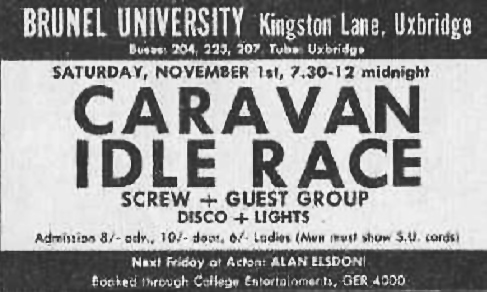
While Tony, Ant, Michael, and John Mayhew spent each day jamming and composing, Peter and Richard worked the phones to pitch the band to promoters and record labels. They secured their first paid public gig at Brunel University on November 1st, supporting Caravan and the Idle Race, led by Jeff Lynne. By all accounts, it was a sonic disaster. Being completely green, they positioned themselves in uncomplimentary positions, causing unnecessary feedback by placing their guitar pickups too close to their amps. Anthony Phillips started playing his 12-string guitar, a staple of early prog rock groups, but had restrung it right before the gig and neglected to stretch the strings. One slipped, creating a dreadfully flat sound from which they couldn’t escape.
Despite the overall unpleasantness of their first gig, it helped them grow, and each performance sharpened their musicality. Over the next six months, Genesis improved exponentially and became a tighter unit, forging a unique blend of acoustic and electric and perfecting dual 12-strings, complemented by Tony’s organ and Peter’s powerful lead vocal and occasional flute solo. Mike was growing into a strong bassist and even played cello on a few numbers. Through the remainder of 1969 and into the early months of 1970, they played regularly at schools like Twickenham Technical College and Thames Polytechnic, as well as in places like Tamworth, Coventry, and Newcastle, at men’s clubs, youth centers, and ballrooms. Their live set included a handful of numbers from their Decca album, including “In the Beginning,” “The Serpent,” and “In the Wilderness,” as well as several new numbers like “Going Out to Get You,” “White Mountain,” and “Pacidy,” and several originals that would eventually fall by the wayside and become part of Genesis lore, like “Masochistic Man,” “Little Leaf,” and “Digby (of the Rambling Lake).” Several covers were added to their repertoire, including SRC’s “Black Sheep” and blues songs by Freddie King, Cream, and John Mayall’s Bluesbreakers. Things were starting to come together.
Looking For Someone
As their musicianship grew over the winter months at the Christmas cottage, Genesis’ willingness to experiment grew as well. They began pushing the limits of their imagination, which had a profoundly positive effect on their music, bringing them into the realm of the young, rapidly growing progressive rock movement. Many songs in their live repertoire had lengthened, with several eclipsing the 10:00 mark. It was all part of the prog mystique. By New Year’s Day 1970, King Crimson’s debut album was climbing the British album charts on its way to #4, and albums by the Nice, Yes, Family, and Jethro Tull had become required listening on college campuses. Even the BBC was getting into the act, featuring many prog acts on radio programs like Top Gear, Sounds of the Seventies, the Sunday Show, and others, often hosted by John Peel or Bob Harris. Several of these artists’ albums were being issued in the U.S. and played on burgeoning album-oriented FM radio stations. The music was expansive and experimental, performed by incredibly talented musicians and led by dynamic vocalists. Each band also featured a unique charisma; Keith Emerson’s virtuosic keyboard playing in the Nice, Ian Anderson’s flute in Jethro Tull, and Robert Fripp’s alternate guitar-picking in King Crimson. Genesis was well on its way to meeting all of that, and their lead singer would become a force to be reckoned with. In the meantime, he had additional duties.
Peter Gabriel’s vocals had been a strength from the start and served as an inspiration during Genesis’ period in the wilderness. He would eventually evolve into the foremost progressive frontman, telling provocative stories between numbers and wearing creative, elaborate costumes to illustrate each song’s story. But for the time being, he poured himself into his role as group promoter and ingratiated himself with a wide range of agents who booked them into vastly different kinds of forums, from colleges and pubs to shady London nightclubs, where they once notoriously played to an audience of one. “Any requests?” asked an exasperated Peter of the lone attendee. He also worked the phones during the day to try to get Genesis signed with a record label. After their contract with Jonathan King expired back in August, they’d snuck into Regent Sound after hours, courtesy of Brian Roberts, who’d just started a job there, and recorded four original songs. One thing Peter did regularly, stemming from Decca’s lack of promotion of “From Genesis to Revelation,” was to hustle at the BBC Radio headquarters at Portland Place, in the heart of London, to get their songs played on the radio and onto any one of their many music programs.
He got their demo into the hands of as many gatekeepers as possible, and it paid off near the end of 1969, when he was approached by a BBC producer whose name has been lost to time. He offered Genesis their first professional recording session since their lone album, to record original music for a documentary he was producing about Mick Jackson, an obscure painter who specialized in sexually provocative art. The five members assembled at the BBC Television Centre in Shepherd’s Bush on January 9th and laid down four mostly instrumental tracks, featuring intermittent singing by Peter, under the auspices of former Yardbirds bassist-turned-producer Paul Samwell-Smith. This sample of songs, released by Genesis on their 2008 box set “1970-1975,” showcases the band’s early pastoral and ethereal sound and features elements of future songs “The Fountain of Salmacis,” “Looking for Someone,” “Anyway,” and “The Musical Box,” as well as some that fell by the wayside, like “Little Leaf.” Another BBC producer, Alec Reid, liked what he’d heard from Genesis’ demo and booked them on their late-night music program Night Ride in February, where they recorded six songs, half of which were later included on “Trespass.”
A record deal still eluded them, and being signed to a quality label quickly became their goal. Despite their relative lack of experience, record labels were intrigued, especially independent ones. The quality that drew Jonathan King to a completely inexperienced group of musical teenagers had only grown more enticing through their dedicated practice and live performances. They attracted interest from Chrysalis co-founder Chris Wright and the Moody Blues’ brand-new Threshold Records, for whom they recorded a demo of Peter’s “Looking for Someone,” produced by none other than Moodies keyboardist Mike Pinder. Both seemed interested in signing Genesis, but Peter held out for Island Records, a leading independent record label that specialized in reggae but, more recently, had been putting out cutting-edge rock records by Traffic, Jethro Tull, King Crimson, and Fairport Convention. One of their latest signees, Mott the Hoople, shared a bill with Genesis in Southall and began championing them to label owner Chris Blackwell, but no offer ever came. Little did they know the answer was closer than they thought.
Genesis had also been making the prog rounds with several like-minded new bands, including Rare Bird, Van Der Graaf Generator, and Lindisfarne. All three were managed by Tony Stratton Smith, a charismatic 37-year-old ex-sports journalist who had just launched his own record label, Charisma. Rare Bird keyboardist Graham Field recommended Genesis to Smith, a recommendation reinforced by house producer John Anthony. In February 1970, Genesis secured a six-week residency upstairs at Ronnie Scott’s Jazz Club in London. Smith caught their act in early March and was duly impressed. The cheerful manager, who had started managing the Creation in the mid-1960s, recognized the group’s uniqueness right away and signed them to an exclusive deal three months later. Their only other offer came from Threshold, but Mike Pinder’s unwillingness to allow the band to re-record their demo after Tony Banks hit a flat note put off the prickly keyboardist. It was evident even then that Genesis would go only as far as Tony Banks would.
In June 1970, Genesis walked into Trident Studios in London’s Soho district to record an album. It had been nearly two years since their last venture, and this time they were more prepared and confident. In that time, the group had composed nearly 20 original songs, but they chose only a handful to work on over this month-long period. For the final release, it would be whittled down to six, the cream of what had been carefully crafted at the Christmas cottage and refined through live performances. Charisma in-house producer John Anthony oversaw the sessions, and Robin Cable served as the engineer. Both quickly learned the band’s perfectionist nature, particularly Tony and Ant, who immediately argued with them about miking the 12-string guitars to make them more prominent in the final mix.
“Looking for Someone” was the album’s opener and began as Peter’s baby, though the entire band helped flesh out the basic track during rehearsals at Ant’s parents’ house, and they shared the credit. It featured a soulful lead vocal and subtly showcased his love of Motown and Stax artists. A short portion of its musical arrangement appeared in the track titled “Provocation,” recorded for the ill-fated Mick Jackson documentary five months earlier. “Visions of Angels” was the oldest track of the bunch, having been written by Anthony Phillips and recorded in a different arrangement for the first album. It was ultimately passed over and given a more tender arrangement for “Trespass.” The fantastic “White Mountain,” inspired by the Jack London novel “White Fang,” and the existential “Dusk” were written principally by Ant and Mike during their pre-Christmas cottage songwriting sessions, and both were first recorded at their clandestine Regent Studios demo session nearly a year earlier. “The Knife” was developed from the Nice’s instrumental, “Rondo,” which appeared on their 1968 debut, “The Thoughts of Emerlist Davjack.” In fact, its working title was “The Nice,” and its pace was hectic, almost violent, matching the lyrics about a Braveheart-like bloody revolution and making it an early fan favorite at live performances. It was a highlight of the set for most of the Peter Gabriel era of Genesis and often served as a show closer as their catalog grew larger. “Stagnation” was their most ambitious song to date and served as a blueprint for where they were heading. The total group effort was a beautiful mix of Ant and Mike’s 12-string interplay, impeccably augmented by Tony’s mix of piano, organ, and Mellotron, and it kept its momentum, shifting from movement to movement and taking a listener on a journey that would become a Genesis staple. Peter wrote most of the lyrics, which describe a man building a life for himself in a postapocalyptic world. It was an amazing feat for a group of 20-year-old kids.
The final mix of the album didn’t please any of the members, but it wasn’t as traumatic as “From Genesis to Revelation.” Tony Stratton Smith was a born schmoozer who made his artists feel like they’d conquered the world. The album would be released in late October, but before that, there were more pressing issues. Not long after the “Trespass” sessions ended, Anthony Phillips announced he was leaving the band, which caught them completely by surprise. Ant had been one of their leading voices, a strong songwriter, and a driving force that kept them together, especially at their lowest moments. He played his final gig on July 18, 1970, at Haywards Heath in Sussex, and, it seemed, left the group in a lurch, or so they thought. The truth was, almost from the beginning, he had been very sickly. It started at Charterhouse with various illnesses and continued with a strong bout of mononucleosis before their Christmas cottage seclusion. More recently, he was struggling with a severe bout of stage fright as their audiences grew bigger, and it was hurting his playing and songwriting. At one of their last self-booked gigs, the Atomic Sunrise Festival that also featured David Bowie and Hawkwind, Ant said he could barely strum his strings. He saw where the group was headed, understood he couldn’t keep up the pace and had to get away, and that meant probably never coming back.
“At the end of my time with them, they were essentially carrying a passenger,” he wrote in Chapter & Verse.
With Ant gone and no way to convince him to stay, the band set out to find a replacement. Tony Banks suggested finding a new drummer as well. John Mayhew was a friendly chap they all liked, but his playing lacked panache. He was self-taught and unambitious, and he didn’t share the rest of the band’s enthusiasm for growth and improvement. Many of their original songs featured quiet passages that built to a crescendo, and his playing was often heavy-handed where it didn’t need to be. Peter was dispatched to deliver the news. John took it hard but wasn’t surprised. He went back home to Ipswich, where he played around for a while before moving to New Zealand in 1977. He set down his drumsticks permanently five years later and became a painter. The three remaining members were unsure of their future. Losing Ant was like losing a family member, and, once again, they were asking that old, familiar question: Is this worth it? They arrived at the same answer, yes, and began looking for the two newest members of Genesis. The answers would surprise even them.
Further information
Part 2 by Scott Shea expected in February 2026



The creation of Genesis. I love the details. I feel like a fly on the wall, watching the boys play and chat and create these songs. As a fan, I know the sound changes and I appreciate the details Scott writes. I can feel it coming, the breakthrough with Steve and Phil. I can’t wait for part two of the article. WELL DONE SCOTT!