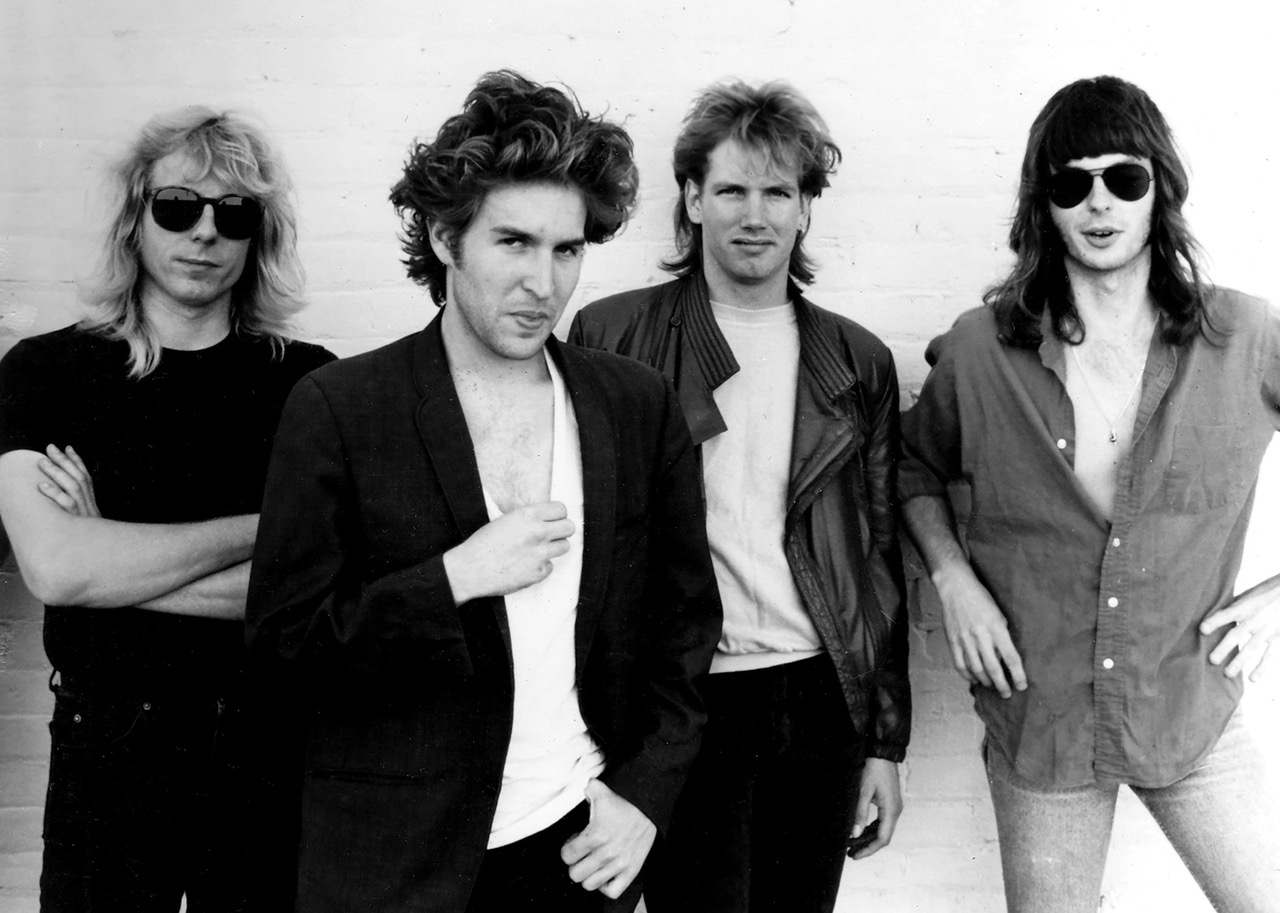
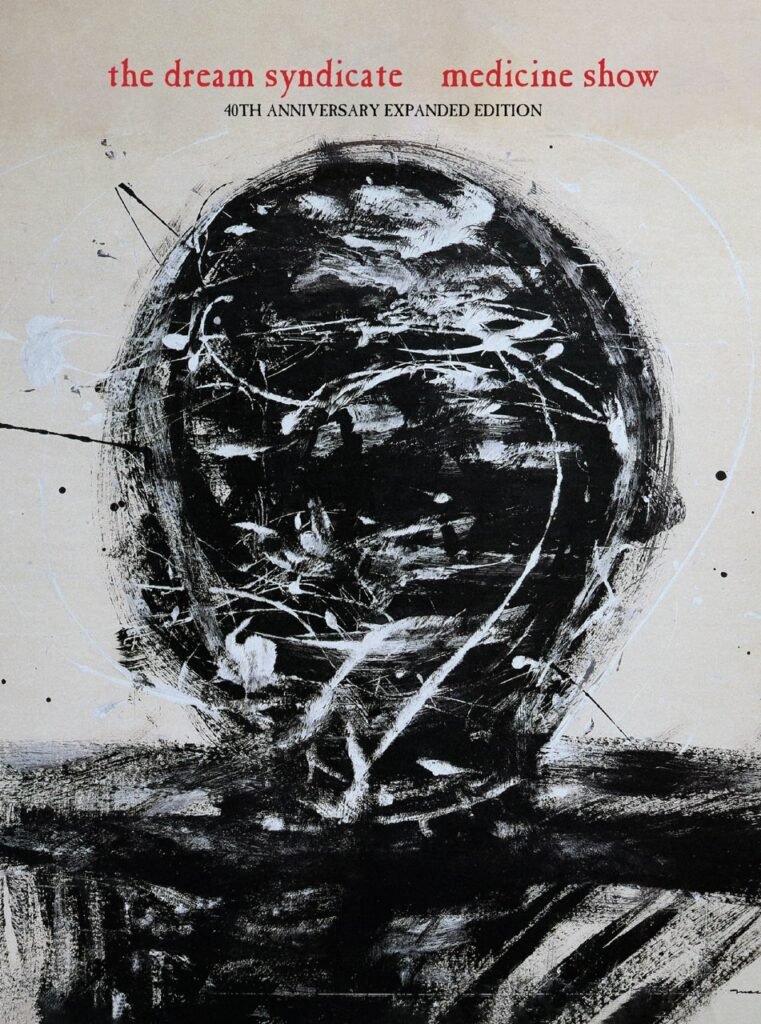
You know how some albums don’t quite fit into the year they were born? They sit there, twitching in the corner of the record shop, waiting for the rest of us to catch up. That’s what The Dream Syndicate’s Medicine Show was in 1984, a dark horse that bolted from the Los Angeles underground. Thirty-odd years later, it’s finally getting the deluxe treatment it always deserved. However, Steve Wynn isn’t just content to put the past in a box. He’s taking Medicine Show out on the road, a victory lap for a record that once nearly flattened him. Steve talks now with the gleam of vindication; because those songs that almost broke him? They’re still combustible and about to catch fire once more.
What was behind that three-decade battle with Universal for Medicine Show, and how does it feel to finally have creative control over this material again?
Not to get too wonky, inside baseball, deep into the weeds—choose your favorite cliché—but there’s a 35 year reversion law that was passed about 10 years ago that guaranteed musicians could reclaim their albums after that period. It’s supposed to be pretty automatic and was how we got back The Days of Wine and Roses from Warner Music. But Universal, who owned the rights to the A&M catalog pretty much said they didn’t care to recognize that provision. A class action suit followed, and it was settled in favor of the musicians. I was actually one of the key witnesses for the prosecution or whatever you want to call it. Such a mess but the upshot is that we regained control of a record that means a lot to me and I couldn’t be happier.
In your memoir, you wrote about the psychological breakdown you experienced while recording Medicine Show. Looking back at these unreleased tracks and rehearsals, what do you hear in your voice and the band’s performance that reflects that period?
Well I was in a pretty dark place. I was drinking a lot and trying to figure out what kind of record we were going to make and the answer wasn’t all that apparent. Kendra had left the band and we had been through a lot of changes and were no longer the same band or people that we were a year earlier. And rather than help us focus and navigate, our producer Sandy Pearlman just added to the uncertainty with endless takes, days and plenty of indecisiveness. So, it was a big mess until about halfway through we all just accepted we were a different kind of band making a different kind of record and that it was a very good record. At that point the sailing got smoother.
This deluxe edition includes 29 previously unreleased tracks. What was it like rediscovering this material with reissue producer Pat Thomas? Were there any tracks that surprised you or changed how you remember that time?
Yes! I didn’t know about that CBGB’s live show from early 1983. It’s fantastic and really shows how we got from one album to the other. You can feel the band that made both The Days of Wine and Roses AND Medicine Show when you listen to that recording.
The complete WXRT Chicago broadcast is finally being released in full. What was lost in thr original A&M Live LP, and why was this particular show so important to capture completely?
I was so happy to find those 2 missing tracks. I’ve grown to love that record and just the sound that we were taking to the stage every night around that time. It was so majestic and big and assured and cocky and fearless at the same time. We’re going to shoot for that kind of sound and vibe on the upcoming tour dates.
You’ve included rehearsal tapes with original bassist Kendra Smith just before she left the band. What do those recordings reveal about the creative tension and evolution happening within The Dream Syndicate at that pivotal moment?
That was another big surprise. I didn’t know there were recordings of us playing those songs with Kendra. I’m glad she’s a part of this package and, of course, such a big part of our whole story and history. It would have been a very different record had she stayed in the band. And those recordings give a tiny clue to what it might have sounded like.
What made this particular iteration of the band from 1983/84 so incendiary on stage?
Lots of reasons. We were being pumped full of nonstop accolades making us feel like we were pretty hot shit. And add drunkenness, exhaustion, various other vices and also the thrill of the very first tours to that equation and you have a group of people living by the skin of their teeth and having no time to steer the ship with any kind of plan. We were pretty untethered and that can be very exciting but can also lead to internal tension.
Medicine Show is sometimes compared to other challenging albums like Berlin and On the Beach – records that needed time with listeners before being accepted. Do you think the album’s initial reception was unfair, or was it simply ahead of its time?
You know, there’s some kind of conventional wisdom that there was a backlash with this record. That’s not entirely true. It sold better, got more radio play, made more new fans and even got good reviews here in the US. And over in Europe it was received like manna from rock heaven, maybe even more over the top praise than we had received on these shores for Wine and Roses. Having said that, it’s a very dark, challenging and confrontational record that wasn’t for everyone, much like the ones you mentioned above.
You’ve said that this deluxe edition leaves The Days of Wine & Roses in the dust. That’s a strong statement about your own work – what makes Medicine Show the superior artistic achievement?
Ha ha—those are the words of our archivist Pat Thomas, not me. And he sure put a hell of a lot of work into this box set. We joke that putting this together was his version of what we went through making it in the first place. He did an amazing job. It really tells a story and illustrates how a band goes from one phase to another, something that isn’t always apparent. I’m waiting for it to be made into a movie!
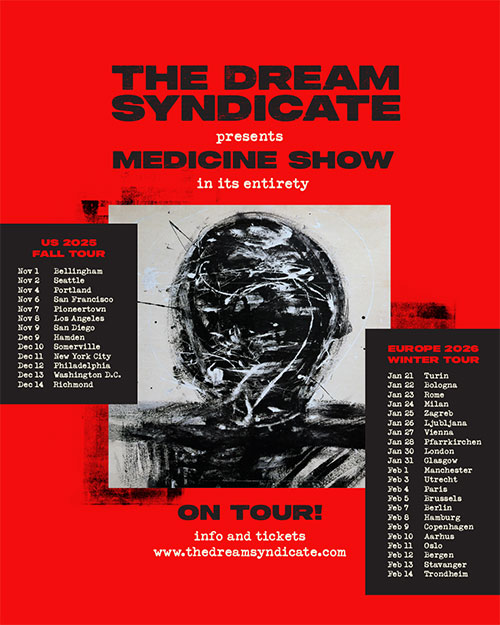
You’re about to perform Medicine Show in its entirety on tour. When you walk off stage after that final show in Trondheim in February, having played these songs that once nearly broke you for audiences night after night, what do you hope will be different about how you carry this music with you for the rest of your life?
That’s a great question. I’ll be honest. I see this reissue and the upcoming tour as a bit of a vindication for a record and era of the band that has often been misunderstood. It’s why I want the tour—or at least the 2nd set where we play the songs off Medicine Show—to be as close to what we were doing back then. You don’t often get a chance to revisit the past so why not revisit with all of your ducks (even Dennis!) in a row!
Further information
Visit thedreamsyndicate.com for details of The Dream Syndicate’s Medicine Show albums’s 40th Anniversary Expanded Edition and associated US and European live dates