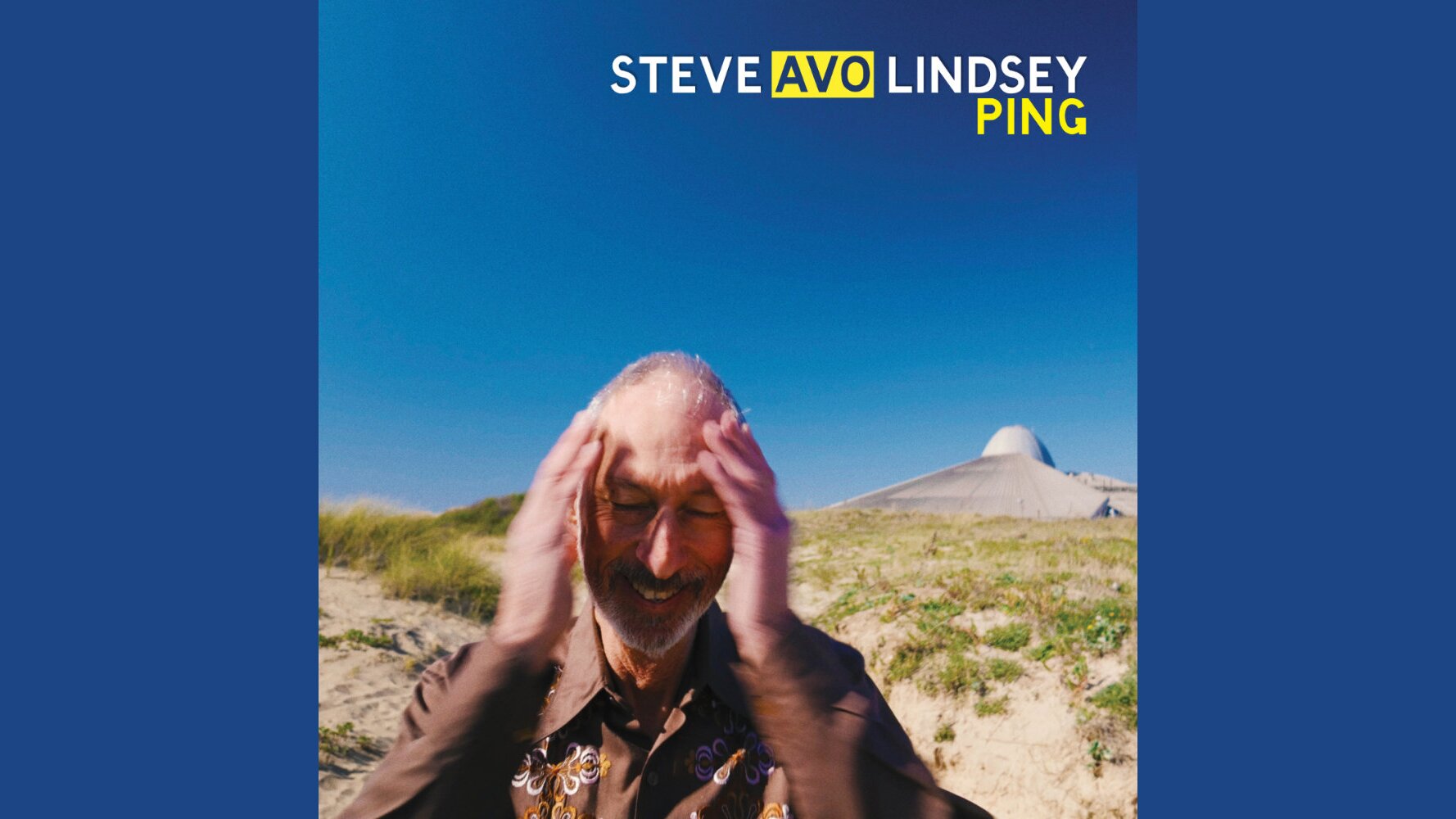
Five decades after first making his mark with the art-pop theatrics of Deaf School and the chart-chasing new wave of The Planets, Steve ‘Avo’ Lindsey has finally released his solo debut, PING. Brimming with wry storytelling, eclectic influences, it’s a record that blends the quirk of his early bands with the craft honed during years as a music executive. Steve talks about the inspirations behind PING, the joy of collaboration, lessons learned from great songwriters, and why, after all these years, he’s still saying “Hello! I’m here!”
You’ve described PING as “what a Nick Lowe album sounds like in my head.” What is it about Lowe’s approach that resonates so strongly with you?
I like the way Nick Lowe produces each track to have its own unique character. His voice ties everything together but each song lives its own life. Hopefully, I’ve got somewhere close to this approach.
‘Beautiful 45’ has a finger-clicking soul feel, while ‘Royal Iris’ is baroque pop and ‘To Know You Better’ has Latin influences. Did these styles emerge organically, or were you deliberately setting yourself style challenges?
As soon as a song comes into existence each one immediately suggests a direction to me where it can go stylistically. So, yes, the arrangements are organic for the most part. Occasionally, you go down a blind alley, production-wise, so you try a totally different approach – that can be an exicting adventure and sometimes works for me.
Could you share the real-life inspiration behind ‘Cheers My Dears’ and its vaudeville feel?
This song always felt a bit quirky and I wanted the production to be unorthodox too. The chorus needed to sound like an old fashioned music-hall knees-up so I avoided rock and roll instrumentation in favour of booming Salvation Army bass drum and hand claps. It’s a song that celebrates friendship – lots of people swaying arm in arm etc. I wanted it to sound like it was in a very real, ambient room.
Which song on PING came together the quickest, and which one made you sweat over every note?
The opening track ALL THIS AND MORE was me experimenting – aiming to write a song on one chord. The melody and words came quite easily. Beautiful 45 I sweated over. In fact, I discarded the first version completely. It just didn’t sit right and I couldn’t figure out why. The version on the album is slower and simpler. More honest, I guess. I wanted the lyrics to be heard clearly.
You originally planned to release tracks one at a time before an album was on the cards. How did that slower, incremental approach shape the final record?
A slower approach gave me time to ensure that every track was up to scratch and worthy of being on an album. Having time allowed me to be objective so I was able to dump a few songs that really weren’t good enough and let me show off the good ones in the best possible light.
You play much of the album yourself. What’s the advantage and the risk of being your own multi-instrumentalist?
Fewer arguments haha! I’m an OK musician – good enough to record the sounds I hear in my head. I like the unifying vibe of this approach. I guess there’s a streak of control freak in me too. Having said that, I also really appreciate expert musicianship in others, hence, Josh McCartney plays drums and Wims plays lead guitar.
The late Tony “Wims” Wimshurst plays lead guitar on the record. What does his presence mean to you personally and musically?
He was undoubtedly the best guitarist I ever worked with. Everything he did musically was pure class and he was a joy to be with too. We made two PLANETS albums together back in 1979/1980. He was my go-to person when I was making this new album. We recorded his parts a couple of years ago and sadly he died earlier this year after a long illness.
Deaf School’s story is one of huge critical acclaim but modest commercial returns. How has that shaped your own creative outlook?
Even though we were a great live band, Deaf School lacked songs that could be classed as singles. After we broke up, I simply wanted to write and record songs that had a chance of being hits. I loved Deaf School’s quirkyness but it got in the way a lot of the time. I wanted to make music that was still a bit different but had hooky melodies and lyrics that could get playlisted. I formed the band the PLANETS and luckily we had a couple of chart singles and international exposure. My plan worked – to a dregree.
You’ve gone from frontman to music executive and back again. How has your time in the business side changed your approach to making records?
I’ve had the honour and joy of working with many talented songwriters during my time in the business as a music publisher – with artists such as Pulp, U2, Massive Attack, The Las, Shakespear’s Sister. I’ve always been fascinated by the process of songwriting and I’ve gleaned such a lot about the craft from some of the best in the world. Getting each song right – especially the lyrics – before you press record is the most imortant lesson I’ve learned.
PING has multiple meanings: texts, data packets, sonar. Which of those ideas best captures what the album is about?
All of the above. It’s me saying “Hello! I’m here!!!”. I love the word and I think it’s catchy and gently prompts some attention.
What can audiences expect from your forthcoming live shows? Will PING be played faithfully or reimagined for the stage?
Some of the album tracks are a little elaborate so I’ll strip them back a bit. I have a small live band, including Josh McCartney on drums, and we’ll ensure the essence of each song comes across. I’ve just done a solo acoustic tour of Japan and I was pleased that the songs worked even in a very minimal context.
Do you see PING as the beginning of a solo chapter, or more of a one-off project?
I’ll never stop writing songs and I enjoy getting on stage and performing so it certainly feels like the start of something rather than a coda. I aim to gig as Steve Avo Lindsey as much as I can during 2026 – in addition to the Deaf School gigs that are already lined up for July next year.