By Scott Shea
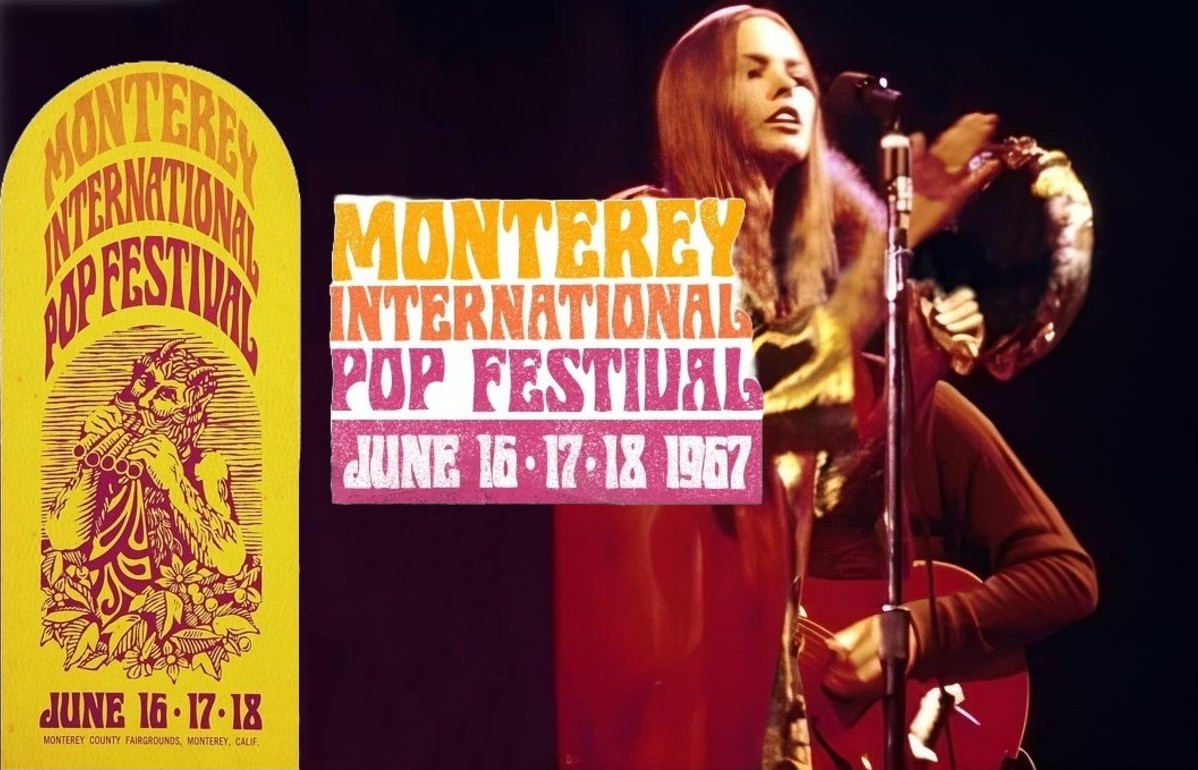
This month, we celebrate the 58th anniversary of the Monterey International Pop Festival, a first-rate rock and roll gathering held in the small California seashore town at the dawn of the Summer of Love in 1967. It was the very first rock and roll music festival modeled after the Monterey and Newport jazz festivals that had been held annually since the late 1950s. The original concept belonged to music industry veterans, Alan Parisier and Ben Shapiro who eventually brought it to John Phillips, leader of the Mamas & the Papas. In fairly short order, Papa John commandeered the project and made it non-profit to make it appear more genuine so it would be easier to secure high-priced talent. When he got Paul Simon to jump in as a silent co-creator, Phillips nearly had his pick of the litter of top musical acts and he went cutting edge. When the show opened on June 16, 1967, Monterey Pop had a who’s who of hot late-1960s talent, including Buffalo Springfield, the Grateful Dead, Canned Heat, Electric Flag, Jefferson Airplane, the Who and many others.
With the benefit of hindsight, it was a rollicking success, but it took a little while for the public to fully realize it. In the years following Monterey Pop, clear winners and losers emerged and I’m here to share who I believe are the five biggest on both sides of that coin. Some played the festival, others never got near it and there’s at least one who never sang a note in his life. Shameless plug: If you want a great detailed account of the conceptualization, development, implementation and a day-to-day examination of all the goings-on at the Monterey Pop Festival, check out my book, “All the Leaves Are Brown: How the Mamas & the Papas Came Togeter and Broke Apart” on Backbeat Books. Let’s start with the biggest losers.
Biggest Losers
(5) Big Brother & the Holding Company (Minus Janis Joplin)
In the hierarchy of San Francisco acid bands, Big Brother & the Holding Company fell somewhere behind Jefferson Airplane and the Grateful Dead, but ahead of Quicksilver Messenger Service and Country Joe & the Fish. That’s because of their vocal thoroughbred lead singer, Janis Joplin and her distinctive bluesy rasp. They were arguably the breakout performers of Day Two of the Monterey Pop Festival, but their new manager Jules Karpen, a veteran member of the Merry Pranksters and an anti-establishment San Francisco denizen since the Beat Generation, nearly sunk them. Documentary filmmaker D.A. Pennebaker was hired by Lou Adler and John Phillips to film the entire festival for distribution. The two had courted all the top San Francisco bands since Monterey Pop’s inception and this was a source of consternation from the get-go. Big Brother & the Holding Company was the first of the coveted cadre to perform and Karpen, acting his non-commercial best, demanded Pennebaker’s cameras be pointed downward. Why film something you believed in? They were the second act of the day, and when they brought down the house, Karpen and the band knew they’d made a mistake. He’d have to kiss John Phillips’ ass to arrange for a repeat performance on Day Three. Fortunately for him, John’s affection for Janis Joplin won him over and he squeezed them in between the Blues Project and the Group with No Name. That performance is the one captured in the film release of the festival. Behind the scenes, perhaps because of a bad taste in her mouth, Joplin forged an alliance with Bob Dylan’s manager Albert Grossman, and she left the group following the release of their “Cheap Thrills” album in August 1968. Karpen and his group eventually faded out of the rock and roll picture altogether.
(4) The Byrds
One can easily credit the very existence of the Monterey Pop Festival to the Byrds. The first successful folk-rock group formed a mere three years earlier and were the first legitimate response to the British Invasion when their version of “Mr. Tambourine Man” topped the charts at the start of summer 1965. By the start of the Monterey Pop Festival, they were a band in crisis. Founding member Gene Clark left over a year earlier and there was a power struggle going on between the pugnacious David Crosby and everyone else. They also hadn’t charted anything in the Top 15 since “Eight Miles High” in June 1966. On stage at Monterey, they crashed and burned. Their performance was hurried and uneven and they looked like a shadow of their former selves. David Crosby spoke between every number where he dished out conspiracy theories, advocated for mass drug use and announced to the crowd that they wouldn’t be playing their biggest hits. Bandmates Roger McGuinn and Chris Hillman could only stand silently and glare at him. The acrimony carried into the sessions for their fifth album, “The Notorious Byrd Brothers,” in August, especially when Crosby refused to participate on their slated leadoff track, “Goin’ Back,” written by Gerry Goffin and Carole King. Two months later, McGuinn and Hillman rode out to Crosby’s Laurel Canyon home on their motorcycles and fired him, but he had the last laugh. A year or so later, he teamed up with ex-Buffalo Springfield singer/guitarist Stephen Stills and ex-Hollie Graham Nash to form Crosby, Stills & Nash who released their groundbreaking debut self-titled LP in May 1969 and became one of the top draws of the early 1970s. Chris Hillman and drummer Michael Clarke were out of the Byrds by the end of 1968 and for the next five years, the group was essentially Roger McGuinn and his talented group of hired hands. They never cracked the Top 40 again and McGuinn dissolved the Byrds after a lukewarm reunion of the five original founding members in 1973.
(3) The Monkees
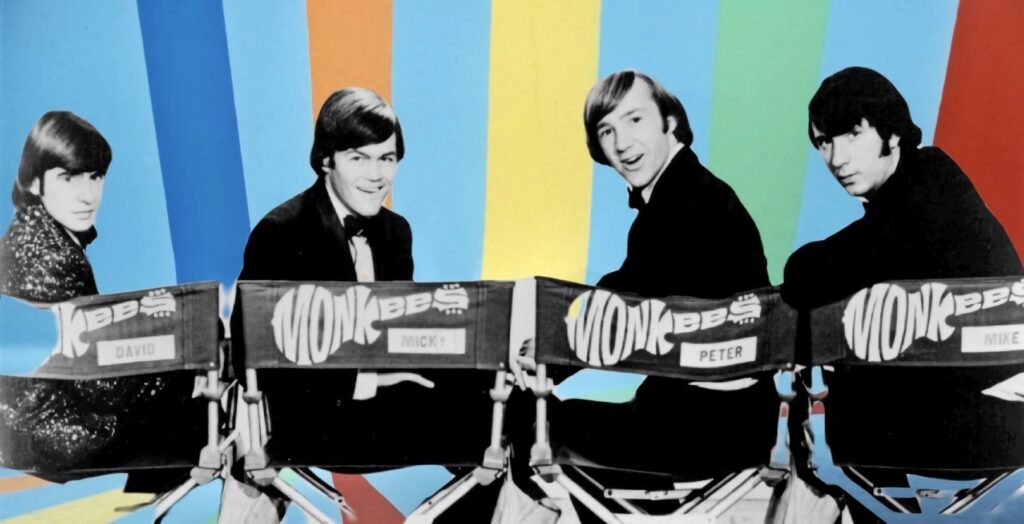
In the months leading up to the Monterey Pop Festival, the Monkees were the most commercially successful band in America. Since their debut #1 hit, “Last Train to Clarksville,” which coincided with the launch of their smash NBC comedy series, they’d been chart and cultural fixtures and there was serious discussion about including them on the Monterey bill. The festival’s Board of Governors ultimately passed when they decided to focus on the over-18 demographic to appease Monterey Mayor Minnie Coyle and the City Council who feared the reported mass influx of young people. The Summer of Love was prognosticated, especially for the city of San Francisco, and its starting point was the Monterey Pop Festival. John Phillips, Lou Adler and their fellow planners wisely decided to make it seem more unappealing to the underage set and this meant no Monkees, no Dave Clark Five and no Paul Revere & the Raiders. This didn’t stop Monkees Micky Dolenz and Peter Tork from attending though. While Dolenz was happy to be a spectator, Tork rubbed elbows backstage and was invited to introduce Buffalo Springfield, fronted by his old friend Stephen Stills. He was given the unenviable task of interrupting the Grateful Dead’s set to advise those in attendance that the Beatles were not on the premises after a rumor to the contrary began spreading. Dead bassist Phil Lesh, uncommercial to the hilt at the time, played hell with him and made him look like the stooge he portrayed in his sitcom. In Monterey Pop’s wake of genuineness, the Monkees’ popularity began its downward trend, and the bloom came off the rose. They made it to the #1 spot once more with “Daydream Believer” in early 1968 but were reduced to a trio with Tork’s late December exit. When Michael Nesmith left in April 1970, they couldn’t get a gig singing to seniors in LaPorte, Indiana. They were about as unhip as a band could be, but that didn’t stop Micky Dolenz and Davy Jones from carrying on the Monkees brand as a duo for approximately 14 months. They went their separate ways after a failed September single under their actual names. The Monkees were never accepted as authentic in their day, and Monterey Pop would’ve been no exception, but time and a new Generation X fanbase have judged them much more favorably.
(2) The Beach Boys
1967 should’ve been another banner year for the All-American group out of Hawthorne, California who predated Beatlemania, the British Invasion and the folk-rock explosion. They elevated their game and hung with their new contemporaries in 1965 and 1966 and were poised to raise the stakes in January 1967 with “Smile,” their scheduled follow-up album to their pre-psychedelic pop art masterpiece, “Pet Sounds.” Since stepping away from live performing in 1964, group leader Brian Wilson had successfully shed their early-1960s surfing and hot rod image to suit his more sophisticated artistic vision and took full advantage of the talented session musicians hanging out at Western Recorders and Gold Star Studios in L.A. Lead singer Mike Love objected to the direction Brian was taking them, going so far to call “Pet Sounds” his ego project and openly scoffed at some of the songs Brian had co-written with Van Dyke Parks for “Smile.” Mike was content wearing the striped shirts and white pants that were already falling out of popular favor and would’ve made them look as square as a band of college deans at Monterey. Among his contemporaries, however, Brian Wilson was still held in high esteem and John Phillips invited him to be on the festival’s Board of Directors. The Beach Boys had agreed to perform early on and made it to the final print of Monterey Pop’s schedule of performers. They were supposed to kick off the Saturday evening show, but Brian pulled them out of it only days before the opening and the Beach Boys hit a rut that would take the better part of a decade to shake. “Smile” was shelved, Brian began pulling away from the group, falling deeper into depression and drug use, and they, along with just about every other American pre-Beatles group that sang harmony, struggled until the oldies revival of the early 1970s.
(1) The Mamas & the Papas
It’s hard to believe that John Phillips’ own group would be the biggest loser coming out of his own festival, but there’s no denying it. John was an incredible taskmaster who poured his heart and soul into his pet projects and the results were often stunning. On the contrary, the things he neglected suffered tremendously and, in this case, it was his bread and butter. For the first time in his life, Phillips took on regular working hours and did yeoman’s work in conceptualizing the Monterey Pop Festival, getting others on board, including artists, city officials and police, and ironing out every detail; from the performer’s itinerary to the location of the porta-potties. His unbridled enthusiasm got the best out of just about everybody involved and, for a little while, even reignited his struggling marriage with bandmate Michelle Phillips who took on several administrative duties. The other half of the Mamas & the Papas, lead singers Denny Doherty and Cass Elliot, were not involved in the planning stages at all, nor did they wish to be. Denny spent most of the spring in the U.S. Virgin Islands and Cass went back east to prepare for birth to her only child who arrived in late-April. That didn’t stop Phillips from making the Mamas & the Papas the show closer though. The only problem was they never rehearsed until Denny arrived about an hour or two before their scheduled showtime. They had two big hits in the first half of 1967, “Dedicated to the One I Love” and “Creeque Alley” and were unable to perform either of them because they hadn’t been together to work out a live arrangement. They were forced to revert to a setlist from 1966, which appeared outdated in comparison. They came out flat and stiff, and the prospect of dazzling the audience gave way to just getting through it as best they could. It didn’t help that penultimate performer Jimi Hendrix damaged one of the mics and the stage monitors by smashing his guitar at the end of his performance. It caused an imbalanced mix that affected their harmonies and Michelle’s microphone was dead for most of their set. The Mamas & the Papas were already on the verge of collapse because of inner turmoil and the end of the festival spelled the end of them. They released their fourth LP, “The Papas and the Mamas,” in May 1968 and then quietly broke away from one another. John and Michelle divorced in 1969. Cass launched a successful solo career and Denny meandered and drifted; his talented vocals only gracing two solo albums in a 41-year career that ended with his 2006 death. John Phillips only released one solo album in his lifetime and descended into hard drugs so badly that he eventually landed a short prison term. He continued to be a polarizing figure even after his 2001 death. Michelle focused on acting and became a matriarch of hippie era reminiscences. Their record label ABC/Dunhill forced their final album, “People Like Us,” with a lawsuit in 1971 and the world never heard a new song from the Mamas & the Papas again. When Cass died unexpectedly in 1974, it cemented the end of the band forever.
Biggest Winners
(5) Lou Adler

The producer of the Mamas & the Papas had come a long way since he first entered the music business in 1957 as a song plugger for Keen Records. After co-writing Sam Cooke’s 1960 hit “Wonderful World,” he and co-writer Herb Alpert became the producers of Jan & Dean, which helped him became a mover and a shaker in the Los Angeles world of pop. His scope of influence grew after becoming a West Coast representative for Don Kirschner’s Screen-Gems’ music publishing, supplying many of their songs to Snuff Garrett at Liberty Records. When that fell through, he launched Dunhill Records with Pierre Cossette, Bobby Roberts and Hal Landers. The label’s initial releases were pretty ho-hum, and they seemed destined to be another fly-by-night L.A. record label until Barry McGuire and the Mamas & the Papas fell into their laps. Before any of them knew it, Dunhill was sustaining the folk-rock movement with “Eve of Destruction” and “California Dreamin’.” When John Phillips called Lou up in the middle of the night to share his Monterey Pop Festival idea, he wrote it off as another byproduct of the group leader’s copious drug use. After further pressing by John and a few days ruminating over it, he jumped right on board and procured some of the festival’s first committed acts, including Lou Rawls, the Association and Laura Nyro. Lou also benefited from perfect timing. After selling Dunhill to ABC in 1966, he launched Ode Records, which issued its debut release in April 1967. He also helped John Phillips in his decision to write an anthem for the festival, which became Ode’s third release, “San Francisco (Be Sure to Wear Flowers in Your Hair),” sung by John’s friend and former Journeymen bandmate, Scott McKenzie. It peaked at #4 in both Billboard and Cash Box and gave Lou’s new label a boost. Over the next two years, he cut minor hits by artists like Spirit, Peggy Lipton and Merry Clayton, but hit paydirt when he signed a group of East Coast transplants called The City. Leading them was a 26-year-old pianist named Carole King. She’d been in the music business since age 17 and had more hits to her credit than the Beatles. She and her ex-husband Gerry Goffin had authored some of the biggest smashes of the 1960s, including “Will You Love Me Tomorrow,” “Up on the Roof,” The Locomotion” and “Pleasant Valley Sunday.” Eventually, Lou recorded her solo and, in 1971, produced and released her quintessential soft singer-songwriter LP, “Tapestry.” Lou Adler had always been a respected music executive, but the Monterey Pop Festival and her platinum album cemented his status as a business luminary.
(4) San Francisco
Usually that name refers to the city in northern California, but here, I’m talking about the underground hippie music scene that, for all intents and purposes, launched in 1965. In two short years, many of the groups there had hit cult status among young listeners and were already signed to major labels. They were vastly uncommercial with oddball names like the Grateful Dead, Jefferson Airplane, Quicksilver Messenger Service, Country Joe & the Fish, and their long, languid on-stage jams. They were largely homegrown and wary of anyone or anything outside their purview. John Phillips desired greatly to get many of them on the bill, and he aimed for the top. Though San Francisco is one of the oldest cities in the United States, it had developed into a countercultural haven, especially following the arrival beat poets Jack Kerouac, Allen Ginsberg and William Burroughs in the mid-1950s. It had a great effect on many young local singers like Jerry Garcia, Phil Lesh, Marty Balin, Joe McDonald, Chet Powers and others. When John Phillips and Lou Adler approached the groups with the idea of the Monterey Pop Festival, they were suspicious of their motives. Part of the countercultural narrative of the mid-to-late-1960s was to be starkly anti-establishment. The Grateful Dead and Jefferson Airplane were signed to RCA Victor, Country Joe & the Fish were on Vanguard and the Steve Miller Band were on Capitol, but all pretended like they hated it. The negotiations went back and forth for weeks. First, they were on, then they were off. When Jefferson Airplane’s “Somebody to Love” peaked at #5 in the spring, their management and label insisted on their participation and the rest fell in line, although the Grateful Dead took particular delight in acting like they could back out on any second. Though they weren’t yet the biggest group from the area, they were the most influential and any hesitation from them could spell disaster. In total seven San Francisco groups, if you include Moby Grape, played the festival. Jefferson Airplane and Big Brother & the Holding Company came away with the best performances with the rest being mixed, but it served to set up the Summer of Love, which came with its positive and negatives, and turn San Francisco into the name of a musical and cultural movement. Three of the groups, Jefferson Airplane, the Grateful Dead and Country Joe & the Fish, participated in the son of Monterey Pop, the Woodstock Music & Art Fair in 1969, as did Big Brother & the Holding Company’s lead singer, Janis Joplin.
(3) The Beatles
No, they didn’t play Monterey, but they were invited, and their influence could be felt everywhere. In fact, when Alan Parisier and Ben Shapiro conceived the idea of the festival, they set their sights on the Beatles and the Rolling Stones as the main headliners. They ended up with neither, but they did get former Beatles press agent Derek Taylor to join as an advisor and he was able to help land the two hottest new groups in England at the time, the Who and the Jimi Hendrix Experience. Like Lou Adler, the Beatles benefitted from the good timing of the Monterey Pop Festival. They’d hit the #1 spot in the spring with their double-sided single “Strawberry Fields Forever” and “Penny Lane,” which marked a seismic shift in their sound, and their latest groundbreaking album, “Sgt. Pepper’s Lonely Hearts Club Band,” was released exactly three weeks before the festival’s opening night. Considered by many to be their best, it perfectly encapsulated the transitional year of 1967 and served as the soundtrack to the Summer of Love. At least three Beatles songs were performed by different artists playing Monterey and Byrd David Crosby roughly quoted Paul McCartney’s interview in the current edition of Life Magazine where he told the interviewer, “If the politicians would take LSD, there wouldn’t be any more war, poverty or famine.” In retrospect, it’s a very naïve sentiment, but served as a clarion call for many of the mind-expanding Baby Boomers in attendance, especially Crosby whose own life would soon become overrun by his drug addiction. There were also rumors throughout the festival that the Beatles were somewhere on the premises. It started innocently enough by first day performer Johnny Rivers who was uncredentialed and trying to get his limo into the backstage area. He told the police officer in charge of that area that his arranger Jimmy Webb, who bore a cursory similarity to Paul McCartney, was, in fact, the bass-playing Beatle. It proved that, even though they were over 5,000 miles away, the Beatles were still top dogs in the music world. John Lennon even sent a crew out to Monterey to film the festival, but, more importantly, to secure some LSD, which had recently been outlawed in England.
(2) Otis Redding
If Monterey lacked anything, it was a respectable amount of black performers, but it wasn’t out of any sense of malice. John Phillips had hoped to include many Motown performers, but label owner Berry Gordy Jr. forbade any of his artists from performing when he learned of the counterculture nature of the festival, even though Smokey Robinson was on the Board of Governors. That meant many of the top black groups, including the Temptations, the Four Tops, the Supremes, the Marvelettes, Martha & the Vandellas, Stevie Wonder and Marvin Gaye would not be involved under any circumstances. The Impressions were invited but never responded and Dionne Warwick couldn’t get out of her gig at the Fairmont Hotel in San Francisco. The only black artists to perform were Lou Rawls, Hugh Masekela and Otis Redding but the Paul Butterfield Blues Band, the Steve Miller Band, Electric Flag, Booker T. & the M.G.’s and the Jimi Hendrix Experience were all interracial. Otis Redding was the most soulful out of all of them. He was part of the Memphis phenomenon Stax/Volt Records with whom he’d been topping the R&B charts since March 1963. The pop charts were another story. Since 1965, he’d hit the Top 40 six times, but his highest placing was the #21 spot with “I’ve Been Loving You Too Long.” It was a struggle, and he came to the Monterey Pop Festival somewhat unwillingly. His manager Phil Walden had to talk him into it. He played the Fillmore in San Francisco the year prior to a lukewarm audience and was not eager to play in front of an even larger peace and love crowd. When he arrived, he set the fields on fire with his down-home brand of Southern soul. The M.G.’s accompanied him, and they were probably the only musicians present in coordinated outfits who could command the audience’s respect and approval. He got the crowd so riled up and excited during “Try a Little Tenderness” that the fire chief threatened to pull the plug. John Phillips had to craftily grab his attention so he could tell them all to sit down. Then he uttered those six famous words that have become synonymous with the Monterey Pop Festival, “This is the love crowd, right?”, before launching into “I’ve Been Loving You Too Long.” Otis may have come away from the festival with more new fans than anyone, but the success was short lived, at least for him. On December 10, 1967, while flying between gigs in Madison, Wisconsin, his plane plummeted into nearby Lake Monona, killing him, the pilot and four of the five members of the Bar-Kays who were traveling with him. Approximately one month later, his first posthumous single, “(Sittin’ on) The Dock of the Bay” was released and hit #1 on both the Pop and R&B charts, making him a household name in death.
(1) Janis Joplin/Jimi Hendrix
The circumstances of both performers’ careers and the proximity of their untimely deaths ties them as the Monterey Pop Festival’s biggest winners, although it feels uneasy to put it that way. Like Otis Redding, both Janis Joplin and Jimi Hendrix wouldn’t live for very long following the Monterey Pop Festival, but unlike him, they were able to witness some of the fruits borne from it. Both artists came into the festival as virtual unknowns and left as two of the biggest faces of the current rock and roll scene. Janis came to San Francisco in the mid-1960s by way of Port Arthur and Austin, Texas. She first played and recorded with future Jefferson Airplane guitarist Jorma Kaukonen and was introduced to the instrumental group Big Brother & the Holding Company by old Texas friend Chet Helms. They were noted for their sloppy playing style and Janice’s bluesy, refined Big Mama Thornton type vocals made that easy to overlook. When the group performed for the second time at the Monterey Pop Festival, her legend was born. Upon the conclusion of their performance of “Ball and Chain,” the camera cuts to audience reaction where a gob smacked Mama Cass is seen exclaiming, “Wow” to those around her.
Jimi Hendrix was born and raised in Seattle, Washington, but had to move to London, England in order to be heard. The prolific guitarist began playing at age 15 and joined a couple of local bands before being shipped off to the Army after stealing a couple of cars. He continued his playing after his discharge in 1962 and became a touring musician on the Chitlin’ Circuit where he supported legends like Sam Cooke, Jackie Wilson, Ike & Tina Turner, Wilson Pickett and others. The Isley Brothers were the first ones to bring him into the studio, and he’d go on to record with Little Richard and Curtis Knight & the Squires before moving to New York City and forming his own band, Jimmy James & the Blue Flames. Keith Richard’s girlfriend Linda Keith was one of the first to take note of his incredible talent and turned the Rolling Stone onto him. Richards, in turn, introduced him to Stones manager Andrew Loog Oldham who brought him to the attention of ex-Animals guitarist Chas Chandler who was transitioning to artist management. He eagerly took him on and moved him to London where he formed the Jimi Hendrix Experience with bassist Noel Redding and drummer Mitch Mitchell. They signed with Track Records, who included the Who and John’s Children, featuring a pre-T. Rex Marc Bolan, on their roster. He became the toast of the British music scene after hitting the Top 10 with “Hey Joe” and “Purple Haze.” By spring 1967, Oldham was no longer the Stones full-time manager and had fled to Los Angeles to hide out in Lou Adler’s mansion. That’s when Derek Taylor brought him on board to help with the Monterey Pop Festival and was able to get the Jimi Hendrix Experience, the Who and Eric Burdon & the Animals to agree to play it. Little did anyone know that Jimi and Who leader Pete Townshend were guitar rivals and both were known for destroying their instruments at the end of each performance. Pete didn’t want to go on after Jimi and look like a copycat hack by doing the very thing he originated, so they ended up flipping a coin to see who’d go on first. The Who won and did their instrument smashing bit to a stunned audience with pieces of guitar and bass strewn about the stage and Lou Adler chasing after Keith Moon’s runaway snare drum. Pete made a critical mistake by giving Jimi time to think on a different finale and he went full-on radical by deciding to set his guitar on fire. He tried it once before in England and ended up with superficial burns. This time he’d use less lighter fluid and, at the conclusion of their version of the Troggs’ “Wild Thing,” did a simulated sex act with the guitar neck, set his guitar and then smashed it to bits. It left those in attendance with a memory to last forever and was captured on film by D.A. Pennebaker, which made it a landmark event of the hippie revolution. Though Jimi Hendrix and Janis Joplin never set the U.S. charts on fire, they did become fixtures on progressive FM stations and cultural icons dressed in feathers, headbands and lots of ruffles. Both had memorable performances at Woodstock two years later and both appeared respectively on the Dick Cavett Show in 1970. Both also died at the age of 27 from substance abuse within a month of each other. And, like Otis Redding, Janis hit #1 following her death with Kris Kristofferson’s “Me and Bobby McGee.”
Finale
It’s hard to say if the Monterey Pop Festival would be viewed with the same type of esteem if it had become an annual event. It was intended to, but it never happened. There were too many hands seeking too much money and keeping it non-profit would’ve been unsustainable. It’s easy to say that music lovers are among the losers because of that but seeing MTV’s disastrous attempts at rekindling Woodstock in the 1990s, we’re probably more in the winner’s camp. Rock festivals didn’t end with Monterey and Woodstock. In the early-to-mid 1970s, there were more than you could shake a stick at, including the Isle of Wight in England, the Bull Island Rock Festival in Indiana, Watkins Glen in New York and Willie Nelson’s 4th of July picnics in Texas. These days, we have annual week-long ones like Glastonbury, Coachella, Bonnaroo, SXSW and others where you can watch your favorite artist perform, eat some sushi or bok choy and even buy a designer purse. They bring in more people over a longer period of time, but they’re a far cry from the relative innocence and musical purity of the first and only Monterey International Pop Festival.