This is an extract of the first part of an extensive interview with Mark Webber of Pulp undertaken by Jason Barnard at The CAT Club. We follow Pulp as they move from indie outsiders into the national spotlight at a time when Webber’s role in the group would only deepen. Read here for the moment when the band who struggled throughout the 1980s met a public audience, and for the first signs that the odd, difficult songs Jarvis and his friends had been making were finally heard.
Mile End
As the 1980s drew to a close, Cocker and Webber separately made their way to London, “It was a coincidence,” Webber explains. “Although I was helping the band here and there, it wasn’t a job. I would often go down to London film screenings and concerts … because there’s not a lot of culture in Chesterfield. I ended up being a civil servant working for the Public Trustees Office. That was the same time Jarvis was at St Martin’s, but I saw him only two or three times that year.”
While Webber was navigating bureaucracy, Pulp were beginning to find momentum. The February 1991 release of ‘My Legendary Girlfriend’ gave them a cult following. In NME’s single of the week review, Stuart Maconie described it as “a throbbing ferment of nightclub soul and teen opera.” Webber recalls “That was when people started coming to the concerts, and within a year or two it seemed like they might actually have a career.”
Webber lasted a year in London before moving back to Chesterfield, living with his parents and helping the band whenever they needed an extra pair of hands. “I’d carry gear at concerts and help with whatever needed doing,” he says. “Then Russell asked if I’d be the tour manager.”
He laughs remembering the makeshift professionalism of those days. “I used my dad’s old briefcase when I became tour manager. There weren’t any BTEC courses on how to do that sort of thing then, so I made it up as I went along. I’d been to a lot of soundchecks, hanging around hoping to meet bands, so I had an idea how it worked. I got busy booking transit vans and finding floors for us to sleep on after concerts.”
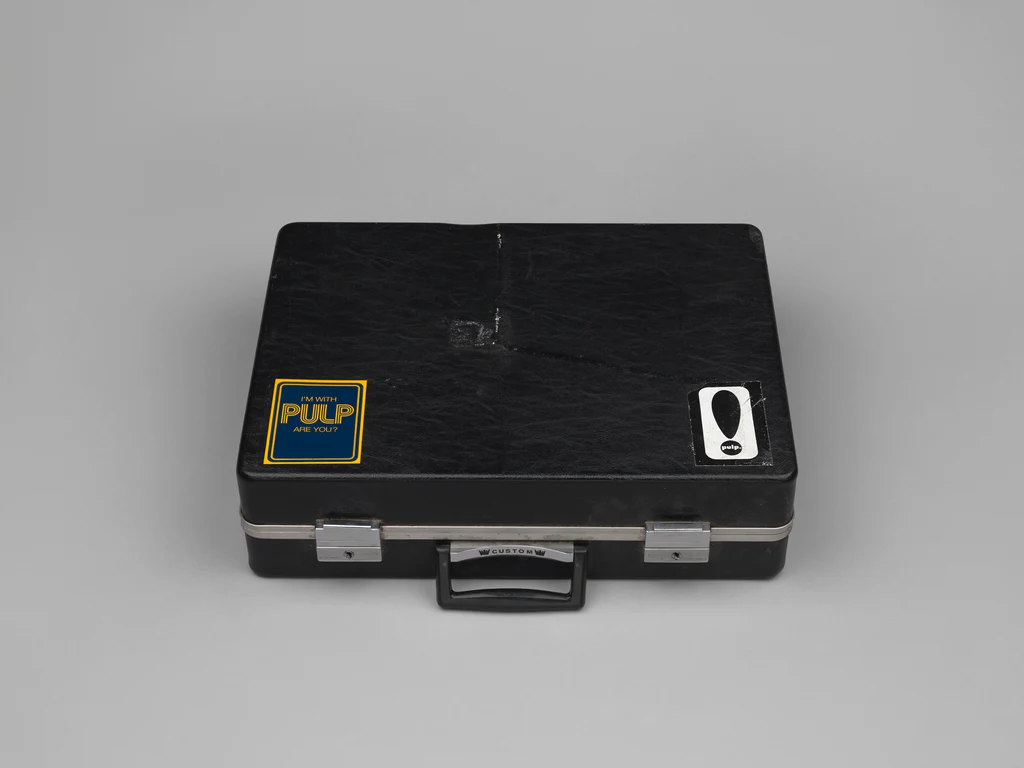
Managing Pulp was no small task. “It was like a bag of cats,” Webber smiles. “They were not a nightmare, but there wasn’t much incentive then for them to turn up on time. Jarvis was a pretty bad timekeeper. Often, we’d have to bang on his door in the bed and breakfast to wake him up. But it was exciting.”
At this point, the band were divided between London and Sheffield. “All the rehearsals were still at Cattcliffe, just outside Sheffield, which was above Nick’s mum’s pottery warehouse, Bank’s Pottery.”
The Separations album, recorded for Fire Records, remained on the shelf for over two years, and Pulp were eager to move on. “They tried to get away from Fire. They tied themselves into a really ridiculous contract basically because no one else was interested in them, so it wasn’t easy to just leave and go to another label. That extraction process took a while but then those three singles were released on Gift Records, which was a subsidiary of FON in Sheffield, ‘OU,’ ‘Razzmatazz,’ ‘Babies.’ That was 1992, when it really started to pick up.”
During this period, Cocker and bassist Steve Mackey were living in Mile End, East London. “They had a squat,” Webber says. “The sink in the kitchen, I don’t know what had happened to it, it was sort of melted. Totally unusable. It was pretty bleak.”
Despite the surroundings, Pulp were gaining traction. From 1991 to 1995 Webber’s role continued to expand. By the release of ‘Do You Remember The First Time’ he was “playing all the songs with them on stage, something which started slowly from 1992 onwards. Then I was tour manager, extra musician and running the fan club.”
The band still held day jobs. “Nick was a schoolteacher in London for a while. Candida moved to Manchester and worked in a toy shop. Jarvis was probably on the dole most of the time,” Webber adds dryly.
Babies
As Pulp’s profile began to rise, their DIY spirit never vanished. The first ‘Babies’ video was a home-made production, shot with borrowed equipment and favours from friends. “There was a very small budget,” Webber says. “Jarvis had been to film school where one of his friends was Martin Wallace, who’s now a filmmaker. Steve studied film at the Royal College of Art and was more into production. So they made it themselves. Half of it was shot in a photography studio. They didn’t have a dolly for the camera, so they sat the cameraman in a shopping trolley and pushed him round the studio. The other half was filmed in Jarvis’s flat which by then was in Sceaux Gardens, Camberwell.”
Casting was equally informal. “One of the girls was Bob Stanley’s girlfriend, the other is her sister,” Webber says. “I was the tape op, we had a Nagra four-track and I was in charge of cueing the playback.” When the finished clip appeared on ITV’s Chart Show, it was a revelation for the band. “We were on tour and had played Bristol the night before,” Webber recalls. “We couldn’t afford a B&B so we were sleeping on the floor at a students’ flat. The next morning we watched the video when it was broadcast the first time.”
As Pulp’s live sound grew, Webber began to step into the lineup. “It started with me playing ‘OU’ on the Stylophone,” he says. “They were writing songs that needed an extra pair of hands, so I played keyboards on a few. Later, Jarvis wanted to concentrate on singing rather than playing guitar, so he taught me his parts and I replicated what I was told.”
By 1993 and 1994, Webber was on stage for every song, even if he wasn’t yet appearing on the recordings. “I’d had a couple of bands with friends but never recorded anything, hardly played any gigs. I taught myself guitar at home, playing along to records I liked. So this was quite a leap,” he says.
That leap coincided with the end of Pulp’s long struggle with Fire Records. “There was interest from Island Records, which was impressive because they were a major label,” Webber recalls. “But they couldn’t sign straightaway because of the legal problems. Island subsidised some of the Gift Records singles and helped fund the recordings and promotion. Eventually they made an agreement with Fire that let Pulp leave and sign to Island, which led to His ’n’ Hers. Fire did very well out of it, they continued to earn royalties from future releases for many years.”
Do You Remember the First Time
By the early nineties, Pulp were shaking off the eccentric underground life that had defined them for over a decade. Their sound was sharper, Jarvis Cocker’s lyrics more confident, and Mark Webber had become indispensable, moving from roadie and fan-club organiser to musician and contributing to writing.
“That was the first one I had that kind of involvement in,” Webber says of ‘Do You Remember the First Time?’ “Until very recently, all the Pulp songs pretty much were written with everyone in the rehearsal space, just making a noise and seeing what would come out. And they were still in this period in Nick’s mum’s pottery. I was there probably because they were teaching me parts to play for concerts or something. They were working on this new song which had something about it, but they were having trouble developing it. They all went off and had a cup of tea or something, and I picked up the bass guitar and started messing around and kind of wrote the bass part for it. They liked it and adapted it, and then soon the song was fully formed. The bass line is not unlike Heroes.”
The song’s blend of self-examination with the influence of David Bowie’s ‘Heroes’ captured a new maturity at a time they had a kinship with the blossoming British indie scene. “From around 1991, 92, there were bands that we were playing concerts with that we seemed to have some things in common with. The first time Pulp played outside of England was in France, and it was a festival organised by the French equivalent of NME, Les Inrockuptibles. We played their festival with Blur and Lush. We played a few concerts with Lush, and, though we didn’t really have anything in common with them musically, they were nice people to hang out with. Then Pulp did a tour supporting Saint Etienne in ’93, and we played quite a few concerts with Blur in 1994. The first time we went to America was supporting them. Suede supported Pulp in one of their first concerts, then about a month later, Pulp had to support Suede!”
Common People
When ‘Babies’ was re-released in 1994 and reached number 19, Pulp were suddenly national. “I wasn’t on the record, so it was a surprise when they asked me to go on Top of the Pops,” Webber recalls. “It was a sign they felt I was part of it.” Jarvis even used that platform for mischief: “He had a notices inside his blazer that said I hate Wet Wet Wet, because they were omnipresent at number one.”
The glamour of television soon turned into routine. “The first few times it was exciting,” he says. “but like anything, if you do it too much you get to resent it a bit. There were many days spent sitting around a TV studio in the outskirts of London, all for just three minutes of action.”
The real breakthrough came the following year. “‘Common People’ was first played at Reading ’94,” Webber says. “No one in the audience had heard it, but it just had this instant reaction.” Jarvis pushed Island Records to release the song early the following year, as soon as it was recorded, rather than wait for the album. “The label wanted to hold it back, but he insisted. It came out about six weeks before Glastonbury and got to number two.”
When the Stone Roses cancelled their headline slot at Glastonbury ’95, Pulp were asked to replace them. However, they were in the middle of recording what would become Different Class “We were given eight days’ notice, and frantically rehearsed in the studio.” Webber says. “Before going on stage we were in a portacabin and asked everyone to leave. We stood there terrified, while Jarvis tried to make an impassioned speech about what we were about to do. Then we were off. It just didn’t seem like it was very good in the moment. It was really strange. This was probably the first time we’d been on a stage that big, definitely never headlined a festival. Hadn’t had a soundcheck. It just felt like we were all isolated from each other and couldn’t hear ourselves very well in the monitors. It just didn’t really seem to be going off … until we played ‘Common People’ at the end, and the audience was lit up and we could see how far it went. And they were singing the song back as loud as we were playing it. Then it started to seem like maybe it’d been all right.”
Webber highlighted the recording of the Glastonbury concert that is included in the 30th anniversary box set of Different Class. “We remixed most of the concert about a month after it happened, for, I think, BBC World Service. But the BBC never seemed to use that version. So we’ve taken matters into our own hands and we’re releasing it. It sounds much better.”
Notwithstanding, that performance as originally broadcast live, transformed them from cult outsiders to household names. “After that had happened, it just seemed inevitable that what we did next would be more successful,” he says. “We were on a roll.”
By 1995 Mark Webber was no longer the kid with a fanzine. The boy who ran Cosmic Pig, booked venues and learned guitar parts in Nick Banks’s mum’s pottery warehouse now stood under the lights. When Pulp walked on at Glastonbury, he walked on with them.
Further information
Part 2 coming soon