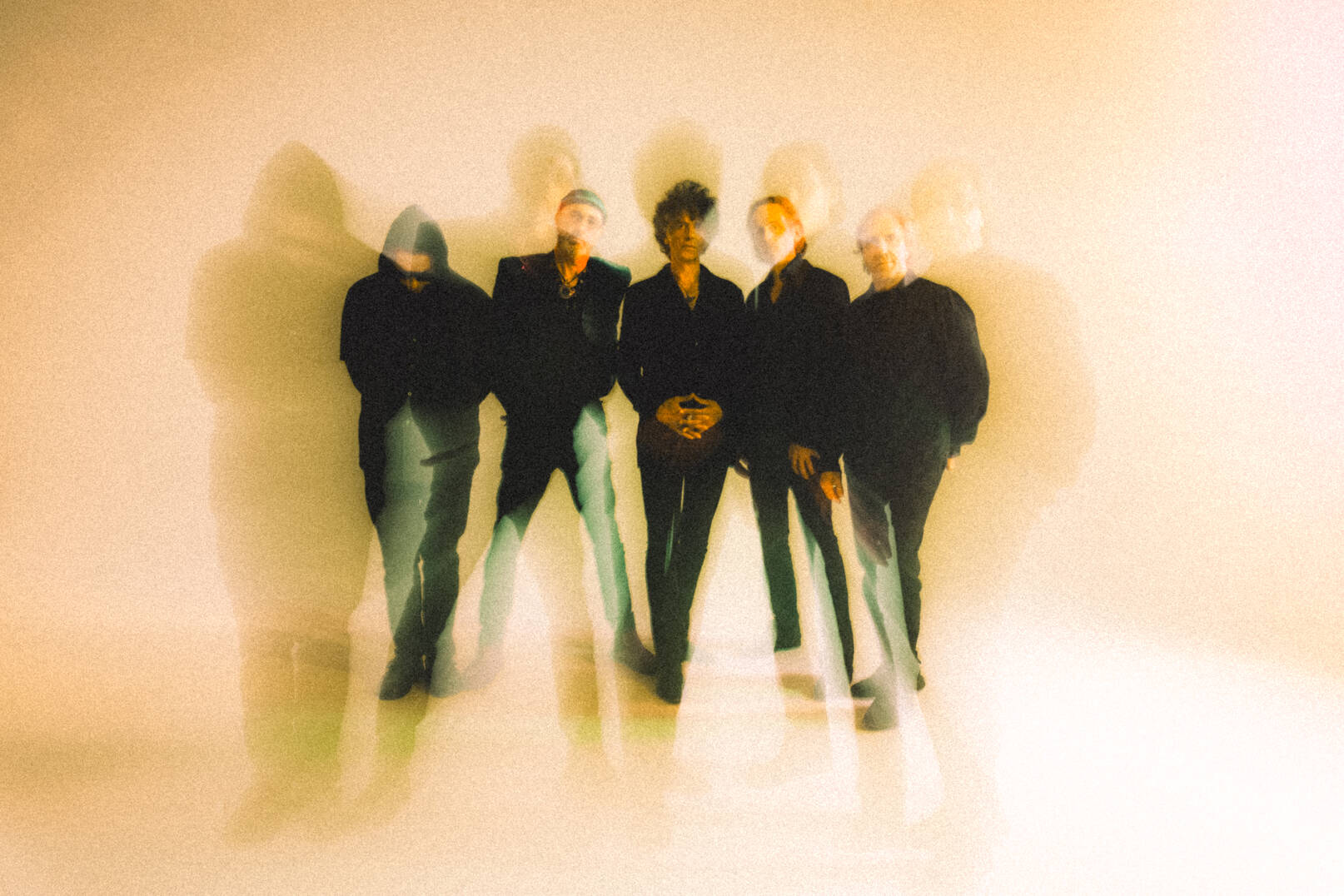
Gong (photo credit: Sam Huddleston)
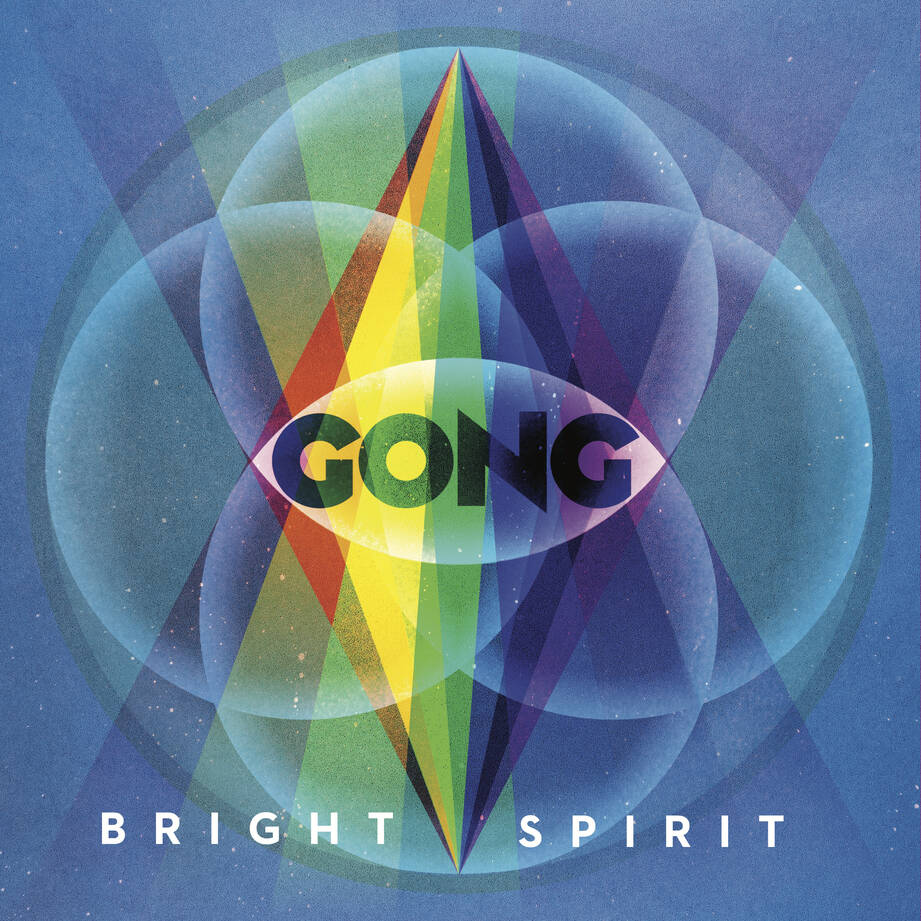
Kavus Torabi has spent the last decade navigating one of progressive rock’s most delicate inheritances. When Daevid Allen passed in 2015, he left the stewardship of Gong to a musician who’d featured on just one album with him. But Torabi has proven himself worthy of that trust and their new LP Bright Spirit, represents the culmination of a critical period. Jason Barnard spoke to Torabi about carrying the Gong legacy forward, finding his own voice, and how torrid times can become gifts if you let them change you.
You’ve described Bright Spirit as being about the Earth goddess and the divine feminine. How did you arrive at this thematic focus, and how does it connect to the loose trilogy you’ve been building with The Universe Also Collapses and Unending Ascending?
Somewhere around writing Unending Ascending we decided to commit to this idea of a trilogy. I think it was because The Universe Also Collapses was where we felt this version of Gong was truly born, where we really found our sound.
It doesn’t necessarily follow a narrative, the way the Radio Gnome Trilogy does, it was more a way for us to think of the albums. As both a development but also as a self-contained triptych. Because of that knowing that this record was somehow completing this particular cycle of the band it affected the way we wrote. Each of the three albums was approached in a different way while keeping many of the variables intact. All were recorded at Snorkel Studio with Frank Byng for instance and, as has been said elsewhere, this is the longest running line up of Gong. Whatever happens to us and the band Gong in the future, either with or without us, I feel very proud of these records we made. I think in some way we put some good into the world.
The album was completed during what sounds like an incredibly difficult period for you personally. Can you talk about how that struggle informed the final work, and whether you feel that intensity is audible in the music itself?
I can’t fully explain what it was but something shifted quite dramatically once we reassembled after the quarantine in 2022. We always knew we played well together but it was as if we had accessed another plateau in terms of the way we performed. There was a new found intensity and chemistry to the performances which deepened once we started losing older material and building the sets out of music we had written. It was during this period that the album Unending Ascending was written, played and recorded. Once that had come out, we found ourselves on the road, both in the UK and internationally, for pretty much two years. The shows were incredible, each one a transformational ritual!
This meant that everything else in my life had to take a back seat to whatever Gong was doing. While I love doing this and put myself completely into it, I think I was finding it a little difficult having to fit in my solo stuff and The Utopia Strong, not to mention my personal relationships, around Gong’s busy schedule. I felt as if these had become relegated to ‘side projects’, which was not how I saw them.
We ended 2024 with a month on the east coast of the USA followed by five weeks in Europe.
As soon as we were home I had to start writing for Bright Spirit with us convening in February to make the album. With another USA tour imminent and a looming deadline, I think I cracked.
I told the guys I needed a break, some time out from Gong. We had a band meeting and together we decided that we could make a break work starting December 2026! That’s how much in advance things were planned. Not ideal but at least it had been discussed and addressed. What’s lovely is that everyone in the band gets on and likes each other. We are a self-managed collective so it wasn’t awkward or difficult, we just had several band meetings to work out the outcome!
The situation definitely changed the variables as to how the album was made which informed the music too. It was always going to be more of a studio album than the previous one because we didn’t have the opportunity to play the songs in live as we did before so we chose to embrace that and use it to the album’s advantage.
‘The Wonderment’ is framed as meditative and inward, yet it is also expansive and communal in feeling. How do you balance music that invites introspection while still functioning as a shared experience? ‘Stars in Heaven’ carries a clear philosophical position about perception and choice in how we experience the world. Has that outlook on life and relationships between people changed over the years?
I think, at any given point, you create art based on who you are at that time. That’s the idea anyway. Things can become stale if you attempt to project yourself back to how you felt a few years before to try and replicate how you felt then if that makes any sense?
With ‘Stars In Heaven,’ it was largely a Cheb tune. It had a bit of a different melody which I struggled to make work, both with writing the lyrics and my voice, so I modified it a a little. Because the song has a classic feel to it, quite different to the way I write, I felt I ought to say something more universal, something that hopefully could be relatable.
Life is, if we choose, a path of personal growth. I’ve been through some absolutely torrid times over the last five years, a pain that I would have previously thought unimaginable. I think you have to take that as a gift. It becomes an opportunity to change. You can’t change other people but you can change yourself. At any given point the idea is to be the best and most authentic version of yourself. ‘Stars In Heaven’ is how I was at the time of writing. I wanted to remind myself to love the world again.
‘Fragrance Of Paradise’ is your first ever love song. What made you want to explore that territory now, and was it harder or easier than you expected?
I suppose it was easier. It wasn’t as if I’d avoided it before, just not something I ever felt inspired to write. What can I say? I think I found the idea corny previously but I have since met my muse and the words seemed to flow out. I was surprised at how florid they were but they are completely sincere and heartfelt.
Your guitar work has always drawn from an unusual palette of influences. How has your approach to the instrument evolved since you first joined Gong, and are there particular textures or techniques on Bright Spirit that feel new?
It definitely has evolved. It’s not that I didn’t play guitar solos before, I did a few in Knifeworld and in Cardiacs and Guapo too but they were pretty thin on the ground. Gong has such a lineage of extraordinary guitarists. I’m part of a band that once had Steve Hillage, Allan Holdsworth and Steffe Sharpstrings all of whom are very inspiring so I think either by osmosis or design I have improved, if only to be worthy of sharing a lineage with them!. I play a lot though, unless I’m working intensely on a recording or artwork, I’ll play every day. I’m always hoping to find things I’ve never explored before and to surprise myself. This time round, the solo on ‘The Wonderment’ came out pretty quickly and, against the chord changes and context, felt pretty unexpected. I think I have a pretty unconventional style in the main. I am drawn to particularly dissonant ‘rubs’ and I’m not much of a string bender. I play in the Lydian mode a great deal which makes my sound different from if it was drawing from a blues idiom, for instance.
It’s been a decade since Daevid Allen passed and left you to steer Gong. Looking at Bright Spirit, where do you most strongly feel his presence, and where do you feel you have consciously stepped away from his shadow?
It’s hard to say. I’m not sure I felt as if I were in his shadow although I am very aware that our critics and, I’d go as far to say, some of our audience probably think so.
Being part of this, in the position I am in is such a funny thing. I wasn’t especially young when I joined. I was in my early forties. I’d been writing, arranging and performing since I was a kid, been part of Cardiacs, had my own band with a number of albums already out so I was already fully formed, or at least part formed! It certainly wasn’t my first rodeo.
Daevid asked me to join and I found him so inspiring and loved the idea of writing music with him which is why I said yes.
We’d barely got an album recorded and done a few shows together before he left us, asking we carry on. I think he had confidence in me and so the responsibility was on me to be that person he believed in. I think it was probably that I had already fronted bands, could write, didn’t feel intimidated by the task in hand and was the right kind of person philosophically speaking that made him come to this decision. That said, it isn’t always easy.
I feel his presence most when playing for his friends or previous band members when they come to shows. Daevid was a nomadic sort and made friends in communities and with musicians all over the world. Whenever we play somewhere, let’s say for example just outside San Fransisco last year, a whole gang of his pals will turn up. Getting their blessing, hearing how happy they are that the band is carrying on in the way we are steering it and the energy that this version of Gong has really means the world to me. It certainly makes up for some of the occasionally unkind comments I’ll stumble across online.
Do you think the group would have taken this particular direction if he’d lived, or has your leadership created something fundamentally different?
I really can’t know that. No one can. I know he liked my songs and was a fan of Knifeworld. We only really got to write one song together on I See You which was a lovely experience.
The music we make now is sincere, heartfelt and exploratory. We are doing the very best we can while upholding the principles of Gong that Daevid set out. We all love it, every bit of it and I know that those on board for the ride in this bizarre craft we’re steering do too.
You told Daevid Allen you couldn’t play like Steve Hillage. What do you think your particular psychedelic guitar voice brings to Gong that’s distinctly yours?
I’ve been very fortunate to have toured with Steve and Miquette quite a bit as part of The Steve Hillage Band. Like I said, I have a pretty unconventional style. Maybe it’s because I’m younger, my influences also include post-punk, noise and metal which brings something else to Gong. I’ve never been one for long guitar explorations, that’s more Fabio Gofetti’s thing, the other guitarist in Gong, and he’s brilliant at it.
While I had always loved Gong, when I was a teenager my key influences were the likes of Fred Frith, Brian Setzer, Tim Smith, Adrian Smith, Lee Ranaldo/ Thurston Moore and Andy Partridge…I suppose that sound got into my DNA long before I was ever in the band.
Also, because I see myself more as a composer/ songwriter who plays guitar, perhaps I’m coming at it from a more melody-driven angle. I don’t know, it’s not something I really ever give too much thought to.
Your style and playing is an extension of yourself. It’s your voice. I’ve seen my playing described as angular and incendiary which is nice. I suppose I’m quite an angular and incendiary person. Not especially ideal traits in social situations, as I’ve discovered over the years, but fairly useful when playing in a rock group!
You’re juggling various other projects (including a current solo tour). How do you decide which musical voice to use for which ideas, and do certain projects serve different creative needs?
Generally, whatever project I’m working on gets all the attention. I can’t really switch between one or another. I have three main creative outlets; Gong, The Utopia Strong and my solo stuff. With Gong, the music usually, but not always, starts with me and we tend to arrange it as a band. With The Utopia Strong it’s an equal thing between the three of us, which we create there and then rather than arriving with prewritten ideas while with my solo records all the music and arrangements are by me.
When I’m in Gong mode then pretty much everything I come up with goes into Gong. There was something I wrote while preparing for Bright Spirit that felt too personal so that became a solo tune but that’s rare.
I love having these three because each one has a very different dynamic and subsequently the way I work in each one is different. In Gong, unless I have a very specific idea for a melody or arrangement, I tend not to try and write other people’s parts.
You’ve said psychedelic music isn’t about a particular era or sound, but about how the music makes you feel. By that definition, what makes Bright Spirit a psychedelic record in 2026?
I think that’s in the ear of the listener. I hope this music is shimmering, otherworldly and moving. There is a part in ‘Dream Of Mine,’ for instance, which I call ‘The Pay Off’ which gets about as close to what I’ve been trying to say musically as anything from the last three decades. Meanwhile, a tune like ‘Mantivlule,’ which is largely a group composition, sounds so unexpected and slippery, my mind is unable to shake off the cascading shifting architectures.
When people come to see Gong live when you tour March onwards, what do you most hope they leave with?
As for the shows, we think of each one as a transformation, for us and the audience. I hope, at the very least, people leave elated and changed. Sometimes people tell us that the show was a religious experience. I can’t know what they’ve been through for the hour or so we’re on stage or which religion they were experiencing but that is exactly the kind of response we’re hoping to trigger.
Further information
Bright Spirit by Gong will be released on 13 March, pre-order here

This interview is fascinating, especially hearing Torabi reflect on stewarding Gong after Daevid Allen’s passing. It must be an immense challenge honoring that legacy while forging a new path. I’m really curious to know what *he* feels was the most significant shift in Gong’s sound or ethos during this trilogy period.