Derek Shulman’s career reads like a musical fairy tale – from teenage pop stardom in the 1960s to progressive rock pioneer, and finally to the executive who signed some of the biggest names in metal and rock. Now, the Gentle Giant frontman-turned-A&R legend is telling his story in a new memoir that promises to lift the lid on five decades of music industry evolution.
Giant Steps: My Improbable Journey from Stage Lights to Executive Heights, co-written with veteran music journalist Jon Wiederhorn, chronicles Shulman’s remarkable transformation from a confident schoolboy who told his teacher he’d become a star, to the man who made stars of others.
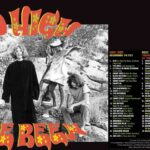
The book, published on 7 October, traces Shulman’s path from his early success with 1960s pop and R&B group Simon Dupree & The Big Sound, a band that once shared stages with Elton John, through his groundbreaking work with progressive rock pioneers Gentle Giant in the 1970s.
But it’s perhaps Shulman’s second act that proves most fascinating. In the 1980s, he took senior roles at major labels and his golden ear for talent led him to sign and develop artists who would go on to define rock and metal. The roster reads like a who’s who of rock royalty: Bon Jovi, Dream Theater, Slipknot, and Pantera all owe their careers, in part, to Shulman’s belief in their potential. He also played crucial roles in revitalising the careers of established acts like AC/DC and Bad Company during periods when their stars had dimmed.
“Derek Shulman was there before there was a there,” Jon Bon Jovi recalls in the book’s advance publicity. “We grew together as a team. We learned as we lived. He was the one real A&R man that we could count on when we needed him.“
Remarkably, Gentle Giant’s influence has proven surprisingly enduring and cross-genre. The progressive rock outfit became a defining influence on hip-hop, with their complex compositions sampled by leading artists including De La Soul and Run The Jewels. The Roots’ Questlove, has championed the band as one of his favourite rock acts of all time.
Ian Anderson of Jethro Tull recalls with evident amusement: “The intensity of Gentle Giant’s performances sometimes extended from stage to dressing room after their show when a noisy post-mortem might erupt into murderous fraternal screaming matches over a missed semi-quaver or less than perfect vocal harmony. Spirited bunch, the Giants, in full flow. Move over, Cain. Step aside, Abel.“