(Strawberry/Cherry Red CR3JAMBX44)
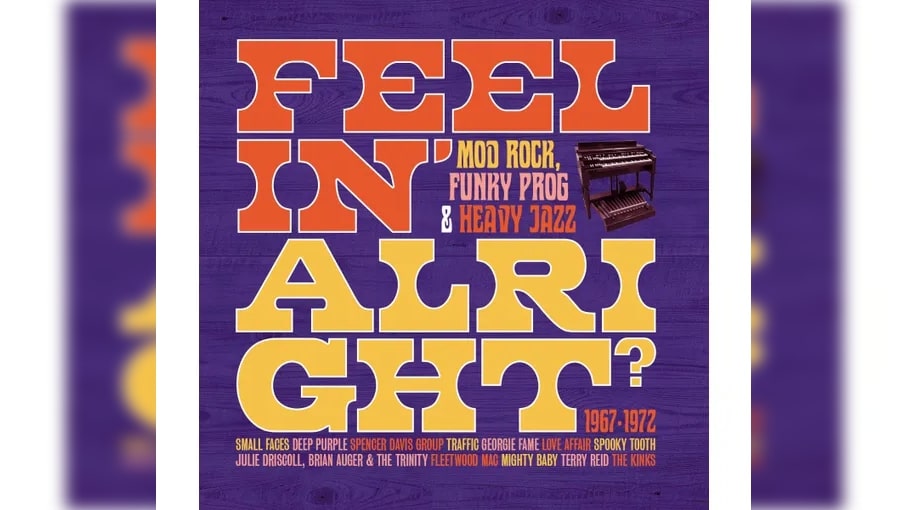
Cherry Red Records continues their exceptional exploration of British music’s transformative late ’60s and early ’70s period with this ambitious three-disc compilation. It captures a pivotal era when the boundaries between rock, jazz, and progressive music were dissolving into exciting new forms. Brian R Banks tells us more.
Since 1982 when the invention of CDs started printing (never “burned”), their larger format allows more content than ever before in physical terms. Cherry Red’s recent box set continues an excellent spectrum of the late 1960s and early 1970s in the U.K. with a slightly expanded trajectory this time out.
The title is from Traffic’s debut LP and its single, and they’re here among other 60s big hitters like the Spencer Davis Group (the original band’s last mono single for a top ten charter featuring Traffic’s Steve Winwood), a Love Affair LP track they didn’t play on, Love Sculpture (the Welsh band sporting a young Dave Edmunds), John Mayall’s Bluesbreakers with a non-album 45 including Mick Taylor, Keef Hartley and Dick Heckstall-Smith on sax, and the Small Faces with a Ronnie Lane song inspired by Sufism.
Heavyweights from the 70s include Deep Purple (their debut ’68 LP single that sold well worldwide but not in Britain, plus a non-LP funky wah-wah heavy blast about a girl in the musical Hair), Fleetwood Mac’s rousing cover of Elmore James, the great rocking Free when still success-searching on their second platter, Blodwyn Pig with Mick Abraham’s Sing Me A Song I Know (plus his solo’s Greyhound Bus after 3 top ten albums with them and Jethro Tull, whose debut is also featured covering jazz master Roland Kirk). Choice cuts too from Jeff Beck, a co-write with the pseudonymous Rod Stewart adapting Buddy Guy, and Alan Bown on Deram featuring the vocals of Robert Palmer.
Gigging headliners are Chicken Shack for a driving romp that was one of three Freddy King standards on their charting LP that never saw singles success, Spooky Tooth (a debut after changing their name from Art), and the jazz fusion leviathans Colosseum covering Graham Bond. Less known are The Creation with a last mono 7” on Polydor before their six UK flops led them to fly to Germany, fellow labelmates The Lion Tamers with their only release, The Attack with an unreleased 5th Decca single featuring John Du Cann who was later in Andromeda and Atomic Rooster, Merseyside’s quaintly-named Curiosity Shoppe’s only 45 (Deram no less), and Wynder K. Frog that was in fact keyboardist Mick Weaver who worked with Traffic, Joe Cocker, Taj Mahal etc with a bonus cut Jumping Jack Flash originally on this label’s 2018 boxset of Weaver. There’s also Sharon Tandy backed by the song’s writers Fleur De Lys—and all that’s just the first CD.
The other two CDs extend the spread, as did their earlier releases but with more jazz rock that was significant then. Further big hitters are Georgie Fame, with the Lancastrian’s later dancefloor filler from 1970 on CBS, Manfred Mann’s Chapter Three on an early Vertigo LP with a brassy fuzz groove, The Shadows’ rock covers of 1970 (in suitable rocker sleeve) with a funked up My Babe by Little Walters, The Faces’ debut when hitched with Rod Stewart and Ronnie Wood from the Jeff Beck Group, the Kinks (instrumental of the hit Lola from their 9th), Graham Bond’s Magick with a jazzy soul Vertigo LP title track, and Brian Auger with two contributions by that era’s ever-present including a piece from Hair.
In and out of the hit parade (a fraught path in those heady days because fans might gasp “selling out”) were Mott the Hoople with their own take of You Really Got Me that opened their Island career, Status Quo’s 3rd LP just before flying from psychedelic pop to rock boogie, and Blue Mink’s first 45 on Morgan Blue Town, a spin-off from the much-frequented North London Studio when its staff including owner-drummer Barry Morgan added Madeline Bell as vocalist from America to their quintet for not just the world hit Melting Pot but five other charters. Little known is that she sang the first jingles for Radio Caroline, while they wrote others for London’s Capital Radio in 1973.
On another producer’s label, Mickie Most’s RAK, CCS (Collective Consciousness Society) were formed by ‘60s scenester Alexis Korner; here is their second LP’s opener (Brother) rather than the Top Of The Pops theme hit which eclipsed its writers Led Zeppelin in 1970. McDonald & Giles, both in the original King Crimson, surface from Island’s classic sampler El Pea (1971) with an edit from their sole LP. Nice to hear Don Fardon’s I’m Alive which preceded his hit Indian Reservation a year later, more recently heard again on a drink advert. Like John Mayall, he wasn’t American but English despite his interest in Native America, as was the late Terry Reid who launched a solo career after the Jaywalkers (a support tour with the Stones in ’66) as an “artists’ artist” (the Most-produced Tinker Tailor and organ-drenched Marking Time from its follow up). Declining Jimmy Page’s invite to join his new combo and also Blackmore’s Deep Purple, he played the Isle of Wight Festival etc. and wrote hits for such as Arrival (Friends).
The very interesting East of Eden are belatedly noticed with the flip to Jig A Jig (the second LP’s Marcus Junior) showcasing their violinist who contributed to the Who, plus the excellent Vertigo rockers Juicy Lucy strutting Chuck Berry’s Nadine. Canterbury Scene prog stalwarts Caravan swirl a Decca B-side that became an album title, while Keef Hartley (Ringo Starr’s replacement in The Hurricanes who backed John Mayall) mixed rock with blues and jazz (Don’t Be Afraid). I wonder if he chatted with Fardon about their American Native interest? His six Deram albums came either side of performing at Woodstock. The ex-Spencer Davis Group’s unassuming Hardin-York debut title track pleases too.
Regular giggers were Savoy Brown, the Battersea blues band that started at its famous Nags Head pub-club, with a searing rip from their fourth release (1969) before wider fame stateside and fathering Foghat there. Also, Mighty Baby whose guitarist Martin Stone used to be in Savoy Brown and later a bookseller, evolving Mod band The Action to become hippy torchbearers with a Sufi lifestyle. They debuted at Middle Earth in January 1969, and a cut is from their Head Records inaugural platter. Blonde On Blonde, the Welsh proggers that sound nothing like Dylan, had three LPs/singles (here the sarky Conversationally Making The Grade) but no success in spite of a fine guitar-led pumping rhythm mixing acoustic with electric plus organ and sitar which has been compared to George Harrison (the album includes Eleanor Rigby), plus Fuzzy Duck of the same ilk but who had only one album of 500 copies on MAM.
Less known at the time but reprised here are The Exceptions on a ’67 pre-album single featuring Fairport’s Dave Pegg with Robert Plant on tambourine, and the now-renowned psych classic Magic Potion by the Open Mind after they morphed from being Mods (The Drag Set) like others at this time. There is also Clouds from their 3rd offering, just before they split in’71, the Ace Kefford Stand (Kefford was one of the founders of the Move) featuring the great drummer Cozy Powell for a heavier redo of the Yardbirds’ hit For Your Love as their lone single on Atlantic, Affinity from the Vertigo stable with a brass arrangement by John Paul Jones, the Norman Haines Band’s rocking keyboards on a one-off LP, and South Londoners Killing Floor’s grooving blues-rooted debut with horns and conga percussion.
I never heard back then of Bobak, Jons, Malone, another Morgan Blue Town studio-team release in ’69 of a pastel-covered LP now sought-after by collectors, also a same-label sole LP by Pussy produced by Bobak, and Rock Workshop with a jazzy non-album B-side featuring Alex Harvey on vocals. As mentioned before, this compilation features more jazz rock e.g. the six-piece Satisfaction with clear pedigree, Walrus who were an eight-piece on Deram, stable mates the Johnny Almond Music Machine fronted by a multi-instrumentalist who played alongside many illumini (later forming Mark-Almond), and Galliard who evolved from a Brummie soul group into a funky six-piece with two Deram LPs: Strange Pleasure shows versatility because they also created memorable prog folk.
This might remind avid listeners of the absent but timeless Dandelion roster or Ladbroke Grove scene, both in Cherry Red’s huge catalogue, but these do appear on their other compilations. Alas alack, there is little excuse for the absence of such regular nationwide giggers at the time who recorded on big labels with sessionmen: Mick Softley (“Britain’s Bob Dylan” it was said!) and Nick Pickett. I know there are no singer-songwriters here, I refer to the series as a whole. But without doubt this is another fine cross-section of the period by leaders in this field with an informative booklet and portrait sleeves: the series is as good as definitive compared to the rest of the market over the last decades since the format’s inception.
Brian R. Banks
Further information
Various Artists: Feelin’ Alright? Mod, Rock, Funky Prog & Heavy Jazz 1967-1972, 3CD