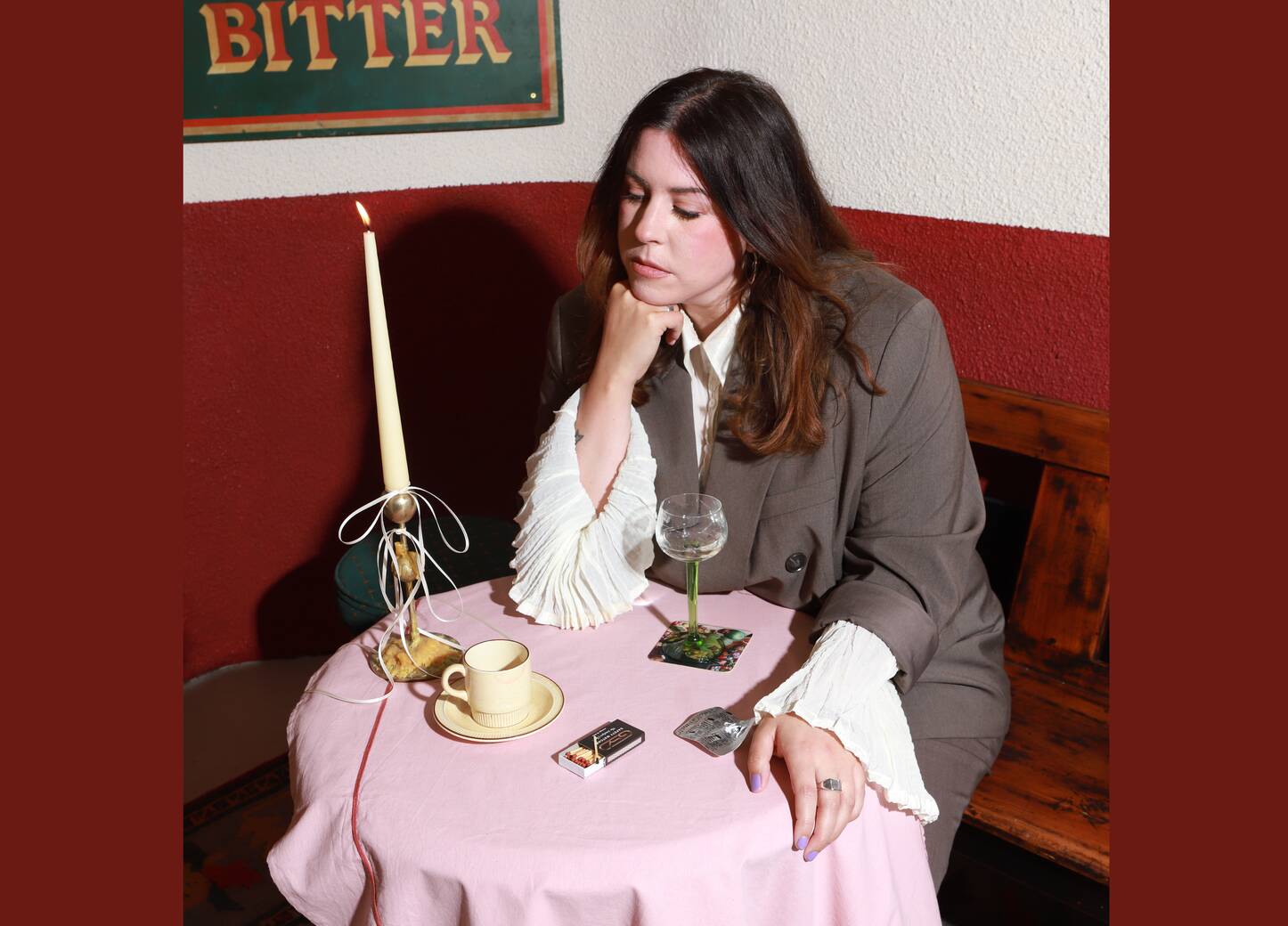
Kelli Blanchett (credit Jamie Noise)
By Jason Barnard
Kelli Blanchett spent much of 2023 stuck at home. Her chronic illness had worsened to the point where leaving the flat wasn’t always possible, and she’d been bracing, she says, for the loneliness of it. What happened instead was that people came to her. Friends would turn up, her partner got good at cooking, and these shared meals became the thing that kept her going. The EP she’s made about that period is called Casual Dining. It’s five tracks that recall the sound of 1970s singer-songwriters and deals with isolation and lost friendship. Blanchett is thoughtful company in the following interview.
Where did the Casual Dining title come from, and what does it mean to you?
In 2023 my chronic illness intensified and I became very ill and often housebound. I’m a sociable person and love having a few wines down the pub with my friends, and I was worried I would lose an important part of my life if I became ill and unable to leave the house. And to my surprise, it became one of my most nourishing years in terms of feeling the love of a community. Many of my friends would come and have casual dinners at my flat, my partner became very good at cooking, and we regularly dined at home with friends coming in and out of the flat and feasting. This is an incredibly personal record for me, and having my friends come and share what is normally a very mundane or passive thing to do (eat dinner) became the highlight of my week and, in some ways, kept me alive.
You’ve described the EP as a break-up with your old self rather than with a person. Did writing these songs help you understand that change and where you are now going?
I don’t know if it helped me understand the change or even understand where I am going, because being chronically ill means it’s always there in the background waiting to pounce. But what it did teach me is how to process my feelings and understand them, instead of pushing them away, and that really helped me write this record. It felt like much-needed therapy.
How much does where you’re from influence the emotional world of this record?
Where I am from shapes everything I do. It’s a part of me that has grown stronger as time has passed. Being from a working-class place felt like something I was supposed to be embarrassed about when I was younger. Joining the creative industries, I felt very out of place. This meant that I wasn’t sure how to write about my experiences, as I was trying to hide them. This EP has felt very honest, and the struggles that I encountered and wrote about were often based in working-class trauma.
“Hiding in Plain Sight” is about a friend disappearing without explanation while you were also going through something serious. How do you write about someone when you don’t know their side of the story?
Their side of the story will always be their lived experience, and that can never truly be known. I took the parts that I did know about and analysed our relationship, and wrote about my experience of navigating that rather than trying to empathise with their reasons for disappearing, because I had spent a long time empathising with their experience in the world and had neglected my own. So it’s more a story of navigating that.
You’ve cited Linda Ronstadt, James Taylor and Gram Parsons as touchstones for the EP’s sound. Can you tell me more about your influences and how it impacts your songwriting?
Ever since I started making music a long time ago, when I first picked up the guitar at 18, I knew that I was interested in the analogue sound, and the rawness and honesty of folk, country, Americana and blues. I listened to lots of different music, but this stuff always stuck with me. I love the melodies of Linda and the soft and intricate vocals of James Taylor. The instrumentation on GP by Gram Parsons has such simplicity, but it’s so perfect and touching. The lap steel guitar and strings do something to me deep in the soul—there’s something so pure about it. I’m also a sucker for harmonies and I love doing them. That’s why I love singing in Self Esteem—it’s five-part harmonies and it’s really intricate at times and really scratches an itch for me. That’s why I love listening to the Trio album with Dolly, Linda and Emmylou.
Has working with Rebecca Lucy Taylor / Self Esteem shaped how you think about what your own music can do or say?
Yes, massively. I entered songwriting and playing tentatively when I first started in music, slightly unsure of who I was musically, or at least afraid to lean into who I was. Meeting Rebecca and joining Self Esteem opened my mind, and as we became close we realised we had lots in common—both from steel towns, both in fluctuating bodies, and feeling like we were taking up space when we shouldn’t be. It helped me advocate for myself and trust that my own ideas and thoughts were to be trusted. It helped me understand there is room for honesty in music and that’s what I’ve tried to make.
You’ve said you hope the music reaches people who feel lost and reassures them it’s okay to be where they are. Where are you right now and what are your plans for the rest of the year?
Well, as a chronically ill girly I don’t tend to live in the future too much—it feels too scary. This is one of the tough parts of having a dynamic disability (one which moves and changes); the industry isn’t really equipped for it. It’s always about momentum and pushing forward at speed, which can feel impossible at times for me, so I live in the present and that helps me weather the storm. I do have plans, I always do. They are to learn how to record so I can work on my music more intensively at home, and then to tour the UK come autumn if my health is in a good place. If not, I’ll do a mini tour and start writing the next record.