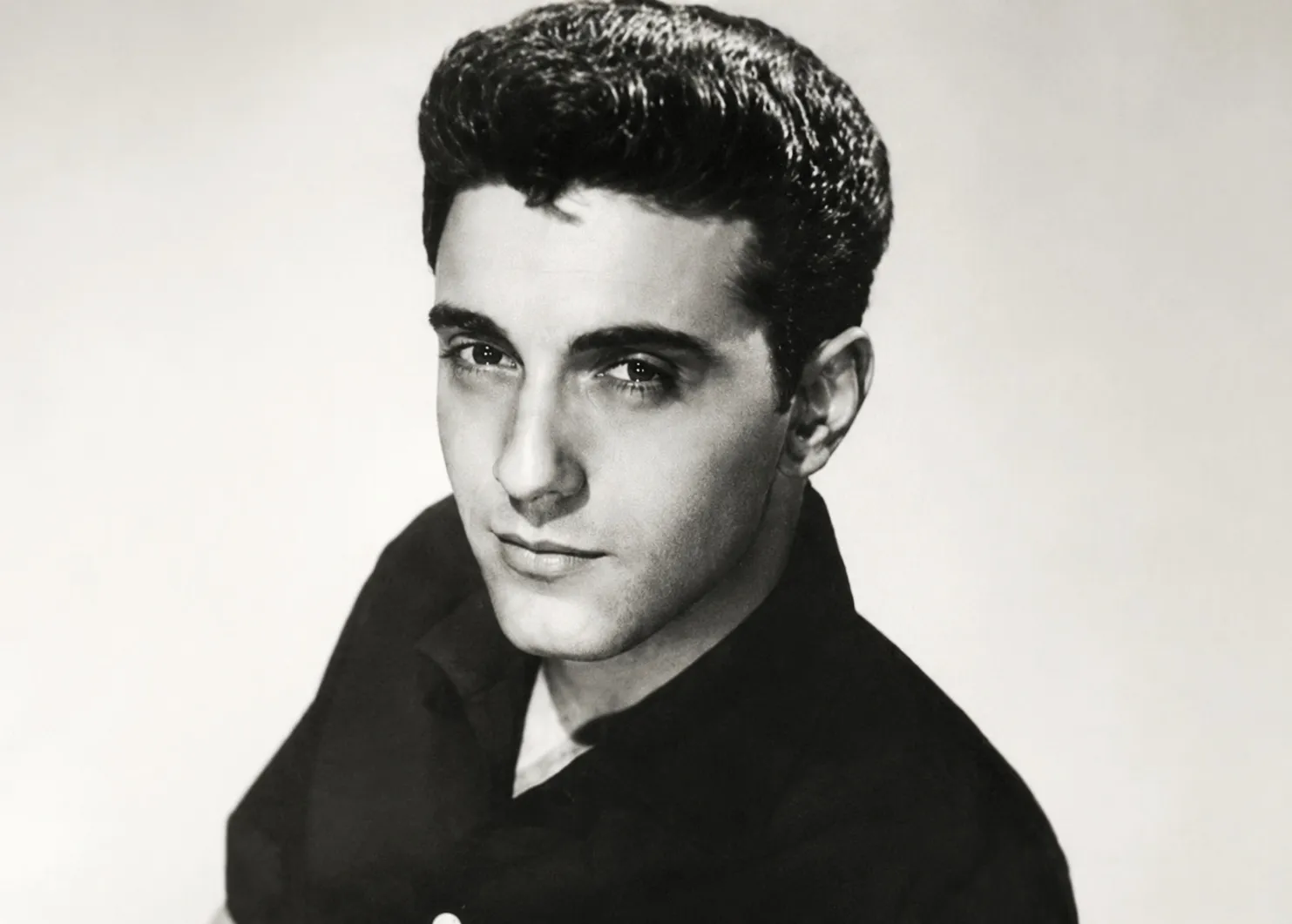
Johnny Stark - 1956
The Story of Johnny Stark by his son Giovanni Sticco
Johnny Stark had been singing since he was a boy in Jersey. After his mother died, music became a refuge, and his father encouraged the talent he already showed.
He was eventually trained by Henry Armanti, who had been a student and friend of Enrico Caruso. That training would stay with Johnny for the rest of his life. It gave him a foundation that most young rock and roll singers did not have and taught him how to understand and control his voice.
Years later, when rock and roll began opening up a new world of possibilities, that early training would prove to be an advantage. Johnny could take that voice into different styles and genres without losing the power that made it his own. The music was changing, but he already understood his instrument.
Johnny was born in Englewood, New Jersey, in 1937, the middle of three boys, and grew up in Fairview. His early life wasn’t easy, and the things he experienced as a boy helped shape the determination he would carry with him for the rest of his life.
Before Hollywood, before the records and before the people who would eventually become part of his story, there was the Air Force.
Johnny joined the service and found himself stationed in Wyoming before being sent to Alaska and Elmendorf Air Force Base. He became a buck sergeant, boxed and experienced the kind of cold most people never encounter. He suffered frostbite. He saw the Northern Lights. And in the middle of that harsh environment, he could still find his way back to music, even singing Ave Maria.
When Johnny came home in ’56, he got a job at the American Can Company in Jersey City.
“I worked the line.”
That was the reality. Johnny needed to work, so he worked. But the music was still there, and the idea of making a life as a singer never went away. Eventually, that desire took him west to Hollywood, where he hoped the place everyone talked about would give him the opportunity he had been looking for.
Hollywood taught him something very quickly as wanting to be in show business and making a living in show business were two very different things.
Johnny had to hustle. He worked construction in California while continuing to pursue music. Even when things started moving in the right direction, he still had to work to support himself while trying to reach the level he believed he could reach. There was no guarantee that the next opportunity would come.
Hollywood also presented Johnny with choices that had nothing to do with singing. He remembered an encounter with Henry Wilson in which Wilson made him a proposition. Johnny told him that he could not accept it. He got up and walked away.
Wilson’s response was, “What a shame. What a shame.”
Johnny wasn’t willing to sacrifice his pride for a way into the business. He wanted to make it as a singer, but he wanted to do it on his own terms.
He had already learned that if something mattered to him, he couldn’t wait for somebody else to hand it to him. Eventually, the work began to turn into a career.
Crystalette Records became an important part of Johnny’s story, and his records began finding their way into the world. He was no longer simply the young singer trying to convince somebody to give him a chance. He was becoming a recording artist with a sound of his own.
One of the most interesting parts of that period involved Gordon Lightfoot and the Four Winds. Gordon worked with Johnny on four songs, and Johnny remembered him as a very nice guy. The famous clapping on “Rockin’ Billy” was Gordon, and he also harmonized with his band.
Johnny was building his own musical identity at the same time that rock and roll itself was taking shape. Eddie Cochran became a good friend and Gene Vincent was another important figure in Johnny’s early rock and roll world.
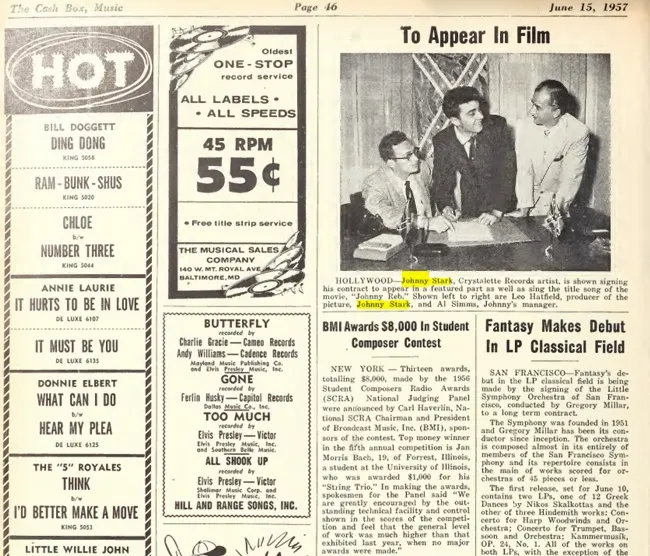
Johnny also had accomplishments of his own. He toured to Baltimore with Frankie Avalon, and Connie Francis was another part of the touring world Johnny experienced during those years. He appeared on American Bandstand and signed a contract to make a movie called Johnny Reb. His career was moving beyond the small rooms and hard days that had defined the beginning.
Then there was Elvis Presley
Elvis knew about Johnny and was fond of his vocals. Johnny remembered that Elvis sought him out because he wanted to meet him. There is something significant about that. Elvis already knew Johnny’s voice and was keen to meet him. Johnny’s classical training never disappeared. It remained part of the way he approached rock and roll, giving him an understanding of his voice that few singers of his generation had. His connection to Elvis’s musical world would continue long after Elvis was gone.
After Elvis’s passing, Johnny jammed with members of Elvis’s band in California, including Jerry Scheff, James Burton and John Wilkinson. Johnny remembered looking at James Burton while they were playing and noticing something in the way James looked at him. To Johnny, there was something familiar in that look. It reminded him of the way James had looked at Elvis.
Another connection came through Kathy Westmoreland, one of Elvis’s backup singers. Kathy was from Texas, and her father owned a record store. She told Johnny’s son that she remembered Johnny and remembered her father stocking Johnny Stark records in the store. She had heard Johnny’s music when she was a little girl.
Years later, after Elvis’s passing, that connection came around again when Kathy Westmoreland sang backup for Johnny in Hollywood, working with Johnny’s good friend Mark Travisino.
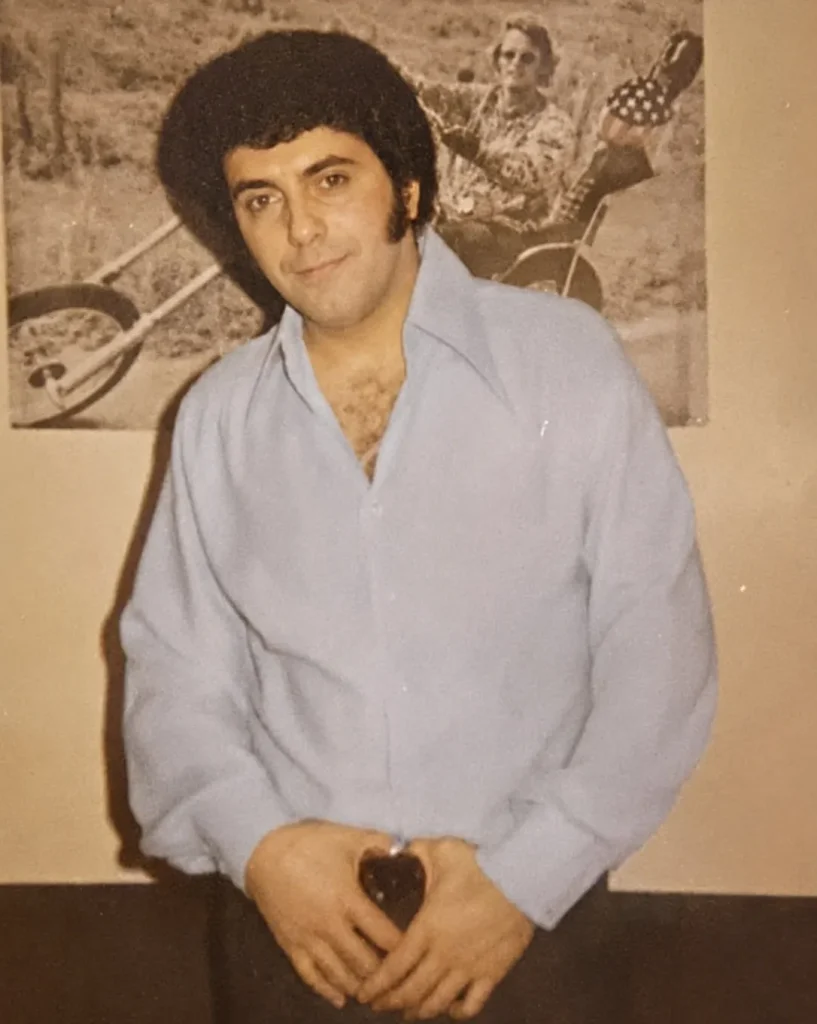
Johnny’s musical life continued to cross generations
About twelve years ago, in Las Vegas, a phone conversation with Little Anthony and the Imperials brought another old connection back to life. Little Anthony remembered working with Johnny in New Jersey in 1970. The conversation was relaxed, with laughing and joking, until Little Anthony said something that stayed with Johnny’s son.
“Johnny, man, your voice gave me chills. What a phenomenal voice you have, Johnny.”
Then they went right back to talking and laughing about the old days.
Frank Sinatra had also known about Johnny and enjoyed his music. Again, that wasn’t what made Johnny who he was. Johnny didn’t need famous names to become a singer. He was already a singer.
And the trail didn’t end with the generation that created rock and roll. At one point, Johnny sat down for a jam session with Les Warner, the drummer who played with The Cult.
Johnny eventually found another form of recognition in Nashville, where he is in the Rockabilly Hall of Fame, which also featured an article about him. But even that kind of recognition wasn’t really what had driven him through all those years.
He believed that getting into show business specifically for the money, rather than because you loved the business, was the wrong attitude. The money would come afterward. You had to love what you were doing first.
He had worked the line at American Can and had served in the Air Force. He had gone to Hollywood and worked construction while chasing music. He had faced disappointment and had walked away when something crossed a line he wasn’t willing to cross. He kept singing, recording and looking for the next opportunity.
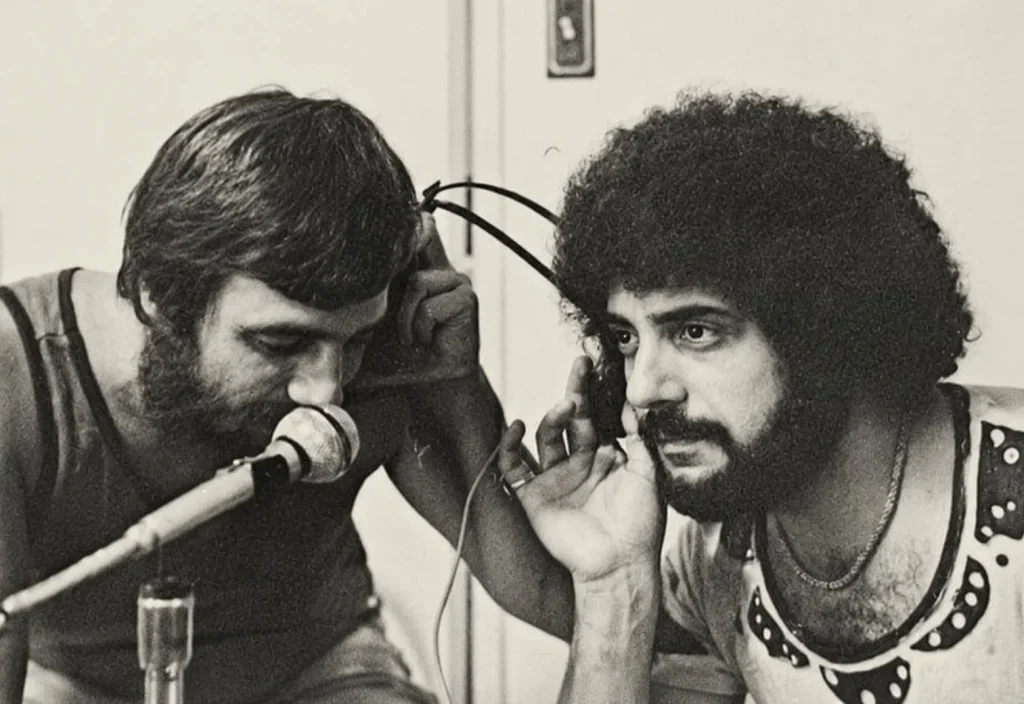
There was never a point where Johnny could simply sit back and say he had made it
The “Cinderfella” nickname fits because there was no sudden breakthrough in Johnny’s story. He worked his way through factory jobs, the Air Force, construction and countless performances while continuing to chase a career in music.
That’s the charming part of calling him the Cinderfella of rock and roll. The famous names are part of Johnny’s story, but they are not the story.
A boy who lost his mother and found a distraction in music. A young man whose father helped put him on the path to singing. A student of Henry Armanti who learned to understand the power of his own voice. A serviceman. A worker. A construction laborer in California trying to keep his dream alive. A singer who made records and walked onto stages where history was being made.
Johnny Stark wasn’t simply somebody who knew famous people, he lived through the early years of rock and roll and made his own contribution to them. He had the voice, but he also had the determination to keep using it when the easy road wasn’t available.
That’s why his story deserves to be remembered.
Further information
I am Johnny Stark: My Rock and Roll Memoir
All photos used with permission of Giovanni Sticco
Wow what a fabulous article about my father.
Thank you Jason..