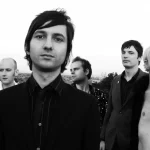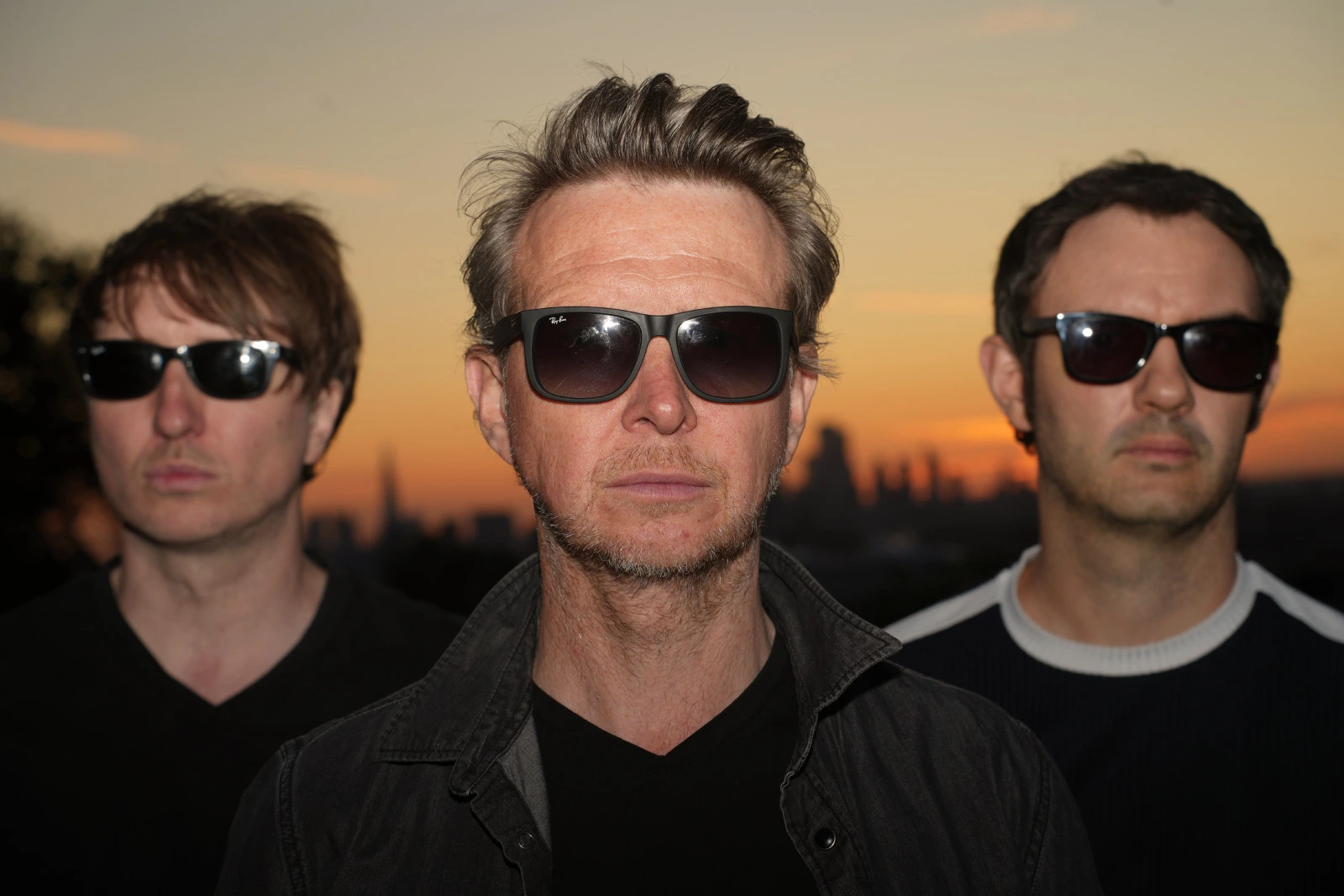
Some Velvet Morning (Credit: Paul Tunkin)
By Jason Barnard
Twenty-five years after their first gig, Some Velvet Morning are still finding new corners in their sound. The North London trio’s fifth album, Tell The Summer Hang On, draws more openly on folk and country than anything before it, an approach that took hold early on when Gavin was away and Des and Rob found something worked with just drums and acoustic guitar in a rented studio space.
Kele Le Roc and Wayne Fullwood of Little Barrie both guest on the record. Ahead of a September show at Colours Hoxton marking the anniversary, Des Lambert, Gavin Lambert and Rob Flanagan spoke to me about the album. We also got into the group’s early days on Denmark Street and how a song written between their first two records ended up in ad campaigns across Europe.
This year marks 25 years since Some Velvet Morning played their first gig. Does that anniversary make you look back, or are you the sort of group that’s always looking towards the next record?
Des: An anniversary inevitably makes you look back a little. 25 years is a long time to spend making music with the same people. There are tours, songs and events that we probably didn’t appreciate fully at the time, but we’ve never been particularly good at sitting around admiring the past. To me, every record feels like the last one once I complete it. I put everything into it and have nothing left to say after, but it seems there’s always one more round.
Rob, you met Desmond and Gavin on Denmark Street. What do you remember about that first meeting, and when did you realise this had the makings of a long-term group rather than a project that might last a few rehearsals?
Rob: I remember hitting it off with Des straight away. The first record he played me in his studio was John Lennon’s “How Do you Sleep?” and that was probably the moment I thought I’d found somebody I could make music with. Gavin came into the band through Des. I’m not sure anybody predicts 25 years at the first rehearsal but having tried out a few different bands before meeting Des and Gavin, I was impressed by the fact that they could sing and play…not always a given!
You took the band name from the Lee Hazlewood and Nancy Sinatra song. Twenty-five years on, does that song still feel like part of your identity, or has the name taken on a meaning of its own?
Gavin: It began with the three of us looking at the backs of record sleeves for ideas. We all liked the album Nancy & Lee (by Nancy Sinatra and Lee Hazelwood). “Some Velvet Morning” was one of the few suggestions that none of us objected to. Our favourite song was actually “Jackson”, but someone had already taken that name!
This album draws more openly on folk and country than previous records. Were there particular artists or albums that nudged you in that direction, or did those influences emerge naturally while you were writing and recording?
Des: Those influences have always been somewhere in the room. Paul Simon, Fleetwood Mac and the Beatles have long been part of our shared musical influences, alongside artists such as Depeche Mode and U2. One reason may be that in the early writing stages of this album, Gavin was unable to be there. It was just Rob and I – the sound of drums and acoustic guitar just worked in the studio space we’d rented. We’ve also always enjoyed stripping songs back and discovering whether they still work without the production around them. This time, a more acoustic side of the band came through naturally from some of those influences.
Kele Le Roc returns as a guest. What keeps bringing you back together creatively, and what does she add to a Some Velvet Morning song that nobody else could?
Des: Kele is a good friend of mine and we work well together in the studio. When you’re working with a friend, the collaboration never feels forced. Kele has a distinctive voice and she brings character and an emotional directness to a song. This helps give the record a dimension that our usual three-piece set up can’t create on its own.
Wayne Fullwood, known from Little Barrie, also appears on the album. How did that collaboration come about, and what did he bring to the sessions?
Rob: Wayne is my kindred spirit in terms of musical taste; we love all the same classic records from the 60s and 70s and we were neighbours in halls at Paul McCartney’s Liverpool Institute for Performing Arts. I was there in the early days of his work with Little Barrie too. Now that Wayne works as a solo musician and we were looking for extra vocals on the new tracks, it seemed like a great opportunity to work with an old friend.
“I Never Knew What Love Could Do” is one of the songs built around the idea of transformation. Was there a particular moment or experience behind it, or did it grow out of several different stories?
Gavin: It grew out of several experiences rather than one strictly autobiographical event. We tend to begin with a riff or a melodic phrase, then allow the song to find its own character.
Des: It’s also our first song to be in a 7/4 time signature. I’m quite proud that it passes most people by (until I point it out.. Like now!) The 7/4 time signature seems to give it an unstable feel which suits the lyric.
“The Architect” centres on renewal, but it’s also a bold title. Who or what is the architect in that song?
Des: I don’t like to be too prescriptive on what a song means to me; the listener’s own experience is far more important. On the surface, the song is about the majesty and possibility of the breaking day. Who or what we owe thanks to, for that opportunity, is open to the listener.
Time seems to run through the LP, particularly in “Tell The Summer Hang On” and “It’s Later Than We Know.” Was that something you recognised while writing, or only when you listened to the finished album?
Rob: It became much clearer as the record was near completion. Individual songs were written for their own reasons, but once they sat beside one another, we noticed that time was one of the record’s themes. I think that making an album as we approached the band’s 25th anniversary made us more aware of those ideas than we realised while writing.
Rough Seas inevitably reflected the uncertainty of the period in which it was written. Did you want this record to feel more hopeful, or did that happen naturally once life became a little more settled?
Des: We didn’t set out to make an artificially optimistic record. Rough Seas reflected the atmosphere of the time it was made. The hopefulness emerged through the subjects we found ourselves writing about – renewal, connection and transformation. There’s still darkness on the record, but now there is more belief that you can travel through it, rather than simply describe it.
”How To Start A Revolution” introduced a huge number of people to the band through the Kick-Ass trailer before finding another life in advertising campaigns across Europe. Were you surprised by how widely that song travelled, and has your relationship with it changed over the years?
Rob: Having it used in the Kick-Ass trailer was a big deal for us at the time, particularly because we actually liked the film. The song was written between our first two albums and has a slightly different character from both records. Since then, it has continued to appear in places we could never have imagined, including two big ad campaigns across Europe for Renault and Aprillia. It’s a song we always have to play live, like any big song in a band’s repertoire. We try and keep it fresh by not over rehearsing it – we’re definitely grateful for its success.
Looking back across five studio albums, do you recognise a thread running through your songwriting, or does each record feel like it belongs to a different chapter of the group?
Gavin: Both are true. Each album belongs to the time in which it was made. Our first two albums (Silence Will Kill You and Allies) were largely about capturing the live band. Later releases became more polished and sculpted as records. The thread is probably the way we build songs: strong ideas and a willingness to rewrite them until all three of us agree they’re finished.
You’ve now been making music together for a quarter of a century. Has the way the three of you work changed much, or do the same roles and instincts still shape the band today?
Des: The roles are clearer because we know one another’s instincts and strengths so well, but they have never been rigid. Everybody can comment on everything—Rob may have an idea about a guitar part, for example, just as myself or Gavin may have a thought about the rhythm. Being three very different people can make the writing process slow and we have been known to rewrite songs several times. I often think about the tale of The Ship of Theseus; when a song has had all of its sections rewritten multiple times, is it still the same idea? An alternate analogy is Trigger’s broom from Only Fools & Horses. He’s had the same broom for 25 years – just replaced the handle 12 times and the head 15!
“Losing My Mind” first appeared almost twenty years ago, and it’s now reaching a new audience through Geek Girl. What’s it like watching one of your earliest songs find listeners who may never have heard the group before?
Gavin: One of the great things about recordings is that a song doesn’t necessarily have only one moment. “Losing My Mind” came from our first album Silence Will Kill You and was built around a bluesy stomp rhythm and lead bass! It later appeared in The Grand Tour, and now Geek Girl, introducing it to another generation. Seeing an early song reused is both strange and gratifying. It may send somebody to the first album, or it could just be a standalone track that they love.
You’ll celebrate both the new album and 25 years together with a show at Colours Hoxton in September. What made that feel like the right place to mark the occasion, and what sort of evening are you hoping people will have?
Rob: We wanted somewhere that felt intimate enough for the audience to be part of the celebration rather than just watching it. The evening will bring the two things together: the new album, which represents where the band is now, as well as the best songs from the last 25 years. As Gavin has chosen to step back from live work, we will be enlisting two new members for the show. DeeRal is joining us on lead guitar and Sam Weston will be handling the bass duties. DeeRal is known for his work with Go West, Phil Collins and Mariah Carey amongst many others. Sam has performed with Yungblud and Goldray (featuring Kenwyn House from Reef). They’re both great players and we’re excited to have them on board.